Joan DeJean has 2 audiobooks on Listento.it, narrated by 2 narrators. The most-rated is How Paris Became Paris.

The Age of Comfort
Summary
Today, it is difficult to imagine a living room without a sofa. When the first sofas on record were delivered in 17th-century France, the result was a radical reinvention of interior space. Symptomatic of a new age of casualness and comfort, the sofa ushered in an era known as the golden age of conversation; as the first piece of furniture designed for two, it was also considered an invitation to seduction. With the sofa came many other changes in interior space we now take for granted: private bedrooms, bathrooms, and the original living rooms. None of this could have happened without a colorful cast of visionaries-legendary architects, the first interior designers, and the women who shaped the tastes of two successive kings of France: Louis XIV's mistress Madame de Maintenon and Louis XV's mistress Madame de Pompadour. Their revolutionary ideas would have a direct influence on realms outside the home, from clothing to literature and gender relations, changing the way people lived and related to one another for the foreseeable future.
©2009 Joan DeJean (P)2013 Audible, Inc.
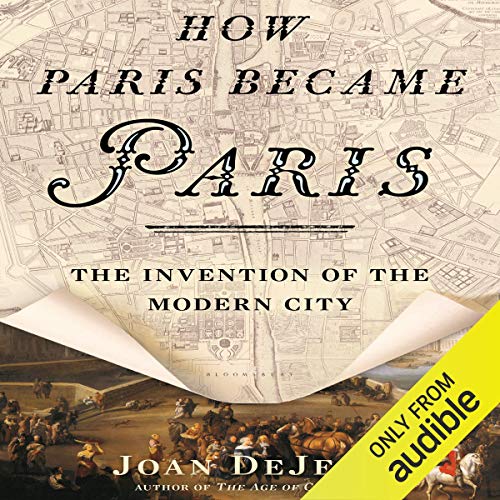
How Paris Became Paris
Summary
At the start of the 17th century, Paris was known for a few monuments, but it had not yet put its brand on urban space. Like many European cities, it was still emerging from its medieval past. But within a century, Paris would be transformed into the modern and mythic city we now know. Most people associate the signature characteristics of Paris with the 19th century. Joan DeJean demonstrates that the Parisian model for urban space was in fact invented two centuries earlier, when the first full design for the French capital was implemented. During this period, Paris saw many changes: It became the first city to tear down its fortifications. A large-scale urban plan was created and executed, with organized streets and boulevards, modern bridges, sidewalks, and public parks. Venues opened for urban entertainment, from opera and ballet to another pastime invented in Paris, recreational shopping. Parisians enjoyed the earliest street lighting and public transportation, even as theirs became Europe’s first great walking city. A century of planned development made Paris beautiful and exciting. It gave people reasons to be out in public as never before and as nowhere else. It gave Paris its modern identity as a place that people dreamed of seeing. As Joan DeJean shows us in this compelling portrait of a city in transition, by 1700 Paris had become the capital that would transform forever our conception of the city and of urban life.
©2014 Joan DeJean (P)2014 Audible Inc.