Marc Sageman has 3 audiobooks on Listento.it, narrated by 3 narrators, with an average listener rating of 5★ across 1 ratings. The most-rated is Leaderless Jihad.
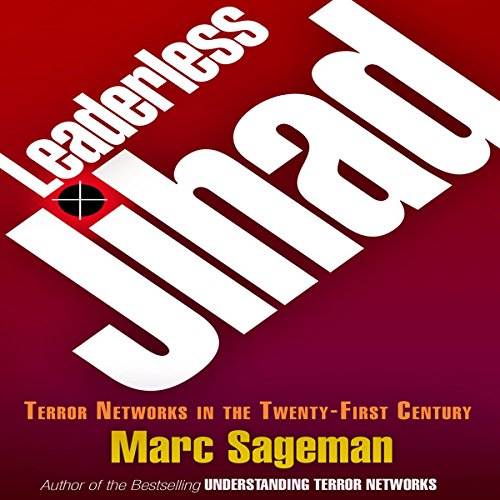
Leaderless Jihad
Summary
In the post-September 11 world, Al Qaeda is no longer the central organizing force that aids or authorizes terrorist attacks or recruits terrorists. It is now more a source of inspiration for terrorist acts carried out by independent local groups that have branded themselves with the Al Qaeda name. Building on his previous groundbreaking work on the Al Qaeda network, forensic psychiatrist Marc Sageman has greatly expanded his research to explain how Islamic terrorism emerges and operates in the 21 century.In Leaderless Jihad, Sageman rejects the views that place responsibility for terrorism on society or a flawed, predisposed individual. Instead, he argues, the individual, outside influence, and group dynamics come together in a four-step process through which Muslim youth become radicalized. First, traumatic events either experienced personally or learned about indirectly spark moral outrage. Individuals interpret this outrage through a specific ideology, more felt and understood than based on doctrine. Usually in a chat room or other Internet-based venues, adherents share this moral outrage, which resonates with the personal experiences of others. The outrage is acted on by a group, either online or offline. Leaderless Jihad offers a ray of hope. Drawing on historical analogies, Sageman argues that the zeal of jihadism is self-terminating; eventually its followers will turn away from violence as a means of expressing their discontent. The book concludes with Sageman's recommendations for the application of his research to counterterrorism law enforcement efforts.
©2008 University of Pennsylvania Press (P)2008 Audible, Inc.

Turning to Political Violence
Summary
What motivates those who commit violence in the name of political beliefs? Terrorism today is not solely the preserve of Islam, nor is it a new phenomenon. It emerges from social processes and conditions common to societies throughout modern history, and the story of its origins spans centuries, encompassing numerous radical and revolutionary movements.
Marc Sageman is a forensic psychiatrist and government counter-terrorism consultant whose bestselling books provide a detailed, damning corrective to commonplace yet simplistic notions of Islamist terrorism. In a comprehensive new book, Turning to Political Violence, Sageman examines the history and theory of political violence in the West. He excavates primary sources surrounding key instances of modern political violence, looking for patterns across a range of case studies spanning the French Revolution, through late 19th - and early 20th-century revolutionaries and anarchists in Russia and the United States, to the assassination of Archduke Ferdinand and the start of World War I. These accounts offer complex and intricate portraits of individuals engaged in struggles with identity, injustice, and revenge who may be empowered by a sense of love and self-sacrifice.
Arguing against easy assumptions that attribute terrorism to extremist ideology, and counter to mainstream academic explanations such as rational choice theory, Sageman develops a theoretical model based on the concept of social identity. His analysis focuses on the complex dynamic between the state and disaffected citizens that leads some to disillusionment and moral outrage - and a few to mass murder. Sageman's account offers a paradigm-shifting perspective on terrorism that yields counter-intuitive implications for the ways liberal democracies can and should confront political violence.
©2017 Marc Sageman (P)2019 Redwood Audiobooks

Misunderstanding Terrorism
Summary
Misunderstanding Terrorism provides a striking reassessment of the scope and nature of the global neo-jihadi threat to the West. The post-9/11 decade experienced the emergence of new forms of political violence and new terrorist actors. More recently, Marc Sageman's understanding of how and why people have adopted fundamentalist ideologies and terrorist methods has evolved. Author of the classic Understanding Terror Networks, Sageman has become only more critical of the US government's approach to the problem. He argues that US society has been transformed for the worse by an extreme overreaction to a limited threat - limited, he insists, despite spectacular recent incidents, which he takes fully into account. Indeed, his discussion of just how limited the threat is marks a major contribution to the discussion and debate over the best way to a measured and much more effective response. The book is published by University of Pennsylvania Press.
©2017 Marc Sageman (P)2017 Redwood Audiobooks