The Military category has 1,612 audiobooks on Listento.it, with an average listener rating of 4.6★ across 5,283 ratings. The most-rated is The Rise and Fall of the Third Reich.

Andersonville
Summary
Between February 1864 and April 1865, 41,000 Union prisoners of war were taken to the stockade at Anderson Station, Georgia, where nearly 13,000 of them died. Most contemporary accounts placed the blame for the tragedy squarely on the shoulders of the Confederates who administered the prison or on a conspiracy of higher-ranking officials.In this carefully researched and compelling revisionist account, William Marvel provides a comprehensive history of Andersonville Prison and conditions within it. Based on reliable primary sources including diaries, Union and Confederate government documents, and letters rather than exaggerated postwar recollections and such well-known but spurious 'diaries' as that of John Ransom, Marvel's analysis exonerates camp commandant Henry Wirz and others from charges that they deliberately exterminated prisoners, a crime for which Wirz was executed after the war.According to Marvel, virulent disease and severe shortages of vegetables, medical supplies, and other necessities combined to create a crisis beyond Wirz's control. He also argues that the tragedy was aggravated by the Union decision to suspend prisoner exchanges, which meant that many men who might have returned home were instead left to sicken and die in captivity.
©2006 William Marvel (P)2010 Audible, Inc.

The Best of American Heritage: Lincoln
Summary
Some of America's foremost historians - including James M. McPherson, Allan Nevins, and Stephen B. Oates - recount the extraordinary life of Abraham Lincoln in this collection of the best essays from 60 years of American Heritage. Lincoln, the book argues, "...evolved into nothing less than an apostle for the sanctity of the Union, the ethic of majority rule, and the dreams of freedom and equality of opportunity. Who could have so predicted when Lincoln had seemed the least qualified candidate for the presidency?"
©2015 American Heritage (P)2017 Tantor

Storm Over Texas
Summary
In the spring of 1844, a fiery political conflict erupted over the admission of Texas into the Union. This hard-fought and bitter controversy profoundly changed the course of American history. Indeed, as Joel Silbey argues in Storm Over Texas, it marked the crucial moment when partisan differences were transformed into a North-vs-South antagonism, and the momentum towards Civil War leaped into high gear. Silbey, one of America's most renowned political historians, offers a swiftly paced and compelling narrative of the Texas imbroglio, which included an exceptional cast of characters, from John C. Calhoun and John Quincy Adams, to James K. Polk and Martin Van Buren. We see how a series of unexpected moves, some planned, some inadvertent, sparked a crisis that intensified and crystallized the North-South divide. Sectionalism, Silbey shows, had often been intense, but rarely widespread and generally well contained by other forces. After Texas statehood, it became a driving force in national affairs, ultimately leading to Southern secession and Civil War. With subtlety, great care, and much imagination, Joel Silbey shows that this brief political struggle became, in the words of an Alabama congressman, "the greatest question of the age" - and a pivotal moment in American history.The “Pivotal Moments in American History” series seeks to unite the old and the new history, combining the insights and techniques of recent historiography with the power of traditional narrative. Each title has a strong narrative arc with drama, irony, suspense, and – most importantly – great characters who embody the human dimension of historical events. The general editors of “Pivotal Moments” are not just historians; they are popular writers themselves, and, in two cases, Pulitzer Prize winners: David Hackett Fischer, James M. McPherson, and David Greenberg. We hope you like your American History served up with verve, wit, and an eye for the telling detail!
©2005 Joel H. Silbey (P)2010 Audible, Inc
To the Gates of Richmond
Summary
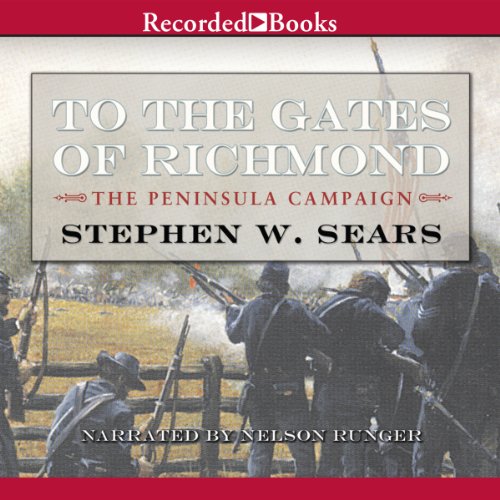
It was the largest campaign ever attempted in the Civil War: the Peninsula campaign of 1862. General George McClellan planned to advance from Yorktown up the Virginia Peninsula and destroy the Rebel army in its own capital. But with Robert E. Lee delivering blows to the Union army, McClellan’s plan fell through at the gates of Richmond. Now, in a study of the great Civil War engagement that weaves together narrative, military analysis, and eyewitness accounts drawn from the diaries and letters of soldiers, historian Stephen W. Sears showcases all the reasons why Ken Burns, the producer of the PBS series The Civil War, calls Sears “one of our best Civil War historians.”
©1992 Stephen W. Sears (P)1995 Recorded Books

The Trigger
Summary
On a summer morning in Sarajevo almost 100 years ago, a teenager took a pistol out of his pocket and fired not just the opening rounds of the First World War but the starting gun for modern history. By killing Archduke Franz Ferdinand, the heir of the Austro-Hungarian Empire, Gavrilo Princip started a cycle of events that would leave 15 million dead from fighting between 1914 and 1918 and that proved fatal for empires and a way of ruling that had held for centuries. The Trigger tells the story of a young man who changed the world forever. It focuses on the drama of the incident itself by following Princip's journey. By retracing his steps from the feudal frontier village of his birth, through the mountains of the northern Balkans to the great plain city of Belgrade, and ultimately to Sarajevo, Tim Butcher illuminates our understanding of Princip and makes discoveries about him that have eluded historians for a hundred years. Traveling through the Balkans on Princip's trail, and drawing on his own experiences there as a war reporter during the 1990s, Butcher unravels this complex part of the world and its conflicts, and shows how the events that were sparked that day in June 1914 still have influence today. Published for the centenary of the assassination, The Trigger is a rich and timely work, part travelogue, part reportage, and part history.
©2014 Tim Butcher (P)2014 Tantor

So Close to Home
Summary
A true story of men and women pitted against the sea during World War II - and an unforgettable portrait of the determination of the human spirit. On May 19, 1942, a U-boat in the Gulf of Mexico stalked its prey 50 miles away from New Orleans. Captained by 29-year-old Iron Cross recipient Erich Würdemann, the submarine set its sights on the freighter Heredia with 59 souls onboard. Most of the crew were merchant seamen, but there were also a handful of civilians, including the Downs family, consisting of the parents, Ray Sr. and Ina; along with their two children, eight-year-old Ray Jr., nicknamed "Sonny", and 11-year-old Lucille. Fast asleep in their berths, the Downs family had no notice that two torpedoes were heading their way. When the ship exploded, Ina and Lucille became separated from Ray Sr. and Sonny. An inspiring historical narrative, So Close to Home tells the story of the Downs family as they struggled against sharks, hypothermia, drowning, and dehydration in their effort to survive the aftermath of this deadly attack off the American coast.
©2016 Michael J. Tougias (P)2016 Blackstone Audio, Inc.

The Great Battle Never Fought: The Mine Run Campaign, November 26-December 2, 1863
Summary
The stakes for George Gordon Meade could not have been higher. After his stunning victory at Gettysburg in July of 1863, the Union commander spent the following months trying to bring the Army of Northern Virginia to battle once more and finish the job. The Confederate army, robbed of much of its offensive strength, nevertheless parried Meade’s moves time after time. Although the armies remained in constant contact during those long months of cavalry clashes, quick maneuvers, and sudden skirmishes, Lee continued to frustrate Meade’s efforts. Meanwhile, in Washington, D.C., Meade’s political enemies launched an all-out assault against his reputation and generalship. Even the very credibility of his victory at Gettysburg came under assault. Pressure mounted for the army commander to score a decisive victory and prove himself once more. Smaller victories, like those at Bristoe Station and Rappahannock Station, did little to quell the growing clamor - particularly because out west, in Chattanooga, another Union general, Ulysses S. Grant, was once again reversing Federal misfortunes. Meade needed a comparable victory in the east. And so, on Thanksgiving Day, 1863, the Army of the Potomac rumbled into motion once more, intent on trying again to bring about the great battle that would end the war. The Great Battle Never Fought: The Mine Run Campaign, November 26-December 2 1863 recounts the final chapter of the forgotten fall of 1863 - when George Gordon Meade made one final attempt to save the Union and, in doing so, save himself.
©2018 Savas Beatie (P)2019 Savas Beatie

Soaring to Glory
Summary
The valiant fight for freedom in the air and dignity on the ground He had to sit in a segregated rail car on the journey to army basic training in Mississippi in 1943. But two years later, the 20-year-old African American from New York was at the controls of a P-51, prowling for Luftwaffe aircraft at 5,000 feet over the Austrian countryside. By the end of World War II, he had done something that nobody could take away from him: He had become an American hero. This is the remarkable true story of Lt. Col. Harry Stewart Jr., one of the last surviving Tuskegee Airmen of World War II. Award-winning aviation writer Philip Handleman re-creates the harrowing action and heart-pounding drama of Stewart's combat missions, including the legendary mission in which Stewart downed three enemy fighters. Soaring to Glory also reveals the cruel injustices Stewart and his fellow Tuskegee Airmen faced during their wartime service and upon return home after the war. Stewart's heroism was not celebrated as it should have been in postwar America - but now, his boundless courage and determination will never be forgotten.
©2019 Philip Handleman and Lt. Col. Harry T. Stewart, Jr. (P)2019 Blackstone Audio, Inc.

Patriotic Fire
Summary
From the author of best-selling works of history and fiction, a fast-paced, enthralling retelling of one of the greatest battles fought on the North American continent. Learn about the two men who, against all expectations and odds, joined forces to repel the British invasion of New Orleans in December 1814. This audio program has all the ingredients of a high-flying adventure story. Unbeknownst to the combatants, the War of 1812 has ended. But Andrew Jackson, a brave, charismatic American general, sick with dysentery and commanding a beleaguered garrison, leads a desperate struggle to hold on to New Orleans and thwart the army that defeated Napoleon. Helping him is a devilish French pirate, Jean Laffite, who rebuffs a substantial bribe from the British and, together with his erstwhile enemy, saves the city from invasion...much to the grateful chagrin of New Orleanians, shocked to find themselves on the same side as the brazen buccaneer. Winston Groom brings his considerable storytelling gifts to the re-creation of this remarkable battle and to the portrayal of its main players. Against the richly evocative backdrop of French New Orleans, he illuminates Jackson's brilliant strategy and tactics, as well as the antics and cutthroat fighting prowess of Laffite and his men. Patriotic Fire brings this extraordinary military achievement vividly to life.
©2006 Winston Groom (P)2006 Tantor Media, Inc.
A Voice from the Main Deck
Summary
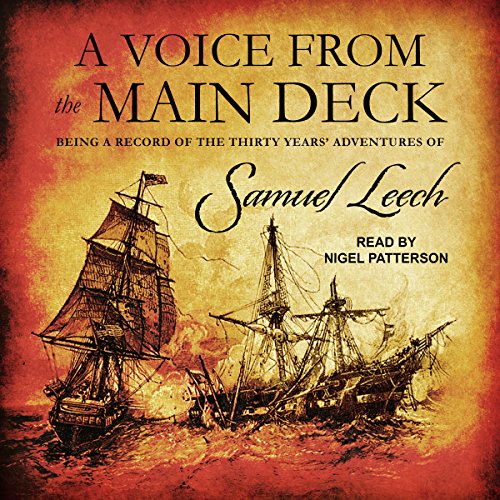
"I heard the shot strike the sides of our ship; the whole scene grew indescribably confused and horrible; it was like some awfully tremendous thunder-storm, whose deafening roar is attended by incessant streaks of lightning, carrying death in every flash and strewing the ground with the victims of its wrath: only, in our case, the scene was rendered more horrible than that, by the presence of torrents of blood which dyed our decks." This was Samuel Leech's first experience of naval warfare. He was a powder monkey aboard the HMS Macedonian when it was attacked forced to strike its colors by the USS United States in the war of 1812. Leech provides a fascinating account of life as a sailor in the War of 1812 and through early 19th century. It is a remarkable account of a man who, until the conflict with the USS United States, had fought British Navy but after that battle changed allegiance to the United States and continued sailing with her navy for a further four years. He provides brilliant insight into the contrasts that he saw between the US Navy and the British Navy during this time. It is a vivid account of life at sea in the early 19th century and a perfect addition to any sailor's library.
Public Domain (P)2018 Tantor

All That We Are
Summary
They say everything happens for a reason - that there’s always a light at the end of the tunnel. For the longest time, I didn’t think that was true. I had stumbled around in the dark for so many years that I didn’t think I would ever find my way out. But when I finally did, it came in the most unexpected way. Miles Hollins had been my brother’s best friend for as long as I could remember. We didn’t like each other much growing up. Or rather, we couldn’t stand each other. But after 10 years of being gone, a lot had changed. He wasn’t the same boy I remembered. I wasn’t the same girl, either. So much had happened. I moved away and got married. Miles joined the military. We both returned home broken in our own way. I struggled to find my place in my new life. Miles struggled just to get through the day. But together, we slowly began to heal. I quieted his demons, and he gave me a sense of belonging. For a while, that was enough. But this is real life, and in real life, nothing stays perfect forever. In real life, not every story ends with a happily ever after. Sometimes, the scars we carry are just too deep. I promised him I would fight. He promised me I would lose. I’ll do everything in my power to prove him wrong. Because, it’s when you find the one thing you can’t live without that you truly find yourself. All That We Are is a stand-alone contemporary romance.
©2019 Melissa Toppen (P)2020 Melissa Toppen

The Indian Army
Summary
In the essays that comprise The Indian Army: Reminiscences, Reforms & Romance, Lieutenant General H. S. Panag examines burning questions surrounding the Indian armed forces: their exploitation by neo- nationalists; an intrusive media’s projection of the army as the sole flag bearer of patriotism; the obsession with Pakistan as an impending threat to national security; the intense militarisation of Kashmir post the abrogation of Article 370; and equal opportunities for women in combat, among other issues. Divided into six sections - Human Rights, Reforms, Leadership, Reminiscences, Conflict and Unforgettable Heroes - the book compels the listener to think deeper and with greater nuance about a much-discussed and much-maligned institution. The Indian Army is also a glimpse into the general’s own life and reveals hitherto unknown aspects of his long career in the army. A writer who straddles the serious and the idyllic with equal ease, he unequivocally condemns the tying of a citizen to the bonnet of an army jeep in Kashmir in 2017 in one piece, and in another tells the intensely passionate, albeit tragic love story of a soldier and a Kashmiri girl. As candid as it is incisive, The Indian Army is a must-listen for every Indian who has stopped to think about the powerful institution that the army is.
©2020 H. S. Panag (P)2020 Audible, Inc.

Battle of Gettysburg: A History From Beginning to End
Summary
Battle of Gettysburg The bloodiest battle of the Civil War was also its turning point. From this point onwards, the Confederate forces would never gain a hold in the North again. Inside you will hear about.... Before July there was Lee Oh Brother, Where Art Thou? Rumors of War Hooker's Last Stand Everything Comes Together Day 1: July 1, 1863 Day 2: July 2, 1863 Day 3: July 3, 1863 Aftermath This Hallowed Ground Heroes would be born from places such as Little Roundtop and among the soldiers of Picketts Charge. And later, in the words of Abraham Lincoln, martyrs were created in the aftermath of the conflict, giving reason to a war that no one quite believed in fully until this point.
©2016 Hourly History (P)2017 Hourly History

Blackett's War
Summary
In March 1941, after a year of unbroken and devastating U-boat onslaughts, the British War Cabinet decided to try a new strategy in the foundering naval campaign. To do so, they hired an intensely private, bohemian physicist who was also an ardent socialist. Patrick Blackett was a former navy officer and future winner of the Nobel Prize; he is little remembered today, but he and his fellow scientists did as much to win the war against Nazi Germany as almost anyone else. As director of the World War II antisubmarine effort, Blackett used little more than simple mathematics and probability theory - and a steadfast belief in the utility of science - to save the campaign against the U-boat. Employing these insights in unconventional ways, from the washing of mess hall dishes to the color of bomber wings, the Allies went on to win essential victories against Hitler's Germany. Here is the story of these civilian intellectuals who helped to change the nature of 20th-century warfare. Throughout, Stephen Budiansky describes how scientists became intimately involved with what had once been the distinct province of military commanders - convincing disbelieving military brass to trust the solutions suggested by their analysis. Budiansky shows that these men above all retained the belief that operational research and a scientific mentality could change the world. It's a belief that has come to fruition with the spread of their tenets to the business and military worlds, and it started in the Battle of the Atlantic, in an attempt to outfight the Germans, but most of all to outwit them.
©2013 Stephen Budiansky (P)2013 Tantor

Discovering Gettysburg
Summary
Gettysburg. Does any other single word in any language invoke so much passion, and angst, enthusiasm, and sadness, as do those 10 letters? But what is Gettysburg, exactly? I am almost embarrassed to say I discovered the answer to that question - or at least approached an answer - only late in life. Of course, Gettysburg is a small charming city nestled in south-central Pennsylvania, but in so many ways it beggars description. For about half the year its streets are mainly empty, its businesses quiet, the weather cold and blustery. For the other months, however, the place literally teems with hundreds of thousands of visitors, bustling streets and shops, and more than a handful of unique larger-than-life characters whose fan base spans the globe. And then there is the battle - the event - of the Civil War. The battle that raged there during the first days of July 1863 at the price of more than 50,000 casualties decided much (just how much depending upon who you believe) and forever stamped that place with its passion and angst and enthusiasm and its lingering, forever sadness. Its monuments and guns and plaques tell the story of the colossal clash of arms and societies, just as its National Cemetery bears silent witness to at least part of the cost of that bloody event. And somehow this “greatest little town in America,” this mammoth battle, its influential characters (living and dead), its deep meaning and profound influence on our society largely escaped me for nearly six decades. That ended a couple years ago when I finally paid a visit. My journey from the uninitiated to the fully converted only took a short time, but I felt compelled to pen my experiences as they unfolded. And so you hold in your hands Discovering Gettysburg: An Unconventional Introduction to the Greatest Little Town in America and the Monumental Battle that Made It Famous. In it, you will visit with me a host of famous and off-the-beaten-path places on the battlefield, explore the historic town of Gettysburg as it is today, chat with some of the town’s fascinating “resources,” and follow along, as I did, with some of the most engaging storytelling I have ever had the pleasure of hearing. And nowhere inside will you be bothered with footnotes or stumble your way through academic mumbo jumbo. Thankfully, my friend and award-winning cartoonist Tim Hartman agreed to provide the magnificent maps and outstanding caricatures that grace this book. Discovering Gettysburg is, I fully admit, rather unconventional. But so is the place, the event, and the experience of that hallowed ground.
©2017 Stephen Coleman (P)2019 Savas Beatie

Journey into Eden
Summary
Uncover a fascinating glimpse into WWI on the Mesopotamian front. Few people truly know about Iraq’s role in World War One. The stage of a desperate struggle against the Ottomans, the story of brave men who lived and served in this harsh landscape is often overshadowed by the battles in Europe and North Africa. But now, this memoir explores the life and duty of Frank Wooten, an American, serving as a British officer in the Mesopotamian Motor Machine Gun Corps. Told with gripping detail and offering profound insights into the lesser-known and often-overlooked Middle Eastern theater, this book provides a unique perspective of the war to end all wars. Recounting Frank’s daily life on the front, his duties throughout the war, and the incredible people he met along the way, Journey into Eden is a fascinating book, perfect for anyone interested in the lesser-known stories of World War One, the history of the Iraq War, and the nature of life on the front.
©2020 Griffin Smith (P)2020 Griffin Smith

We Are All Americans
Summary
Join the journey into one of the most captivating and seminal events in all of American history. The United States in 1865 was a dramatically different country from the one that went to the polls in 1860. It and the world were transformed by the Civil War - a political struggle between sections of the country for a Union without slavery or slavery without a Union. We Are All Americans is the story of how the United States was transformed through the words of the three most central figures of the time - Jefferson Davis, Frederick Douglass, and Abraham Lincoln - and narrated by three reporters in a contemporary newsroom setting, who describe the events as they unfolded, in time-linear fashion. It is often said the country entered the war as the United States, plural, and emerged a nation as the United States, singular. Let We Are All Americans take you back 150 years to experience this dramatic and profound transformation as it happened.
©2017 Richard A. Radoccia (P)2021 Richard A. Radoccia

Scapegoats
Summary
"At all costs avoid blame." Such is the creed of dictators and politicians, tycoons and company chairmen, media celebrities, and spin doctors the world over. But what about men at war, where the penalties for errors of judgment can be devastating? History is full of tales of those who have been wrongly castigated in the rush to find a culprit; only later, sometimes much later, when the real truth comes out, is the scapegoat exonerated. Exposed here are the real stories behind the myths that allow the listener to make a balanced judgment on history's fairness to the individual, including those of: Captain Alfred Dreyfus, exiled and imprisoned on charges of treason in 1895; Lieutenant General James Longstreet, blamed for the failure of Pickett's Charge in 1863; Major General Jackie Smyth, removed from the Army after ordering the destruction of the Sittang Bridge in 1942; Lieutenant General Roméo Dallaire, let down by the United Nations over the Rwanda massacres of 1994. This superbly researched book by a former professional soldier uncovers what might be termed the most disgraceful miscarriages of military justice.
©2013 Michael Scott; First Skyhorse Publishing edition 2015 (P)2016 Audible, Inc.

1968 - Into the Abyss
Summary
What if after decades there was still one more untold incredible Viet Nam war saga peppered with tightly-written notes from then young, not yet 20, and highly decorated leader of a small group of underground and Special Force combatants who searched and destroyed over 900 tunnels? What if this saga was more compelling than typical battlefield heroics by including experiences of this same elite group of fighters, led by multiple-medal awarded Staff Sergeant Thomas Wergen, who linked up with Special Forces for covert combat missions into areas across the South Vietnamese border such as Cambodia and Laos - where according to the US power’s political spin “they weren’t”? What if along with their bloodstained tales this saga entailed accurate and concise historic tidbits, including anecdotes of the US protests across America, during the bloodiest and heaviest fighting period in the war when America had committed over 500,000 troops - the infamous TET counteroffensive phase of 1968? What if this saga included an award-winning foreword, which depicts a remarkable and factual historical account retrieved directly from the logs of the mighty USS Constitution? Titled warfare on a skewer, this is a short account of how Captain “Mad Jack” Percival had carried out armed aggression against Danang, Vietnam (Turon, China) in May 1845. And more ironic the fact that Captain Percival’s war party - including Marines - stormed the same shores that the initial combat-designated Marines did in 1965, ordered by then President Lyndon Johnson. Then you would have, 1968 - Into the Abyss, a book-length war account of - Bronze Star Medal and Combat Infantryman’s Badge decorated - Army Staff Sergeant Thomas E. Wergen. Young and well-educated, Wergen found himself leading a selected squad of soldiers who meandered, crawled, and sought after in the dank darkness where even the most courageous dared not - the dreaded and treacherous jungle tunnels built by the North Vietnamese military. Because they were deadly effective and highly revered, they would also find themselves serving on secretive special force combat missions in the enemy-peppered hostile territory across the border, where they weren’t supposed to be. So turn the lights up bright and follow along in these dense jungle war tales - just try not to get lost, or captured - by the enemy, that is.
©2012 Riley St. James (P)2019 Riley St. James

Rescuing Broken
Summary
Seven years ago, Jaxon Kane enlisted in the army and shattered my heart. Now, he's back. Except too much has changed while he was gone. The spirited, passionate girl he first fell in love with no longer exists. I live as a shadow of my former self, a shell of damaged dreams and unfulfilled potential. Too broken for second chances, too broken for him, I cling to my dark secret. I'll hide the truth from Jax no matter the cost. But Jax is a hot, confident, and fearless soldier. He may carry around old hurts and wear new scars but at his core, he's a fighter. I just wish he wasn't fighting for me. Or my heart. Contains mature themes.
©2018 Gina Azzi (P)2019 Tantor