Frederick Douglass has 10 audiobooks on Listento.it, narrated by 13 narrators, with an average listener rating of 4.7★ across 26 ratings. The most-rated is Narrative of the Life of Frederick Douglass.
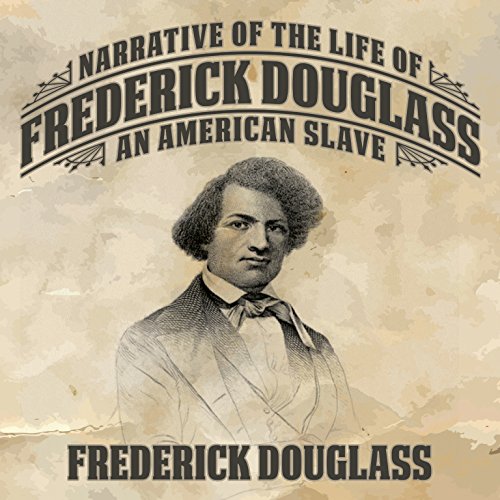
Narrative of the Life of Frederick Douglass
Summary
This classic of American literature, a dramatic autobiography of the early life of an American slave, was first published in 1845, when its author had just achieved his freedom. It is a story that shocked the world with its first-hand account of the horrors of slavery. The book was an incredible success. It sold over 30,000 copies and was an international best seller. His eloquence gives a clear indication of the powerful principles that led Douglas to become the first great African-American leader in the United States.
Public Domain (P)2015 Gildan Media LLC

Narrative of the Life of Frederick Douglass, an American Slave, Written by Himself (Annotated)
Summary
This is a special bicentennial edition of Douglass' most famous book, which has been published by his direct descendants through Frederick Douglass Family Initiatives (FDFI). It contains a never-before publicized pencil drawing of Douglass on the cover that was created by his grandson Joseph Douglass. Joseph is the grandfather of Nettie Washington Douglass, who serves as chairwoman for FDFI. She is Douglass' great-great-granddaughter and Washington's great-granddaughter. The foreword of this edition is written by Kenneth B. Morris, Jr., Nettie's eldest son, who describes in more detail his historical kinship to the Douglass and Washington legacies. Bryan Stevenson, author of the New York Times best-seller Just Mercy, writes a brilliant introduction to this bicentennial edition. In his piece, Stevenson connects the challenges faced by Douglass with the most problematic social injustices of our time such as mass incarceration, racial inequality, and police violence. The Library of Congress named Narrative of the Life of Frederick Douglass one of the 88 books that shaped America. Published in 1845, his first autobiography became an instant best-seller, putting his life in danger since he had escaped slavery just seven years earlier. Narrative helped change the course of the US abolitionist movement in the mid-19th century and has been changing the lives of readers ever since.
©2017 Frederick Douglass Family Initiatives (P)2018 Frederick Douglass Family Initiatives

Black History Collection
Summary
This Black History Collection contains the brilliant works of Frederick Douglass (Narrative of the Life of Frederick Douglass), Booker T. Washington (Up from Slavery) and W. E. B. Du Bois (The Souls of Black Folk). Enjoy the works of these three influential men, whose vision and ideas helped to shape modern society.
Public Domain (P)2018 Combray Media

Narrative of the Life of Frederick Douglass
Summary
The Narrative of the Life of Frederick Douglass was published in 1845; it is a memoir and treatise on abolition written by the famous author and former slave Frederick Douglass. The book includes two introductions by well-known abolitionists: a preface by William Lloyd Garrison, and a letter by Wendell Phillips, both confirming the veracity of the account and the literacy of its author. It is generally considered to be the most famous of a number of abolition narratives written by former slaves in the same era. The narrative describes the events of Douglass’s life over 11 chapters, from his childhood to emancipation. The book was an immediate success and received critical acclaim, also in Europe.
Public Domain (P)2019 Woodkeep Audio

Narrative of the Life of Frederick Douglass
Summary
This memoir written by writer, orator, and former slave Frederick Douglass describes, in gripping detail, the circumstances of his upbringing, his brutal treatment at the hands of slave-owners, and his narrow escape from Maryland to freedom. Written in 1845, this narrative is one of the most famous works of American literature and provided fuel for the abolitionist movement that began in the early 19th century.
Public Domain (P)2019 Dreamscape Media, LLC

History's Greatest Speeches - Volume III
Summary
The most profound and important speeches ever delivered are collected in this anthology, featuring some of the most influential figures in world history. From ancient times to the American Revolution to as recently as this past century, Fort Raphael Publishing has collected seven of the most important and iconic speeches of all time, featuring such disparate historical characters as the prophet Moses, the Greek general Pericles, France's architect of the Reign of Terror Maximilien Robespierre, President Thomas Jefferson, Muscogee Chief Speckled Snake, the abolitionist and former slave Frederick Douglass, and the brilliant scientist Marie Curie. This collection of powerful and moving speeches pays tribute to these great world leaders and the words they used to inspire millions. This is the third volume of this series.
©2021 Fort Raphael Publishing Company (P)2021 SoundCraft Audiobooks

Cast off the Mill-Stone
Summary
In this work, the abolitionist Frederick Douglass points out the evils of the policy of protecting and preserving slavery. Among them was the fact that it would deprive the Union of the aid that might be rendered it by four million slaves. Another evil of the policy was the chilling effect it exerted upon the moral sentiment of mankind.
Public Domain (P)2019 Museum Audiobooks

Life and Times of Frederick Douglass
Summary
Frederick Douglass was an American social reformer, abolitionist, orator, writer, and statesman. After escaping from slavery in Maryland, he became a national leader of the abolitionist movement in Massachusetts and New York, gaining note for his oratory and incisive antislavery writings. Accordingly, he was described by abolitionists in his time as a living counter-example to slaveholders' arguments that slaves lacked the intellectual capacity to function as independent American citizens. Likewise, Northerners at the time found it hard to believe that such a great orator had once been a slave. This is his story. Geoffrey Giuliano is the author of over 30 internationally best-selling biographies, including the London Sunday Times best seller Blackbird: The Life and Times of Paul McCartney and Dark Horse: The Private Life of George Harrison. He can be heard on the Westwood One Radio Network and has written and produced over 700 original spoken-word albums and video documentaries on various aspects of popular culture. He is also a well known movie actor.
©2020 Geoffrey Giuliano (P)2020 Geoffrey Giuliano

Abolitionists Mega Collection: Thought Leaders in the Fight to End Slavery Before the Civil War
Summary
Abolitionism was the movement that strove to end slavery in the United States. The abolitionists saw slavery as a stain and an affliction on the United States and made it their goal to eradicate slave ownership. Abolitionists produced anti-slavery literature, sent petitions to Congress, and ran for political office. Abolitionists Mega Collection: Thought Leaders in the Fight to End Slavery Before the Civil War includes: Book 1: Life and Times of Frederick Douglass, which covers the life of the prominent abolitionist during and after the Civil War. Douglass provides a fuller account of his escape from slavery and the underground railway to freedom. Book 2: David Walker's Appeal to the Coloured Citizens of the World. Walker (1796-1830), the son of an enslaved man and a free Black woman, was an entrepreneur, abolitionist, author, and anti-slavery activist. In 1829, he published "An Appeal to the Coloured Citizens of the World", a radical call for Black solidarity and resistance to slavery. It raised awareness of the abuses of slavery, encouraged pride in its Black readers, and offered hope that change would eventually come. Book 3: The Narrative of Sojourner Truth. An autobiographical narrative that chronicles Sojourner Truth’s life as a slave in upstate New York and her transformation into an abolitionist, women’s rights activist, orator, and preacher. Book 4: The Black Man, His Antecedents, His Genius, and His Achievements. Born a slave, William Wells Brown (1814-1884) escaped to the North, where he became a prominent abolitionist, historian, novelist, and playwright. His 1863 book portrays the lives of individuals selected by Brown that had “by their own genius, capacity, and intellectual development, surmounted the many obstacles which slavery and prejudice have thrown in their way, and raised themselves to positions of honor and influence". Book 5: Thoughts upon the African Slave Trade. John Newton was the master of a slave ship, later becoming a beloved Anglican priest and an ardent abolitionist. Book 6: The Past and the Present Condition and the Destiny of the Colored Race. Henry Highland Garnet was an African American abolitionist whose "Call to Rebellion" speech in 1843 encouraged slaves to rise up against their owners. Book 7: The Church and Prejudice. Frederick Douglass would eventually become one of the most powerful orators of his day. In 1841, three years after he had escaped from slavery and settled in Massachusetts, Douglass delivered a brief oration on something he had not anticipated: racial prejudice in Northern churches. Book 8: Prejudice Against the Colored Man. Rev. Theodore S. Wright (1797-1847) was pastor of the First Presbyterian Church in New York City and a conductor on the Underground Railroad. In this speech Wright described anti-Black prejudice as nefarious and wicked and something that should be reprobated and discountenanced. Book 9: "Why Sit Ye Here and Die?" In her 1832 lecture, "Why Sit Ye Here and Die?", Maria W. Stewart demanded equal rights for African American women while criticizing both the slavery of the South and the lack of opportunity and equality in the North. Book 10: The Experience of Rev. Thomas H. Jones. The author, who was born a slave on a plantation near Wilmington, North Carolina, discusses the religious meetings he conducted as a slave. Book 11: "What Are the Colored People Doing for Themselves?" In this speech of 1848, the great abolitionist Frederick Douglass makes an eloquent call for self-reliance.
©Public Domain (P)2020 Museum Audiobooks

Slave Narratives Mega Collection: 18 of the Most Moving & Telling Memoirs
Summary
This collection contains: Twelve Years a Slave, Up from Slavery, Life and Times of Frederick Douglass, The Interesting Narrative of the Life of Olaudah Equiano, Incidents in the Life of a Slave Girl, The History of Mary Prince, a West Indian Slave, The Life of an American Slave (Fifty Years in Chains), The Experience of Rev. Thomas H. Jones, Memoir and Poems of Phillis Wheatley, a Native African and a Slave, From Log Cabin to the Pulpit, or, Fifteen Years in Slavery, Thirty Years a Slave, Behind the Scenes: or, Thirty Years a Slave, and Four Years in the White House, The Life of Josiah Henson, The Kidnapped and the Ransomed: Being the Personal Recollections of Peter Still and His Wife "Vina" After Forty Years of Slavery, Memoir of Pierre Toussaint, The Life, History, and Unparalleled Sufferings of John Jea, the African Preacher, Africa for Christ: Twenty-Eight Years a Slave, and The Narrative of Bethany Veney, a Slave Woman. The slave narrative is a literary genre involving the autobiographical accounts of enslaved Africans. A slave narrative gives an account of the life, or a portion of the life, of a fugitive or former slave. It could be written or orally related by the slave personally. More than 6,000 such narratives are estimated to exist; the overwhelming majority of American slave narratives were authored by African Americans.
Public Domain (P)2020 Museum Audiobooks