Inazo Nitobe has 4 audiobooks on Listento.it, narrated by 4 narrators, with an average listener rating of 4.5★ across 11 ratings. The most-rated is Bushido: The Soul of Japan.

Bushido: The Soul of Japan
Summary
Bushido. This one word contains a wealth of meaning. Honor and grace, strength and compassion, loyalty and vengeance. Bushido is the warrior code of the samurai, a standard of conduct and an unwritten guide for right behavior and attitude. It is the core principle of ethics in Japan, an ideal that extends into every aspect of life and character. In this work, Bushido: The Soul of Japan, Inazo Nitobe explores the concept of Bushido and translates it onto a form accessible to western understanding. Nitobe examines each aspect of the Bushido code, showing how it corresponds to courage, honesty, benevolence, and politeness, and how it leads one to an understanding of loyalty and self-control. This work is a study of the way of the samurai, an exploration of the ideal that drove the fiercest and most honorable warrior class in human history. Bushido: The Soul of Japan was written at the turn of the 20th Century, providing the west a new and unprecedented avenue for the understanding of eastern thought. It captured the hearts and minds of those who encountered it, resulting in more than 10 editions in print. The work was so admired by President Theodore Roosevelt that he bought several copies to distribute among his friends, ensuring that each had access to this wealth of wisdom, and clarity of ethical thought. The AudioLearn version of Bushido: The Soul of Japan is preceded by a summary that explores the life of the author and the background of the book itself. Also included are an overview, synopsis, analysis, and an exploration of the historical context of the work. If you are interested in samurai, martial arts, eastern thought, or the ethical code of the warrior, then this is an audiobook that you won't want to miss.
©2017 AudioLearn (P)2017 AudioLearn

Bushido: The Soul of Japan (AmazonClassics Edition)
Summary
Inazo Nitobé's Bushido: The Soul of Japan is a poetic inquiry into the ethos of his homeland. Through a study of the way of the samurai, Nitobe identifies the seven virtues most widely recognized by the Japanese: rectitude, courage, benevolence, politeness, veracity, honor, and loyalty. In sharing these moral guidelines, handed down over generations, Nitobe gives the world unique insight into a previously unexplored code of honor. Written in English and only translated years later into Japanese, Bushido was an inspiration to many Western leaders, including two US presidents - Theodore Roosevelt and John F. Kennedy. After centuries, the samurai principles are now applied around the world and recognized as universal ideals. Revised edition: Previously published as Bushido: The Soul of Japan, this edition of Bushido: The Soul of Japan (AmazonClassics Edition) includes editorial revisions.
Public Domain (P)2019 Brilliance Publishing, Inc., all rights reserved.

Bu-shi-do
Summary
A word that can be communicated worldwide is [Bu-shi-do]?That word was spread by this one book: Inazo Nitobe is known as an author and a portrait of 5,000 yen bills of the Bank of Japan note. When Japan seceded from the League of Nations, Inazo Nitobe appealed, "Japan under no circumstances should be an orphan of the international community. A friend of Nitobe who did not understand him uttered, "Did Nitobe come as a representative for the military"? Meanwhile in Japan, while militaristic ideas were building up, since Nitobe commented, "The Communist Party and the Military will destroy our country", this has enticed severe criticism from the military and the right wing, and many of his friends and disciples have left him. Although he has encountered hardships during his old age, he pursued "Bu-shi-do". As a contributory factor to perceiving "My Own Road", please feel the grittiness by this reading. (C)Ai Library (C) Kotonoha Publications "Audio Book Works of Kotonoha Publications are listed in http://www.kotonoha.co.jp"
Kotonoha
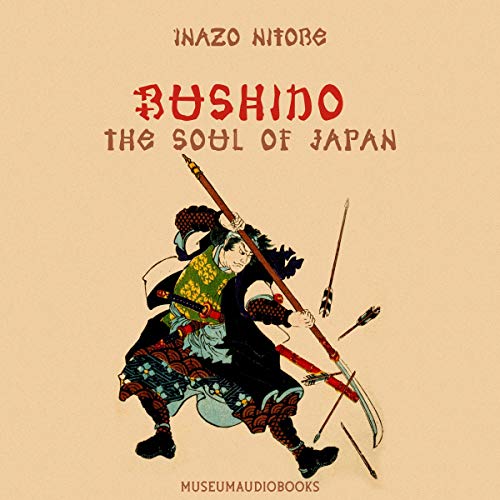
Bushido: The Soul of Japan
Summary
Bushido: The Soul of Japan is a seminal study on the way of the samurai by the Japanese educator Inazo Nitobe. From 1868, the beginning of the Meiji Era, Japan rapidly transformed itself from an isolated feudal society into a modern, industrialised nation state, influenced by Western philosophical and scientific ideas. Nitobe wrote Bushido in English to explain the samurai way to a western audience; it was later translated into Japanese. In the book, he explained the principles of the “bushi” (warrior) and “do” (way) and positioned Bushido in the historical paradigm of knighthood and chivalry. Using a combination of western and oriental thought, he illustrated the virtues of courage, benevolence, politeness, honor, self-control, and loyalty with reference to Buddhism, Confucianism, and Shintoism, as well as modern western philosophy and classical ideas from the Bible and Greco-Roman civilization. The book was a best seller and became an enduring classic. Generations of scholars have consulted it to gain an understanding of the character of the Japanese people.
Public Domain (P)2019 Museum Audiobooks