John Steinbeck has 27 audiobooks on Listento.it, narrated by 48 narrators, with an average listener rating of 4.2★ across 2,176 ratings. The most-rated is East of Eden.

East of Eden
Summary
This sprawling and often brutal novel, set in the rich farmlands of California's Salinas Valley, follows the intertwined destinies of two families - the Trasks and the Hamiltons - whose generations helplessly reenact the fall of Adam and Eve and the poisonous rivalry of Cain and Abel.
©1952 John Steinbeck; Renewed 1980 Elaine Steinbeck, Thom Steinbeck, and John Steinbeck IV (P)2011 Penguin Audio
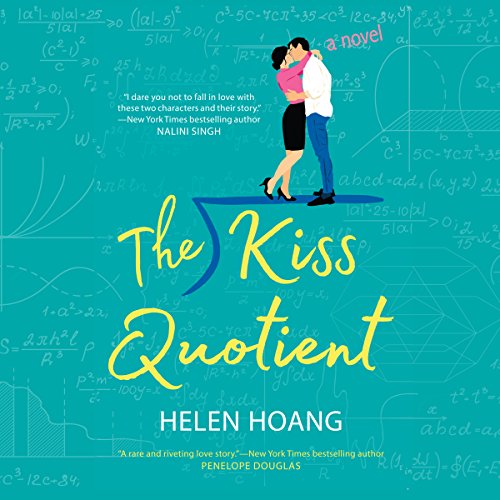
The Kiss Quotient
Summary
A cosmopolitan title to get excited about in 2018! Stella Lane thinks math is the only thing that unites the universe. She comes up with algorithms to predict customer purchases - a job that has given her more money than she knows what to do with as well as way less experience in the dating department than the average 30-year-old. It doesn't help that she has Asperger's and that French kissing reminds her of a shark getting its teeth cleaned by pilot fish. She decides that she needs lots of practice - with a professional - which is why she hires escort Michael Phan. The Vietnamese-Swedish stunner can't afford to turn down Stella's offer, and he agrees to help her check off all the boxes on her lesson plan - from foreplay to more-than-missionary position... Before long, Stella not only learns to appreciate his kisses but also to crave all of the other things he's making her feel. Their no-nonsense partnership starts making a strange kind of sense. And the pattern that emerges convinces Stella that love is the best kind of logic...
©2018 Helen Hoang (P)2018 Dreamscape Media, LLC

The Grapes of Wrath
Summary
The Pulitzer Prize-winning epic of the Great Depression, a book that galvanized—and sometimes outraged—millions of readers. At once naturalistic epic, captivity narrative, road novel, and transcendental gospel, Steinbeck's, The Grapes of Wrath is perhaps the most American of American classics. Although it follows the movement of thousands of men and women and the transformation of an entire nation during the Dust Bowl migration of the 1930s, The Grapes of Wrath is also the story of one Oklahoma farm family, the Joads, who are driven off their homestead and forced to travel west to the promised land of California. From their trials and their repeated collisions against the hard realities of this new America, Steinbeck creates a drama that is intensely human yet majestic in its scale and moral vision, tragic but ultimately stirring in its insistence on human dignity.
©1939 John Steinbeck (P)2011 Penguin

Of Mice and Men
Summary
Steinbeck’s tale of commitment, loneliness, hope, and loss remains one of America’s most widely read and beloved novels. While the powerlessness of the laboring class is a recurring theme in Steinbeck’s work of the late 1930s, he narrowed his focus when composing Of Mice and Men (1937), creating an intimate portrait of two men facing a world marked by petty tyranny, misunderstanding, jealousy, and callousness. But though the scope is narrow, the theme is universal: a friendship and shared dream that make an individual’s existence meaningful. Of Mice and Men also represents an experiment in form, which Steinbeck described as “a kind of playable novel, written in a novel form but so scened and set that it can be played as it stands.” A rarity in American letters, it achieved remarkable success as a novel, a Broadway play, and three acclaimed films.
©1937 John Steinbeck (P)2011 Penguin

Des souris et des hommes
Summary
En Californie, pendant la Grande Crise, Lennie et George vont de ferme en ferme. Ils louent leurs bras en attendant le jour où ils auront leur ferme à eux, avec un petit bout de luzerne pour élever des lapins. Lennie, malgré sa taille de colosse, n'a pas plus de malice qu'un enfant de six ans ; George veille sur lui, le protège du monde qui n'est pas tendre aux innocents. Le soir, ils se racontent leur rêve, celui de la maison et des lapins. Mais allez savoir pourquoi, les rêves de certains finissent toujours en cauchemars.
©1939 Éditions Gallimard (P)2004 Éditions Gallimard

Travels with Charley in Search of America
Summary
A stunning evocation of America on the eve of a tumultuous decade—and a moving elegy for more innocent times. In September 1960, John Steinbeck and his poodle, Charley, embarked on a journey across America, from small towns to growing cities to glorious wilderness oases. Travels with Charley is animated by Steinbeck’s attention to the specific details of the natural world and his sense of how the lives of people are intimately connected to the rhythms of nature—to weather, geography, the cycles of the seasons. His keen ear for the transactions among people is evident, too, as he records the interests and obsessions that preoccupy the Americans he encounters along the way.
©1962 John Steinbeck (P)2011 Penguin

Cannery Row
Summary
Here is Steinbeck’s tough yet charming portrait of people on the margins of society, dependent on one another for both physical and emotional survival. Published in 1945, Cannery Row focuses on the acceptance of life as it is: both the exuberance of community and the loneliness of the individual. Drawing on his memories of the real inhabitants of Monterey, California, Steinbeck interweaves the stories of Doc, Henri, Mack and his boys, and the other characters in this world, where only the fittest survive, to create a novel that is at once one of his most humorous and most poignant works.
Public Domain (P)2011 Penguin

The Winter of Our Discontent
Summary
The final novel of one of America’s most beloved writers - a tale of degeneration, corruption, and spiritual crisis. In awarding John Steinbeck the 1962 Nobel Prize in Literature, the Nobel committee stated that with The Winter of Our Discontent, he had “[R]esumed his position as an independent expounder of the truth, with an unbiased instinct for what is genuinely American”. Ethan Allen Hawley, the protagonist of Steinbeck’s last novel, works as a clerk in a grocery store that his family once owned. With Ethan no longer a member of Long Island’s aristocratic class, his wife is restless, and his teenage children are hungry for the tantalizing material comforts he cannot provide. Then one day, in a moment of moral crisis, Ethan decides to take a holiday from his own scrupulous standards. Set in Steinbeck’s contemporary 1960 America, the novel explores the tenuous line between private and public honesty and today ranks alongside his most acclaimed works of penetrating insight into the American condition.
©1961, 1989 John Steinbeck (P)2012 Penguin Audio

The Pearl
Summary
In this short book illuminated by a deep understanding and love of humanity, John Steinbeck retells an old Mexican folk tale: the story of the great pearl, how it was found, and how it was lost. For the diver Kino, finding a magnificent pearl means the promise of a better life for his impoverished family. His dream blinds him to the greed and suspicions the pearl arouses in him and his neighbors, and even his loving wife cannot temper his obsession or stem the events leading to the tragedy. For Steinbeck, Kino and his wife illustrate the fall from innocence of people who believe that wealth erases all problems. Originally published in 1947, The Pearl shows why Steinbeck’s style has made him one of the most beloved American writers: it is a simple story of simple people, recounted with the warmth and sincerity and unrivaled craftsmanship Steinbeck brings to his writing. It is tragedy in the great tradition, beautifully conveying not despair but hope for mankind.
©1945, 1973 Elaine Steinbeck, John Steinbeck IV, Thom Steinbeck (P)2011 Penguin Audio

The Moon Is Down
Summary
"Free men cannot start a war, but once it is started, they can fight on in defeat." This compelling, dignified and moving novel was inspired by and based upon the Nazi invasion of neutral Norway. Set in an imaginary European mining town, it shows what happens when a ruthless totalitarian power is up against an occupied democracy with an overwhelming desire to be free.
©1942; 1970 John Steinbeck; Elaine A Steinbeck, Thom Steinbeck, John Steinbeck IV (P)2011 Penguin Audio

The Wayward Bus
Summary
In his first novel to follow the publication of his enormous success The Grapes of Wrath, Steinbeck's vision comes wonderfully to life in this imaginative and unsentimental chronicle of a bus traveling California's back roads, transporting the lost and the lonely, the good and the greedy, the stupid and the scheming, the beautiful and the vicious away from their shattered dreams and, possibly, toward the promise of the future. This edition features an introduction by Gary Scharnhorst.
©1947 John Steinbeck (P)2015 Penguin Audio

Tortilla Flat
Summary
Adopting the structure and themes of the Arthurian legend, Steinbeck created a Camelot on a shabby hillside above the town of Monterey, California, and peopled it with a colorful band of knights. At the center of the tale is Danny, whose house, like Arthur’s castle, becomes a gathering place for men looking for adventure, camaraderie, and a sense of belonging—men who fiercely resist the corrupting tide of honest toil and civil rectitude. As Steinbeck chronicles their deeds—their multiple lovers, their wonderful brawls, their Rabelaisian wine-drinking—he spins a tale as compelling and ultimately as touched by sorrow as the famous legends of the Round Table, which inspired him.
Public Domain (P)2011 Penguin

In Dubious Battle
Summary
This 1936 novel—set in the California apple country—portrays a strike by migrant workers that metamorphoses from principled defiance into blind fanaticism.
©1936 John Steinbeck (P)2011 Penguin

The Pastures of Heaven
Summary
Today, nearly 40 years after his death, Nobel Prize winner John Steinbeck remains one of America's greatest writers and cultural figures. We have begun publishing his many works for the first time as Penguin Classics. This season we continue with the seven spectacular and influential books East of Eden, Cannery Row, In Dubious Battle, The Long Valley, The Moon Is Down, The Pastures of Heaven, and Tortilla Flat. Penguin Classics is proud to present these seminal works to a new generation of listeners and to the many who revisit them again and again.
©1960 John Steinbeck (P)2013 Penguin Audio

Sweet Thursday
Summary
In Monterey, on the California coast, Sweet Thursday is what they call the day after Lousy Wednesday, which is one of those days that is just naturally bad. Returning to the scene of Cannery Row, the weedy lots and junk heaps and flophouses of Monterey, John Steinbeck once more brings to life the denizens of a netherworld of laughter and tears—from Fauna, new headmistress of the local brothel, to Hazel, a bum whose mother must have wanted a daughter.
©1954 John Steinbeck (P)2011 Penguin

The Log from the Sea of Cortez
Summary
The Log from the Sea of Cortez is the exciting day-by-day account of Steinbeck's trip to the Gulf of California with biologist Ed Ricketts. Drawn from the longer Sea of Cortez, it is a wonderful combination of science, philosophy, and high-spirited adventure.
©1979 Elaine Steinbeck, John Steinbeck IV, and Thom Steinbeck (P)2012 Penguin

To a God Unknown
Summary
Set in familiar Steinbeck territory, To a God Unknown is a mystical tale, exploring one man's attempt to control the forces of nature and, ultimately, to understand the ways of God.
©2012 Penguin Audio (P)1933 John Steinbeck

L'Ombre du tyran
Summary
L'angoisse pèse sur Ta'Kayla. Si les souverains du nord du continent sont persuadés que Vaten Mer'rock, l'empereur de Der'Killia, va les envahir et ainsi achever son rêve de régner en maître absolu sur les contrées, ils n'ont en revanche aucune idée des détails de son plan. Ils ignorent qu'une grande partie de celui-ci repose sur les épaules d'une orpheline de vingt-deux ans, recueillie enfant par Vaten Mer'rock dans le but déclaré d'en faire la dame de compagnie de sa fille, Soyeline, et dans le but secret d'en faire un assassin d'élite voué aux ténèbres et dévoué à son maître. Devenue l'ombre du Tyran, Aylin Or'riel se voit confier la mission de tuer l'héritier du royaume sekari, dont l'existence avait été soigneusement dissimulée à l'avidité impériale que le feu roi soupçonnait d'être à l'origine des morts mystérieuses de ses autres fils. Elevé dans le temple de Shank Al'Rin par des moines depuis vingt-trois ans, Lando Sekarin ne se doute pas du piège qui l'attend sur le chemin vers cette couronne éclaboussée du sang des siens. Et il ne se doute pas que sa rencontre avec l'ombre fera tout basculer.
©2019 Aurélie Venem (P)2021 Audible Studios

A Russian Journal
Summary
Steinbeck and Capa's account of their journey through Cold War Russia is a classic piece of reportage and travel writing. Just after the Iron Curtain fell on Eastern Europe, Pulitzer Prize-winning author John Steinbeck and acclaimed war photographer Robert Capa ventured into the Soviet Union to report for the New York Herald Tribune. This rare opportunity took the famous travelers not only to Moscow and Stalingrad - now Volgograd - but through the countryside of the Ukraine and the Caucasus. Hailed by the New York Times as "superb" when it first appeared in 1948, A Russian Journal is the distillation of their journey and remains a remarkable memoir and unique historical document. What they saw and movingly recorded in words and on film was what Steinbeck called "the great other side there... the private life of the Russian people." Unlike other Western reporting about Russia at the time, A Russian Journal is free of ideological obsessions. Rather, Steinbeck and Capa recorded the grim realities of factory workers, government clerks, and peasants, as they emerged from the rubble of World War II - represented here in Capa's stirring photographs alongside Steinbeck's masterful prose. Through it all, we are given intimate glimpses of two artists at the height of their powers, answering their need to document human struggle. This edition features an introduction by Steinbeck scholar Susan Shillinglaw.
©1948 John Steinbeck (P)2014 Penguin Audio

America and Americans and Selected Nonfiction
Summary
More than three decades after his death, John Steinbeck remains one of the nation's most beloved authors. Yet few know of his career as a journalist who covered world events from the Great Depression to Vietnam. Now, this original collection offers a portrait of the artist as citizen, deeply engaged in the world around him. In addition to the complete text of Steinbeck's last published book, America and Americans, this volume brings together for the first time more than 50 of Steinbeck's finest essays and jouralistic pieces.
©2003 The Estate of John Steinbeck (P)2013 Penguin Audio