The Economics category has 353 audiobooks on Listento.it, with an average listener rating of 4.4★ across 2,738 ratings. The most-rated is Stealing Fire.

A Macat Analysis of Thomas Piketty's Capital in the Twenty-First Century
Summary
A Macat analysis of Thomas Piketty's Capital in the Twenty-First Century. Cambridge: Harvard University Press, 2014 Does capitalism have a natural tendency to a just and reasonable distribution of wealth? The French economist Thomas Piketty thinks not. In his best-selling 2013 book, Capital in the Twenty-First Century, Piketty takes issue with the idea that, despite the odd bump along the way (not least the 2007-08 global financial crisis), inequality tends to decline as capitalism matures. Piketty spent 15 years building an unparalleled database on wealth and income in France, the United States, and a number of other countries. He uses this data to argue that the opposite is true. Capitalism's natural tendency is, he says, to move toward ever-greater inequality. Piketty's solution? A global wealth tax - even if he admits it has little chance of becoming a reality. Capital has attracted impassioned responses, both positive and negative. But it has single-handedly shifted the goalposts of economic thinking and re-kindled discussion of the problem of inequality. You can find out more about how Piketty's ideas have been challenged and applied - and how his work has impacted on thinkers in other academic disciplines - by exploring further in the Macat Library. Macat's analyses cover 14 different subjects in the humanities and social sciences. To browse our whole multi media library and get a lot more, visit www.macat.com today. Macat. Learn better. Think smarter. Aim higher.
©2015 Macat Int (P)2016 Macat Int

Sovereign Soldiers
Summary
They helped conquer the greatest armies ever assembled. Yet no sooner had they tasted victory after World War II than American generals suddenly found themselves governing their former enemies, devising domestic policy and making critical economic decisions for people they had just defeated in battle. In postwar Germany and Japan, this authority fell into the hands of Dwight D. Eisenhower and Douglas MacArthur, along with a cadre of military officials like Lucius Clay and the Detroit banker Joseph Dodge. In Sovereign Soldiers, Grant Madsen tells the story of how this cast of characters assumed an unfamiliar and often untold policymaking role. Seeking to avoid the harsh punishments meted out after World War I, military leaders believed they had to rebuild and rehabilitate their former enemies; if they failed they might cause an even deadlier World War III. Although they knew economic recovery would be critical in their effort, none was schooled in economics. Beyond their hopes, they managed to rebuild not only their former enemies but the entire western economy during the early Cold War. Madsen shows how army leaders learned from the people they governed, drawing expertise that they ultimately brought back to the United States during the Eisenhower Administration in 1953. The book is published by University of Pennsylvania Press. “Offers a lively account of economic policymaking in post-World War II Germany, Japan, and the United States." (Mark R. Wilson, author of Destructive Creation: American Business and the Winning of World War II) “This book is essential reading for anyone interested in the historical roots of our current global economy and its discontents." (Jeremi Suri, author of The Impossible Presidency: The Rise and Fall of America's Highest Offic
©2018 University of Pennsylvania Press (P)2019 Redwood Audiobooks

The Great Depression
Summary
The Great Depression was one of the most trying eras in American history. All aspects of the US were affected. After the stock market crash of 1929, the nation was thrust into a decade of turmoil and change - in government, the economy, and culture. Many of the changes brought about by the Great Depression remain today. You will learn about: Causes of the Great Depression The Depression and the Hoover administration The election of 1932 and the rise of Franklin Roosevelt The Depression and American culture Setbacks and detractors Last steps toward recovery - and war And much more!
©2018 Hourly History (P)2018 Hourly History

American Business History
Summary
By the early 20th century, it became common to describe the United States as a "business civilization". President Coolidge in 1925 said, "The chief business of the American people is business." More recently, historian Sven Beckert characterized Henry Ford's massive manufactory as the embodiment of America: "While Athens had its Parthenon and Rome its Colosseum, the United States had its River Rouge Factory in Detroit.... " How did business come to assume such power and cultural centrality in America? This volume explores the variety of business enterprise in the United States and analyzes its presence in the country's economy, its evolution over time, and its meaning in society. It introduces listeners to formative business leaders (including Elbert Gary, Harlow Curtice, and Mary Kay Ash), leading firms (Mellon Bank, National Cash Register, Xerox), and fiction about business people (The Octopus, Babbitt, The Man in the Grey Flannel Suit). It also discusses Alfred Chandler, Joseph Schumpeter, Mira Wilkins, and others who made significant contributions to understanding of America's business history. This VSI pursues its three central themes - the evolution, scale, and culture of American business - in a chronological framework stretching from the American Revolution to today.
©2020 Oxford University Press (P)2020 Tantor

Economics Terms: Financial Education Is Your Best Investment
Summary
Essential Economics Terms You Should Know Few things affect the day-to-day lives of everyone more than the economy. Economics is a subject everyone should know at least a little about. How your country’s economy is doing directly affects you, even though you may not be able to see it. Understanding the basic terms and definitions, so when the financial news comes on you won’t have to skip it because you don’t understand it. In this practical glossary, you'll learn about economics, including some of its foundational topics and concepts. This glossary compiles a list of over 150 most common terms you’re likely to encounter. Every economic term is explained in detail, with clear and concise article style description and practical examples. Economics is a social science concerned with the production, distribution, and consumption of goods and services. It studies how individuals, businesses, governments, and nations make choices on allocating resources to satisfy their wants and needs. This Practical Economics Guide Helps You Understand: • Microeconomics & Macroeconomics • Keynesian & Classical Economics • Business & Consumer Economics • Basic Economics • Principles of Economics • Trade Economics • Economic History This dictionary with alphabetical order also covers schools of economic thought. Two of the most common are Classical and Keynesian. Economic indicators are reports that detail a country's economic performance in a specific area. Make Economics Less of a Mystery Taking time to understand the vocabulary can help you with your day-to-day life, eliminating confusion, and get better prepared for economic changes. Get Smart with the Financial IQ Series Please also have a look at other titles in this series. The Herold Financial IQ series covers all major areas and aspects in the financial world. • Personal Finance, Real Estate, and Banking • Corporate Finance, Investment, and Economics • Retirement, Trading, and Accounting • Debt, Bankruptcy, Mortgage, Small Business, and Wall Street • Financial Laws & Regulations, Acronyms, and Abbreviations PLEASE NOTE: When you purchase this title, the accompanying PDF will be available in your Audible Library along with the audio.
©2019 Thomas Herold (P)2019 Thomas Herold

Cryptocurrency: Beginners Guide to Learn About Blockchain and Mining, Trading and Investing in Cryptocurrencies
Summary
Lots of investment opportunities have come and gone. Now is the time for cryptocurrencies, so do not miss the boat. Cryptocurrencies are the largest wealth redistribution in history that is just starting to gain attention. People are still confused what blockchain is, and very few understand the potential it has. Isn’t this the perfect time to learn more about it? If you stumbled upon this book then you must have an interest in cryptocurrency. Maybe, however, the subject isn't all that clear for you. This book will tell you all about this new form of digital gold. If you are considering investing or if you just want to get some information regarding cryptocurrency, this book is for you. In this book, we will first familiarize you with the concepts of cryptocurrency, explain the various benefits and risks that come with it, and tell you the tips you need to follow while investing in cryptocurrencies. Even if you think cryptocurrency is completely overwhelming and confusing, this book breaks everything down into simple, easy-to-understand language. Unless you want another “if only” story - the time is now. Grab the book today.
©2018 Jordan Smith (P)2018 Jordan Smith

After the Pandemic
Summary
Twenty-five Sunbury Press authors contributed 27 chapters about the possible impacts of the COVID-19 pandemic on society. Based on their experiences in a variety of fields, they provide their projections about the changes facing us, many of which have already been underway for some time. Included in this volume: "Tory Gates: Change and Embracing It" "Mark Carlson: The Role of Plagues in Human Enlightenment" "Wylie McLallen: The Pandemic of 1918" "Thomas Malafarina: How Are Future Pandemics Likely to Be Different?" "Barbara Matthews: COVID-19: Through the Eyes of a Grandmother" "Bridget Smith: Dreams Deferred" "Iris Dorbian: The Great Equalizer" "H.A. Callum: Fighting Solo: COVID-19 and the Single Parent" "Catherine Jordan: Left Behind" "Joseph Mazerac: An Essential Optimist" "Scott Zuckerman: Public Health, Civil Liberties, and Life After the Pandemic" "Scott Zuckerman: Medicine in the Post-Coronapocalypse Era" "Will Delavan: The Looming Health Insurance Problem" "Pat LaMarche: Politics Makes No Bedfellows" "Virginia Brackett: COVID-19 Effects on Higher Education" "Cheryl Woodruff-Brooks: The Corona Virus and Homeschooling" "Wynne Kinder: The New ACEs: At-Home COVID-19 Effects on Youth" "Cheryl Woodruff-Brooks: How Museums and Galleries Will Adapt to the Coronavirus" "Marianne Bickett: Coronavirus, Instrument of Change: How the Arts Will Usher in a New Era" "Merrill Shaffer: The Effects of the Coronavirus Pandemic on Sports" "Maia Williamson: Tourism in the Post-Pandemic World" "Jack Adler: The Brave New World of Travel" "Brook Lenker: Conservation in the Midst" "Simon Landry: On the Economic Front" "Lawrence Knorr: The Various Economic Impacts of COVID-19" "Penny Fletcher: Materialism vs. Spirituality" "Chris Fenwick: Creativity - Necessity Is a Mother"
©2020 Lawrence Knorr, Barbara Matthews, Chris Fenwick, Cheryl Woodruff-Brooks, Pat LaMarche, Will Delavan, Scott Zuckerman, Merrill Shaffer, Marianne Bickett, Virginia Brackett (P)2021 McKinney Publishing

The Business Hack
Summary
Get on the right track and start thinking about what's to come. A simple guide to understand true business.
©2021 Andrew Cooper (P)2021 Andrew Cooper

Irrational Behavioral Economics: Predicting the Unpredictable
Summary
Do we always make rational choices? In other words: Are all human’s homo economicus? Certainly not. But this was not so obvious until the beginning of XX century, when the behavioral economics was developed. Behavioral economics is a group of concepts which put into question the rational character of people’s financial decisions.
©2018 Naven Johnson (P)2018 Naven Johnson

The Structure of World History
Summary
In this major, paradigm-shifting work, Kojin Karatani systematically re-evaluates Marx's version of world history, shifting the focus of critique from modes of production to modes of exchange. Karatani seeks to understand both capital-nation-state, the interlocking system that's the dominant form of modern global society, and the possibilities for superseding it. He traces different modes of exchange, including the pooling of resources that characterizes nomadic tribes, the gift exchange systems developed after the adoption of fixed-settlement agriculture, the exchange of obedience for protection that arises with the emergence of the state, the commodity exchanges that characterize capitalism, and, finally, a future mode of exchange based on the return of gift exchange, albeit modified for the contemporary moment. He argues that this final stage - marking the overcoming of capital, nation, and state - is best understood in light of Kant's writings on eternal peace. The Structure of World History is in many ways the capstone of Karatani's brilliant career, yet it also signals new directions in his thought. The book was published by Duke University Press.
©2014 Duke University Press (P)2015 Redwood Audiobooks

An Infinite History
Summary
This audiobook narrated by Eve Matheson tells the story of social change in France through the experiences of a single extended family across five generations Marie Aymard was an illiterate widow who lived in the provincial town of Angoulême in southwestern France, a place where seemingly nothing ever happened. Yet, in 1764, she made her fleeting mark on the historical record through two documents: a power of attorney in connection with the property of her late husband, a carpenter on the island of Grenada, and a prenuptial contract for her daughter, signed by 83 people in Angoulême. Who was Marie Aymard? Who were all these people? And why were they together on a dark afternoon in December 1764? Beginning with these questions, An Infinite History offers a panoramic look at an extended family over five generations. Through 98 connected stories about inquisitive, sociable individuals, ending with Marie Aymard’s great-great granddaughter in 1906, Emma Rothschild unfurls an innovative modern history of social and family networks, emigration, immobility, the French revolution, and the transformation of 19th-century economic life. Rothschild spins a vast narrative resembling a period novel, one that looks at a large, obscure family, of whom almost no private letters survive, whose members traveled to Syria, Mexico, and Tahiti, and whose destinies were profoundly unequal, from a seamstress living in poverty in Paris to her third cousin, the Cardinal of Algiers. Rothschild not only draws on discoveries in local archives but also uses new technologies, including the visualization of social networks, large-scale searches, and groundbreaking methods of genealogical research. An Infinite History demonstrates how the ordinary lives of one family over three centuries can constitute a remarkable record of deep social and economic changes. PLEASE NOTE: When you purchase this title, the accompanying PDF will be available in your Audible Library along with the audio.
©2021 Emma Rothschild (P)2021 Princeton University Press

Smaller Faster Lighter Denser Cheaper
Summary
In the face of today’s environmental and economic challenges, doomsayers preach that the only way to stave off disaster is for humans to reverse course: To de-industrialize, re-localize, ban the use of modern energy sources, and forswear prosperity. But in this provocative and optimistic rebuke to the catastrophists, Robert Bryce shows how innovation and the inexorable human desire to make things Smaller Faster Lighter Denser Cheaper is providing consumers with Cheaper and more abundant energy, Faster computing, Lighter vehicles, and myriad other goods. That same desire is fostering unprecedented prosperity, greater liberty, and yes, better environmental protection. Utilizing on-the-ground reporting from Ottawa to Panama City and Pittsburgh to Bakersfield, Bryce shows how we have, for centuries, been pushing for Smaller Faster solutions to our problems. From the vacuum tube, mass-produced fertilizer, and the printing press to mobile phones, nanotech, and advanced drill rigs, Bryce demonstrates how cutting-edge companies and breakthrough technologies have created a world in which people are living longer, freer, healthier, lives than at any time in human history. The push toward Smaller Faster Lighter Denser Cheaper is happening across multiple sectors. Bryce profiles innovative individuals and companies, from long-established ones like Ford and Intel to upstarts like Aquion Energy and Khan Academy. And he zeroes in on the energy industry, proving that the future belongs to the high power density sources that can provide the enormous quantities of energy the world demands. The tools we need to save the planet aren’t to be found in the technologies or lifestyles of the past. Nor must we sacrifice prosperity and human progress to ensure our survival. The catastrophists have been wrong since the days of Thomas Malthus. This is the time to embrace the innovators and businesses all over the world who are making things Smaller Faster Lighter Denser Cheaper.
©2015 Robert Bryce (P)2014 Gildan Media LLC

Brasil [Spanish Edition]
Summary
La imperdible reseña de uno de los países más fascinantes de la Tierra, no sólo por su importante economía, la belleza de sus playas, su impresionante carnaval, o su inmejorable habilidad para los deportes (especialmente el fútbol), sino también por la invencible alegría de sus gentes, cuya fortaleza de ánimo es celebrada mundialmente. Please note: This audiobook is in Spanish.
©2015 Online Studio Productions (P)2015 Online Studio Productions
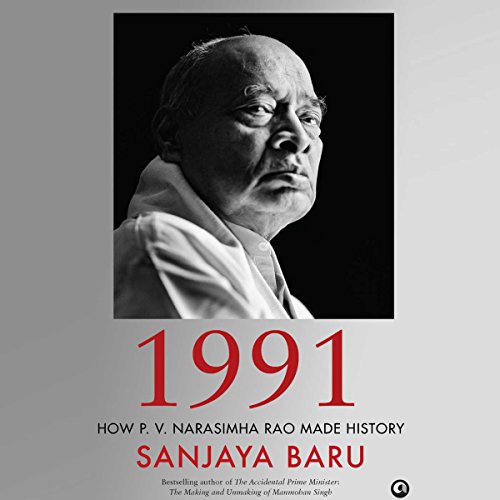
1991
Summary
P. V. Narasimha Rao (or PV, as he was popularly known) has been widely praised for enabling the economic reforms that transformed the country in 1991. From the vantage point of his long personal and professional association with the former prime minister, best-selling author Sanjaya Baru shows how PV's impact on the nation's fortunes went way beyond the economy. This book is an insider's account of the politics, economics and geopolitics that combined to make 1991 a turning point for India. The period preceding that year was a difficult one for India: economically, due to the balance of payments crisis; politically, with Rajiv Gandhi's politics of opportunism and cynicism taking the country to the brink; and globally, with the collapse of the Soviet Union, its ally. It was in this period that the unheralded PV assumed leadership of the Indian National Congress, took charge of the central government, restored political stability, pushed through significant economic reforms and steered India through the uncharted waters of a post-Cold War world. He also revolutionized national politics, and his own Congress party, by charting a new political course, thereby proving that there could be life beyond the Nehru-Gandhi dynasty. The year 1991 marked the end of an era and the beginning of another. It was the year that made PV. And it was the year PV made history.
©2016 Sanjaya Baru (P)2017 Audible, Inc.

From Here to Security
Summary
The practical, nonpartisan guide to making our retirement savings systems work for America’s people, our economy, and the nation at large At a time of fierce political divisiveness, From Here to Security is a refreshingly balanced, non-ideological guide to solving what may be our nation’s most pressing policy challenge: achieving retirement security for all. A pioneer of the 401(k) system, Robert L. Reynolds eschews radical calls for throwing out the 401(k) entirely and creating a new government-run savings system. Our best course, he shows, is to build on what we have: a flexible, dynamic private-public system of Social Security and more robust workplace savings. From Here to Security provides a clear, powerful new approach to solving America’s retirement challenge - based on facts, data, and Reynolds’ decades of experience. While fear-mongers claim that the U.S. retirement system is on the verge of collapse; Reynolds shows why our system is actually the envy of the world. But From Here to Security is no status quo book. Reynolds lays out an action agenda to dramatically improve our retirement systems – public and private - lift our savings rate, improve people’s retirement prospects, spur faster growth – and reboot America’s national morale.
©2017 Robert L. Reynolds (P)2020 Robert L. Reynolds

Simon Evans Goes to Market: The Complete Series 1-5
Summary
All five series of Simon Evans’ BBC Radio 4 show explaining economics through comedy. How do you make money funny? How do you put the comedy in commodity? In this BBC radio show, Simon Evans sets himself the challenge of making economics entertaining through comedic lectures, with the help of special guests including investment gurus, financial journalists and economists. In series one and two, he examines the chequered social and economic histories of eight important commodities: land, gold, oil, grain, alcohol, tobacco, coffee and sugar. By looking at these fundamental products, Simon brings us to a closer understanding of how global economic forces have a far-reaching and often surprising impact on our lives. Series three sees him exploring four of the stages that mark our journey through life - youth, marriage, birth and death - and how economics is part of every one of those stages, whether we like it or not. In series four, Simon looks at the concept of the ‘free lunch’ and shines a light on new ways of making money in the 21st century, from social media and multinationals that appear to be operating tax-free to philanthropy and the cost of health. Finally, in series five, he points his jokenomics lens at the competing theories of macroeconomics and the ‘Big Beards’ who devised them - Adam Smith, Karl Marx and John Maynard Keynes - and reflects on how they shape our world today, and how they can help us out of our current economic predicament. Among his regular guests are Financial Times columnist and presenter of Radio 4’s More or Less, Tim Harford; Timandra Harkness, author of Big Data: Does Size Matter?; and the queen of investment know-how, editor-in-chief of MoneyWeek Merryn Somerset Webb. Produced by Tilusha Ghelani (series one), Claire Jones (series two and three), Richard Morris (series four and five).
©2019 BBC Worldwide Ltd (P)2019 BBC Studios Distribution Ltd

AIRBNB 2-in-1 Bundle Ultimate Box Set to Airbnb Business
Summary
Discover the secret way to make money on Airbnb - without owning a property! Special two-in-one bundle! Earn passive income on airbnb without owning any property The complete guide to maximizing your bookings and profits! Are you an active Airbnb host, but you're not getting enough bookings? Did you know you can make money on Airbnb without owning a property? Would you like to increase your passive monthly income? If you answered ‘Yes’ on any of those questions, keep reading and find out exactly how to master this platform and start making money, even without owning a property. Airbnb is a business phenomenon and is an incredibly successful platform. The number of people renting their properties is continuously increasing. For you, that can be a good and a bad thing. On the one hand, the rising number of offers means that the demand is also getting bigger so there’s definitely room for you to join this money-making train. On the other hand, it can be hard to stand out amongst that vast Airbnb crowd. This two-in-one books bundle will help you do exactly that - stand out, grab the attention of others, find your place at the market and grab that success that has, until now, been out of reach! This special two-in-one Airbnb Bundle contains: The complete guide to making a profit on Airbnb without owning any property Listing hacks: complete guide to maximizing your bookings and profits Here’s what you’ll discover inside those two books: How Airbnb really works, and the secrets behind the curtain Smart things to do, and know before starting a business How to make money on Airbnb without being a property owner How to get as many reservations as you can by optimizing your listing Techniques for polishing your listing to ensure a higher search rank Tips on setting the price according to the market’s demand How to protect yourself against problematic guests And much, much more! Even though Airbnb has been around for a while now, and the listings are measured in millions, the demand is way higher than the supply. Business experts predict a great future for this platform, with both its users and profits increase in the next couple of years. This bundle does not offer a magical recipe for success. You won’t become a millionaire overnight. But it will give you practical and proven business techniques to ensure you have a great start and out-smart your competition. Interested in making a profit on a world’s leading rental platform? If you are, buy this book bundle NOW and start building your business!
©2020 Alexander Keys (P)2020 Alexander Keys

Ghost Work
Summary
Hidden beneath the surface of the internet, a new, stark reality is looming - one that cuts to the very heart of our endless debates about the impact of AI. Anthropologist Mary L. Gray and computer scientist Siddharth Suri team up to unveil how services delivered by companies like Amazon, Google, Microsoft, and Uber can only function smoothly thanks to the judgment and experience of a vast, invisible human labor force. These people doing "ghost work" make the internet seem smart. They perform high tech, on-demand piecework: flagging X rated content, proofreading, transcribing audio, confirming identities, captioning video, and much more. An estimated 8 percent of Americans have worked at least once in this "ghost economy", and that number is growing. There are no labor laws to govern this kind of work, and these latter-day assembly lines draw in - and all too often overwork and underpay - a surprisingly diverse range of workers: harried young mothers, professionals forced into early retirement, recent grads who can't get a toehold on the traditional employment ladder, and minorities shut out of the jobs they want. Gray and Suri also show how workers, employers, and society at large can ensure that this new kind of work creates opportunity - rather than misery - for those who do it.
©2019 Mary L. Gray and Siddharth Suri (P)2019 HighBridge, a division of Recorded Books

The Rush
Summary
A riveting portrait of the Gold Rush, by the award-winning author of Down the Great Unknown and The Forger's Spell. In the spring of 1848, rumors began to spread that gold had been discovered in a remote spot in the Sacramento Valley. A year later, newspaper headlines declared "Gold Fever!" as hundreds of thousands of men and women borrowed money, quit their jobs, and allowed themselves - for the first time ever - to imagine a future of ease and splendor. In The Rush, Edward Dolnick brilliantly recounts their treacherous westward journeys by wagon and on foot, and takes us to the frenzied gold fields and the rowdy cities that sprang from nothing to jam-packed chaos. With an enthralling cast of characters and scenes of unimaginable wealth and desperate ruin, The Rush is a fascinating - and rollicking - account of the greatest treasure hunt the world has ever seen.
©2014 Edward Dolnick (P)2014 Hachette Audio

Hidden Order
Summary
The book is for listeners who would like to learn economics for the fun of it - economics understood not as the study of the economy but as a tool for understanding human behavior: crime, marriage, politics, and much else. Praise for the book: "The book of the month is Hidden Order: The Economics of Everyday Life. One doesn't normally think of an economics book as light and pleasant reading, but David makes it seem so. If you have any interest in economics at all, you'll find this book both readable and fascinating; and I guarantee you'll learn something from it." (Jerry Pournelle in Byte) “In David Friedman’s hands, economics becomes a sprightly science. Friedman has the rare knack of introducting fundamental principles with humorous examples. [A] dazzling array that runs the gamut from supermarkets to pirate ships. [A] clear picture of how simple assumptions about individual preferences and human rationality can increase our understanding of ordinary market behavior and a wide range of social institutions from marriage, to crime, to voting.” (Richard A. Epstein, The University of Chicago Law School) “Hidden Order helps us look at everyday experience from the perspective of basic economics. Readers will be surprised to learn how much economics explains about their own behavior as well as about that of others...” (James M. Buchanan, Nobel Laureate in Economics, 1986) "The author is a talented teacher, and he moves effortlessly from the traffic jams and grocery stores to the efficient-market hypothesis, price theory, and backward-bending labor curves." (Deborah Stead in The New York Times) “A surprisingly lucid and useful book, and about as appealing as economics gets." (Kirkus Reviews) David Friedman apparently has written the book for the purpose of teaching you something, something which many textbook writers apparently don’t feel the need to take into consideration.” (Garret Wilson, Booknotes interview) PLEASE NOTE: When you purchase this title, the accompanying PDF will be available in your Audible Library along with the audio.
©1996, 2019 David Director Friedman (P)2020 David Director Friedman