The Politics & Government category has 4,793 audiobooks on Listento.it, with an average listener rating of 4.5★ across 40,708 ratings. The most-rated is A Promised Land.

The Brain Defense
Summary
Called "the best kind of nonfiction" by Michael Connelly, this riveting new book combines true crime, brain science, and courtroom drama. In 1991 the police were called to East 72nd St. in Manhattan, where a woman's body had fallen from a 12th-story window. The woman's husband, Herbert Weinstein, soon confessed to having hit and strangled his wife after an argument, then dropping her body out of their apartment window to make it look like a suicide. The 65-year-old Weinstein, a quiet, unassuming retired advertising executive, had no criminal record, no history of violent behavior - not even a short temper. How, then, to explain this horrific act? Journalist Kevin Davis uses the perplexing story of the Weinstein murder to present a riveting, deeply researched exploration of the intersection of neuroscience and criminal justice. Shortly after Weinstein was arrested, an MRI revealed a cyst the size of an orange on his brain's frontal lobe, the part of the brain that governs judgment and impulse control. Weinstein's lawyer seized on that discovery, arguing that the cyst had impaired Weinstein's judgment and that he should not be held criminally responsible for the murder. It was the first case in the United States in which a judge allowed a scan showing a defendant's brain activity to be admitted as evidence to support a claim of innocence. The Weinstein case marked the dawn of a new era in America's courtrooms, raising complex and often troubling questions about how we define responsibility and free will, how we view the purpose of punishment, and how strongly we are willing to bring scientific evidence to bear on moral questions. Davis brings to light not only the intricacies of the Weinstein case but also the broader history linking brain injuries and aberrant behavior, from the bizarre stories of Phineas Gage and Charles Whitman, perpetrator of the 1966 Texas Tower massacre, to the role that brain damage may play in violence carried out by football players and troubled veterans of America's 21st century wars. The Weinstein case opened the door for a novel defense that continues to transform the legal system: Criminal lawyers are increasingly turning to neuroscience and introducing the effects of brain injuries - whether caused by trauma or by tumors, cancer, or drug or alcohol abuse - and arguing that such damage should be considered in determining guilt or innocence, the death penalty or years behind bars. As he takes stock of the past, present and future of neuroscience in the courts, Davis offers a powerful account of its potential and its hazards. Thought-provoking and brilliantly crafted, The Brain Defense marries a murder mystery complete with colorful characters and courtroom drama with a sophisticated discussion of how our legal system has changed - and must continue to change - as we broaden our understanding of the human mind.
©2017 Kevin Davis (P)2017 Penguin Audio

Final Flight Final Fight: My Grandmother, the Wasp, and Arlington National Cemetery
Summary
When Arlington National Cemetery refused to accept my grandmother's last request to be laid to rest there, I refused to let her legacy as a veteran die along with her. My grandmother, Elaine Danforth Harmon, flew as a pilot with the Women Airforce Service Pilots (WASP) of World War II. Despite being part of the first group of women to fly for the United States Army, the WASP remained officially unrecognized as members of the military due to discriminatory thinking about gender on Capitol Hill and beyond. Women flying planes? Too progressive for the World War II era. When I was young, I thought of my grandmother's trips to accept awards, or to visit the White House, or to give lectures about her time in the service, as her hobby. I knew what she had done, and I knew that in the 1970s they had lobbied Congress to get the veterans' status they had been denied during the war. From that point on, my grandmother shared her story of service with the WASP during World War II with anyone who would listen. But it was not until after she died that I fully understood why she had spent so many years talking about her service with the WASP. My grandmother's last request was to be laid to rest at Arlington National Cemetery. Our family was surprised when the United States Army, which managed the cemetery, denied that the WASP, and, therefore, my grandmother, were eligible for placement in the cemetery. The Army said "no" to the wrong family. I led our family's campaign on behalf of my grandmother, and all the women of the WASP, across social media, traditional news outlets, and to Capitol Hill to fight for their equal recognition at one of the nation's most well-known cemeteries. My grandmother's final fight came after her final flight - but I was honored to follow in her footsteps to ensure her legacy would not be forgotten.
©2019 Erin Miller (P)2019 Erin Miller

When Corporations Rule the World
Summary
A handful of corporations and financial institutions command an ever-greater concentration of economic and political power in an assault against markets, democracy, and life. It's a "suicide economy," David Korten says, and it destroys the very foundations of its own existence. The best-selling 1995 edition of When Corporations Rule the World helped launch a global resistance against corporate domination. In this 20th-anniversary edition, Korten shares insights from his personal experience as a participant in the growing movement for a new economy. A new introduction documents the further concentration of wealth and corporate power since 1995 and explores why our institutions resolutely resist even modest reform. A new conclusion chapter outlines high-leverage opportunities for breakthrough change.
©2015 The Living Economies Forum (P)2015 The Living Economies Forum
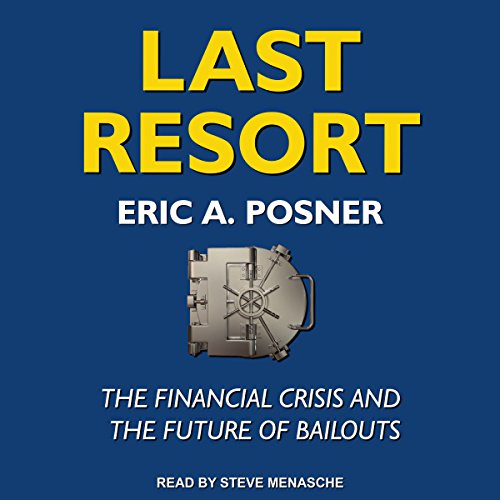
Last Resort
Summary
The bailouts during the recent financial crisis enraged the public. They felt unfair - and counterproductive: people who take risks must be allowed to fail. If we reward firms that make irresponsible investments, costing taxpayers billions of dollars, aren't we encouraging them to continue to act irresponsibly, setting the stage for future crises? And beyond the ethics of it was the question of whether the government even had the authority to bail out failing firms like Bear Stearns and AIG. The answer, according to Eric A. Posner, is no. The federal government freely and frequently violated the law with the bailouts - but it did so in the public interest. An understandable lack of sympathy toward Wall Street has obscured the fact that bailouts have happened throughout economic history and are unavoidable in any modern, market-based economy. And they're actually good. Contrary to popular belief, the financial system cannot operate properly unless the government stands ready to bail out banks and other firms. Taking up the common objections raised by both right and left, Posner argues that future bailouts will occur. Acknowledging that inevitability, we can and must look ahead and carefully assess our policy options before we need them. PLEASE NOTE: When you purchase this title, the accompanying reference material will be available in your Library section along with the audio.
©2018 The University of Chicago (P)2018 Tantor

Soul of a Citizen
Summary
Soul of a Citizen awakens within us the desire and the ability to make our voices heard and our actions count. We can lead lives worthy of our convictions. An audiobook of inspiration and integrity, Soul of a Citizen is an antidote to the twin scourges of modern life - powerlessness and cynicism. In his evocative style, Paul Loeb tells moving stories of ordinary Americans who have found unexpected fulfillment in social involvement. Through their example and Loeb's own wise and powerful lessons, we are compelled to move from passivity to participation. The reward of our action, we learn, is nothing less than a sense of connection and purpose not found in a purely personal life. Soul of a Citizen has become the handbook for budding social activists, veteran organizers, and anybody who wants to make a change - big or small - in the world around them. At this critical historical time, Paul Loeb's completely revised edition - and inspiring message - is more urgently important than ever.
©2010 Paul Rogat Loeb (P)2017 Wetware Media

The RBG Way
Summary
Given her incredible tenure as a Supreme Court justice as well as her monumental impact on the modern women’s rights movement, Ruth Bader Ginsburg has become one of the most prominent political leaders of today. To complement her judicial significance, she has also become one of the most culturally popular political figures in US history. Not only has her workout routine gone viral (and been detailed in a book by her trainer), but RBG’s story has been featured in multiple critically acclaimed films. Organized into three parts and then broken down into more specific chapters within each part, The RBG Way offers wisdom from Justice Ginsburg, based on comments she has made on particular topics of importance. Insight is offered on subjects such as women’s rights, creating lasting partnerships, overcoming hardship, how to be brave, and how to create lasting change. Rebecca Gibian offers her seasoned journalistic perspective to shed light on beliefs that RBG holds strongly, in a manner that is both comprehensive and accessible.
©2019 Dreamscape Media, LLC (P)2019 Dreamscape Media, LLC

The Frugal Superpower
Summary
In this incisive new book, Michael Mandelbaum argues that the era marked by an expansive American foreign policy is coming to an end. During the seven decades from the U.S. entry into World War II in 1941 to the present, economic constraints rarely limited what the United States did in the world. Now that will change. The country's soaring deficits, fueled by the huge costs of the financial crash and of its entitlement programs - Social Security and Medicare - will compel a more modest American international presence. In assessing the consequences of this new, less expensive foreign policy, Mandelbaum, one of America's leading foreign policy experts, describes the policies the United States will have to discontinue; assesses the potential threats from China, Russia, and Iran; and recommends a new policy, centered on a reduction in the nation's dependence on foreign oil, which can do for America and the world in the 21st century what the containment of the Soviet Union did in the 20th.
©2010 Michael Mandelbaum (P)2010 Audible, Inc.

Chasing Shadows
Summary
In 1973, a gunman fired five shots into Colonel Joe Alon, a kind, unassuming Israeli Air Force pilot. As it turned out, Alon wasn't just a pilot and family man - he was a high-ranking Israeli military official and hero of the Israeli Air Force. The assassin was never found, and the case was closed. As a counterterrorism special agent, Fred Burton reopened the case and pursued the killer.
From swirling dogfights over Egypt and Hanoi to gun battles on the streets of Beirut, this action-packed history spans the globe and several fraught decades in our history. Chasing Shadows spins a gripping tale of agents, double agents, terrorists, and heroes as Burton chases leads around the globe in an effort to solve this decades-old murder.
©2011 Fred Burton (P)2011 Dreamscape Media, LLC
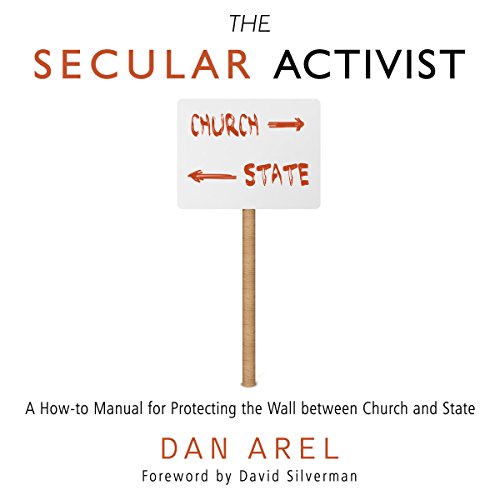
The Secular Activist
Summary
Are you interested in preserving the constitutional principle of church-state separation? Do you think a secular system is the only way to ensure freedom of religion and conscience for all? Do you want creationism out of classrooms, religious dogma out of health care, sectarian prayers out of government meetings, and taxpayer funding out of "faith-based" initiatives and programs that promote religious indoctrination? Think there's not much you can do about it? If so, as secular writer and activist Dan Arel demonstrates in word and deed, think again. Drawing on his experience in fighting to keep $18 million in taxpayer money out of the construction of the Noah's Ark theme park in Kentucky, Arel makes it clear that the only way to stop the religious right's assault on the wall separating church and state is for each of us to be active and vocal. He offers pragmatic lessons and guidance for protecting secularism, whether by raising awareness on social media, protesting in the public square, or knocking on doors in government corridors. Sharing not only his story but also the stories of other secular activists, he offers an inspirational and forceful call to action. For those who are waiting for others to stand up against antisecular forces, he reminds us that each of us can make an individual difference - and that ultimately we must be the wall separating church and state.
©2016 Dan Arel (P)2016 Pitchstone Publishing

Stitched Up
Summary
Stitched Up delves into the alluring world of fashion to reveal what is behind the clothes we wear. Moving between Karl Lagerfeld and Karl Marx, the book explores consumerism, class, and advertising to reveal the interests which benefit from exploitation. Tansy E. Hoskins dissects fashion’s vampiric relationship with the planet and with our bodies to uncover what makes it so damaging. Why does "size zero" exist, and what is the reality of working life for models? In a critique of the portrayal of race in fashion, the book also examines the global balance of power in the industry. In a compelling conclusion, Stitched Up explores the use of clothing to resist. Can you shock an industry that loves to shock? Is "green fashion" an alternative? Stitched Up provides a unique critical examination of contemporary culture and the distorting priorities of capitalism.
©2014 Tansy Hoskins (P)2018 Tansy Hoskins

Stalin and the Fate of Europe
Summary
In this powerful reassessment of the postwar order in Europe, Norman Naimark suggests that Joseph Stalin was far more open to a settlement on the continent than we have thought. Through revealing case studies from Poland and Yugoslavia to Denmark and Albania, Naimark recasts the early Cold War by focusing on Europeans' fight to determine their future. As nations devastated by war began rebuilding, Soviet intentions loomed large. Stalin's armies controlled most of the eastern half of the continent, and in France and Italy, communist parties were serious political forces. Yet Naimark reveals a surprisingly flexible Stalin, who initially had no intention of dividing Europe. During a window of opportunity from 1945 to 1948, leaders across the political spectrum pushed back against outside pressures. The first frost of Cold War could be felt in the tense patrolling of zones of occupation in Germany, but not until 1948, with the coup in Czechoslovakia and the Berlin Blockade, did the familiar polarization set in. The split did not become irreversible until the formal division of Germany and establishment of NATO in 1949. In illuminating how European leaders deftly managed national interests in the face of dominating powers, Stalin and the Fate of Europe reveals the real potential of an alternative trajectory for the continent.
©2019 Norman M. Naimark (P)2020 Tantor

They Never Let a Crisis Go to Waste
Summary
Why did the left think they could solve the pandemic with burning cities, closed beaches, blue-state budget bailouts, and mail-in ballots nobody asked for? The coronavirus has been a disaster for America, but it’s been an unprecedented opportunity for the left. In They Never Let a Crisis Goes to Waste, Jason Chaffetz delves into progressive efforts to leverage crises to force their priorities into law. Whether the crisis is legitimate, fabricated, or exaggerated, the solution is always the same: more government, less individual freedom, higher spending, higher taxes. He explores how disaster liberalism subjugates individual freedoms to political expediency in times of crisis, and how Republicans need to be ready for next time. Because when we allow government power to become unlimited in a crisis, the crises will become unlimited. Across the board, Democrat leaders exploited the pandemic to achieve their agenda, invoking disaster liberalism to justify unpopular and unconstitutional power grabs. Virginia Governor Ralph Northam signed a gun control bill on April 10 - three weeks into pandemic - because he wouldn’t have to put up with tens of thousands of protestors. Wisconsin Governor Tony Evers announced he was making it a criminal offense to attend church or go to work, only to see his overreach struck down by the state supreme court. Nancy Pelosi rammed through a three-trillion-dollar liberal wish list filled with proposals unrelated to COVID-19, that immediately died in the Senate. If not for the courts and local media, many of the Democrats’ schemes would have successfully been implemented. As it was, many were - and many of the most egregious violations of Americans’ rights were celebrated across the left. In They Never Let a Crisis Go to Waste, Chaffetz uncovers Democrats’ game plan and calls upon all Americans to protect ourselves against future incursions. If we don’t pay attention, the left will use every crisis to implement its radical plan, steadily eroding the freedoms we all hold dear. Only the American people have the power to stop the left’s next power grab, as Chaffetz shows in this powerful, thoroughly researched call to action.
©2021 Jason Chaffetz (P)2021 HarperCollins Publishers

Toward Psychologies of Liberation
Summary
Understanding that the psychological well-being of individuals is inextricably linked to the health of their communities, environments, and cultures, the authors propose a radical interdisciplinary reorientation of psychology to create participatory and dialogical spaces for critical understanding and creative restoration.
©2008, 2021 Springer (P)2021 Cacophony Innovation

Prairie Fire
Summary
Prairie Fire is a guide for Red Counties to survive and thrive during what looks to be another Civil War brewing. Drawing on his experience in Special Forces with counterinsurgency, the author creates a step-by-step road map to making it out alive. Featuring the same gallows humor mixed with real-world examples as Concrete Jungle: A Green Beret's Guide to Urban Survival, Prairie Fire is the spiritual successor made specifically for those in rural areas. Food and water, firearms, security, equipment, planning, and tactics are all covered in depth, along with many other topics.
©2020 Clay Martin (P)2021 Permuted Press

Every Drop of Blood
Summary
A brilliantly conceived and vividly drawn story - Washington, D.C. on the eve of Abraham Lincoln’s historic second inaugural address as the lens through which to understand all the complexities of the Civil War By March 4, 1865, the Civil War had slaughtered more than 700,000 Americans and left intractable wounds on the nation. After a morning of rain-drenched fury, tens of thousands crowded Washington’s Capitol grounds that day to see Abraham Lincoln take the oath for a second term. As the sun emerged, Lincoln rose to give perhaps the greatest inaugural address in American history, stunning the nation by arguing, in a brief 701 words, that both sides had been wrong, and that the war’s unimaginable horrors - every drop of blood spilled - might well have been God’s just verdict on the national sin of slavery. Edward Achorn reveals the nation’s capital on that momentous day - with its mud, sewage, and saloons, its prostitutes, spies, reporters, social-climbing spouses and power-hungry politicians - as a microcosm of all the opposing forces that had driven the country apart. A host of characters, unknown and famous, had converged on Washington - from grievously wounded Union colonel Selden Connor in a Washington hospital and the embarrassingly drunk new vice president, Andrew Johnson, to poet-journalist Walt Whitman; from soldiers’ advocate Clara Barton and African-American leader and Lincoln critic-turned-admirer Frederick Douglass (who called the speech “a sacred effort”) to conflicted actor John Wilkes Booth - all swirling around the complex figure of Lincoln. In indelible scenes, Achorn vividly captures the frenzy in the nation’s capital at this crucial moment in America’s history and the tension-filled hope and despair afflicting the country as a whole, soon to be heightened by Lincoln's assassination. His story offers new understanding of our great national crisis, and echoes down the decades to resonate in our own time. PLEASE NOTE: When you purchase this title, the accompanying PDF will be available in your Audible Library along with the audio.
©2020 by Edward Achorn. Recorded by arrangement with Atlantic Monthly Press, an imprint of Grove Atlantic, Inc. (P)2020 Audible, Inc.

Island Stories
Summary
This history of Britain set in a global context for our times offers a new perspective on how the rise and fall of an empire shaped modern European politics. When the British voted to leave the European Union in 2016, the country's future was thrown into doubt. So, too, was its past. The story of British history is no longer a triumphalist narrative of expanding global empire, nor one of ever-closer integration with Europe. What is it now? In Island Stories, historian David Reynolds offers a multi-faceted new account of the last millennium to make sense of Britain's turbulent present. With sharp analysis and vivid human detail, he examines how fears of decline have shaped national identity, probes Britain's changing relations with Europe, considers the creation and erosion of the "United Kingdom", and reassesses the rise and fall of the British Empire. Island Stories is essential listening for anyone interested in global history and politics in the era of Brexit.
©2020 David Reynolds (P)2020 Basic Books

Tacky's Revolt
Summary
In the second half of the 18th century, as European imperial conflicts extended the domain of capitalist agriculture, warring African factions fed their captives to the transatlantic slave trade while masters struggled continuously to keep their restive slaves under the yoke. In this contentious atmosphere, a movement of enslaved West Africans in Jamaica (then called Coromantees) organized to throw off that yoke by violence. Their uprising - which became known as Tacky's Revolt - featured a style of fighting increasingly familiar today: scattered militias opposing great powers, with fighters hard to distinguish from noncombatants. It was also part of a more extended borderless conflict that spread from Africa to the Americas and across the island. Even after it was put down, the insurgency rumbled throughout the British Empire at a time when slavery seemed the dependable bedrock of its dominion. That certitude would never be the same, nor would the views of Black lives, which came to inspire both more fear and more sympathy than before. Tracing the roots, routes, and reverberations of this event across disparate parts of the Atlantic world, Vincent Brown offers us a superb geopolitical thriller.
©2020 Vincent Brown (P)2021 Tantor

The Second Creation
Summary
A stunning revision of our founding document’s evolving history that forces us to confront anew the question that animated the founders so long ago: What is our Constitution? Americans widely believe that the United States Constitution was created when it was drafted in 1787 and ratified in 1788. But in a shrewd rereading of the founding era, Jonathan Gienapp upends this long-held assumption, recovering the unknown story of American constitutional creation in the decade after its adoption - a story with explosive implications for current debates over constitutional originalism and interpretation. When the Constitution first appeared, it was shrouded in uncertainty. Not only was its meaning unclear, but so too was its essential nature. Was the American Constitution a written text, or something else? - Was it a legal text? Was it finished or unfinished? What rules would guide its interpretation? Who would adjudicate competing readings? As political leaders put the Constitution to work, none of these questions had answers. Through vigorous debates they confronted the document’s uncertainty, and - over time - how these leaders imagined the Constitution radically changed. They had begun trying to fix, or resolve, an imperfect document, but they ended up fixing, or cementing, a very particular notion of the Constitution as a distinctively textual and historical artifact circumscribed in space and time. This means that some of the Constitution’s most definitive characteristics, ones which are often treated as innate, were only added later and were thus contingent and optional.
©2018 President and Fellows of Harvard College (P)2019 Post Hypnotic Press Inc.

The Pence Principle
Summary
Mike Pence has a policy. He is never left alone with another woman unless his wife is in attendance. And he doesn’t attend parties where alcohol is being served, without his wife. Our vice president caught a lot of guff for having this somewhat prudish policy. Some even accused him of being a sexist, refusing to be left alone with women. But with the carnage and mayhem that was Brett Kavanaugh's nomination, Vice President Pence’s policy is starting to look very wise, even clairvoyant. And every man in America could stand to learn a lesson or two from our vice president. Be smart. Buy this guide, and learn to practice The Pence Principle. Defend yourself, your career, your family, and your life from the false accusations of women today and in the future.
©2018 Randall Bentwick (P)2018 Randall Bentwick

How Rights Went Wrong
Summary
An eminent constitutional scholar reveals how the explosion of rights is dividing America and shows how we can build a better system of justice. You have the right to remain silent and the right to free speech. The right to worship and to doubt. The right to be free from discrimination and to hate. The right to marry and to divorce; to have children and to terminate a pregnancy. The right to life and the right to own a gun. Rights are a sacred part of American identity. Yet they were an afterthought for the Framers, and early American courts rarely enforced them. Only as a result of the racial strife that exploded during the Civil War - and a series of resulting missteps by the Supreme Court - did rights gain such outsized power. The result is a system of legal absolutism that distorts our law and debases our politics. Over and again, courts have treated rights conflicts as zero-sum games in which awarding rights to one side means denying rights to others. As eminent legal scholar Jamal Greene shows in How Rights Went Wrong, we need to recouple rights with justice - before they tear society apart.
©2021 Jamal Greene (P)2021 by Houghton Mifflin Harcourt Publishing Company