Fleur Edwards has narrated 4 audiobooks on Listento.it by 2 authors, with an average listener rating of 3★ across 1 ratings. The most-rated is Parliament of Rooks.

Parliament of Rooks
Summary
No matter how hard life is, humanity has the power to make it bearable -- or worse. Parliament of Rooks, the new historical paranormal novel in the award-winning Yorkshire Ghosts series, contrasts the beautiful, inspiring village of Haworth today with the slum -- or rookery -- it was during the industrial revolution: rife with disease, heartache, poverty, and child slavery in the mills. In 2017, life expectancy in the UK is 81. In 1848 Haworth, it was 22. Nine-year-old Harry Sutcliff hates working at Rooks Mill and is forever in trouble for running away to the wide empty spaces of the moors -- empty but for the song of the skylark, the antics of the rabbits, and the explorations of Emily Brontë. Bound together by their love of the moors, Emily and Harry develop a lasting friendship, but not everyone is happy about it -- especially Martha, Harry's wife. As Martha's jealous rages grow in ferocity, Harry does not realize the danger he is in. A hundred and fifty years later, this danger also threatens Verity and her new beau, William. Only time will tell if Verity and William have the strength to fight off the ghosts determined to shape their lives, or whether they will succumb to an age-old betrayal. The Yorkshire Ghost Stories are all stand-alone, complete books, and can be listened to in any order.
©2017 Karen Perkins (P)2017 Karen Perkins

Cursed
Summary
Number one best seller horror short stories Number one best seller British and Irish short stories Jennet's here. No one is safe. A skeleton is dug up at the crossing of the ways on Hanging Moor, striking dread into the heart of Old Ma Ramsgill - the elderly matriarch of the village of Thruscross. And with good reason. The 18th-century witch, Jennet, has been woken. A spate of killings by a vicious black dog gives credence to her warnings and the community - in particular her family - realize they are in terrible danger. Drastic measures are needed to contain her, but with the imminent flooding of the valley to create a new reservoir, do they have the ability to stop her and break her curse?
©2014 Karen Perkins (P)2017 Karen Perkins

The Haunting of Thores-Cross
Summary
A haunting historical thriller set in Britain's North Yorkshire Moors about isolation, superstition, and persecution, The Haunting of Thores-Cross explores 18th century life in a picturesque but isolated village in the North Yorkshire Moors. But when a vulnerable young girl is ostracized within her community and accused of witchcraft, the descendants of her neighbors will suffer for centuries to come. Emma Moorcroft is still grieving after a late miscarriage and moves to her dream house at Thruscross Reservoir with her husband, Dave. Both Emma and Dave hope that moving into their new home signifies a fresh start, but life is not that simple. Emma has nightmares about the reservoir and the drowned village that lies beneath the water, and is further disturbed by the sound of church bells - from a church that no longer exists. Jennet is 15 and lives in the isolated community of Thores-Cross, where life revolves about the sheep on which they depend. Following the sudden loss of both her parents, she is seduced by the local wool merchant, Richard Ramsgill. She becomes pregnant and is shunned not only by Ramsgill, but by the entire village. Lonely and embittered, Jennet's problems escalate, leading to tragic consequences which continue to have an effect through the centuries. Emma becomes fixated on Jennet, neglecting herself, her beloved dogs, and her husband to the point where her marriage may not survive. As Jennet and Emma's lives become further entwined, Emma's obsession deepens and she realizes that the curse Jennet inflicted on the Ramsgill family over 200 years ago is still claiming lives. Emma is the only one who can stop Jennet killing again, but will her efforts be enough?
©2014 Karen Perkins (P)2017 Karen Perkins
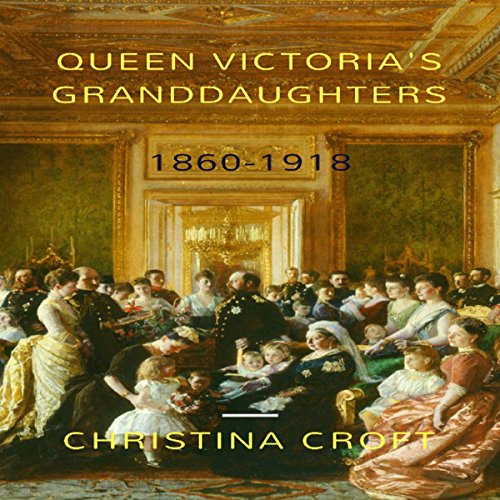
Queen Victoria's Granddaughters: 1860-1918
Summary
On 6 July 1868, when told of the birth of her seventh granddaughter, Queen Victoria remarked that the news was "a very uninteresting thing for it seems to me to go on like the rabbits in Windsor Park". Her apathy was understandable - this was her 14th grandchild, and, though she had given birth to nine children, she had never been fond of babies, viewing them as "frog-like and rather disgusting...particularly when undressed". The early years of her marriage had, she claimed, been ruined by frequent pregnancies, and large families were unnecessary for wealthy people since the children would grow up with nothing worthwhile to do. Nevertheless, her initial reaction to the birth of Princess Victoria of Wales belied the genuine concern that Queen Victoria felt for each of her 22 granddaughters. "As a rule," she wrote, "I like girls best," and she devoted a great deal of time to their well-being and happiness, showering them with affection she had seldom shown her own children. By 1914, through a series of dynastic marriages, the queen's granddaughters included the empress of Russia; the queens of Spain, Greece, and Norway' and the crown princesses of Rumania and Sweden. As their brothers and cousins occupied the thrones of Germany, Britain, and Denmark, Prince Albert's dream of a peaceful Europe created through bonds of kinship seemed a real possibility. Yet in little more than a decade after Queen Victoria's death, the prince consort's dream would lie shattered in the carnage of the First World War. Royal cousins and even siblings would find themselves on opposing sides; two of them would die horrifically at the hands of revolutionaries, and several others would be ousted from their thrones. They had lived through the halcyon days of the European monarchies, but their lives, like the lives of millions of their people, would be changed forever by the catastrophe.
©2013 Christina Croft (P)2017 Christina Croft