Ira Claffey has narrated 8 audiobooks on Listento.it by 8 authors, with an average listener rating of 5★ across 2 ratings. The most-rated is The Rock Rats.

The Rock Rats
Summary
Visionary space industrialist Dan Randolph is dead, but his protege, pilot Pancho Barnes, now sits on the board of his conglomerate. She has her work cut out for her, for Randolph's rival, Martin Humphries, still wants to control Astro and still wants to drive independent asteroid miners like Lars Fuchs out of business. Humphries wants revenge against Pancho, and, most of all, he wants his old flame, Amanda, who has become Lars Fuchs's wife. Before it ends, many will die, and many will achieve more than they ever dreamed was possible.
©2002 Ben Bova (P)2002, 2005 Audio Renaissance, a division of Holtzbrinck Publishers, LLC

Theodore Roosevelt
Summary
The American century opened with the election of that quintessentially American adventurer, Theodore Roosevelt. Louis Auchincloss' biography introduces us to the man behind the many myths of Theodore Roosevelt. From his early involvement in the politics of New York City and then New York State, we trace his celebrated military career and finally his ascent to the national political stage. Caricatured through history as the "bull moose," Roosevelt was in fact a man of extraordinary discipline whose refined and literate tastes actually helped spawn his fascination with the rough-and-ready worlds of war and wilderness. Auchincloss briskly recounts the significant contributions of Roosevelt's career and administration.
©2001 Louis Auchincloss (P)2002 Audio Renaissance, a division of Holtzbrinck Publishers, LLC
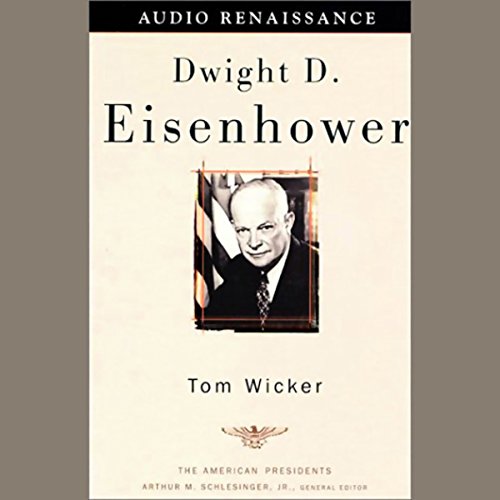
Dwight D. Eisenhower
Summary
A bona-fide American hero at the close of World War II, General Dwight Eisenhower rode an enormous wave of popularity into the Oval Office seven years later. Though we may view the Eisenhower years through a hazy lens of 1950s nostalgia, historians consider his presidency one of the least successful. At home there was civil rights unrest, McCarthyism, and a deteriorating economy; internationally, the Cold War was deepening. But despite his tendency toward "brinksmanship," Ike would later be revered for "keeping the peace." Still, his actions and policies at the onset of his career, covered by Tom Wicker, would haunt Americans of future generations.
©2002 by Tom Wicker (P)2002 by Audio Renaissance, a division of Holtzbrinck Publishers, LLC

James Madison
Summary
The eternal conundrum about James Madison - a key framer of the U.S. Constitution, a formidable political figure, and a man of penetrating analytical intellect and tremendous foresight - is why, when he became chief executive, did he steer the ship of state with such an unsteady hand? Why was this man, whose pre-and post-presidential careers contributed so significantly to the future course of American political history, so lackluster and ineffectual in his tenure as president? In this concise and readable examination of Madison's life and career, Garry Wills outlines the confluence of unfortunate circumstance, misplaced temperament, and outright poor judgment that bogged down Madison's presidency. Though a brilliant theoretician and effective legislator and collaborator, he was not a natural leader of men, and the absence of leadership was keenly felt during wartime. In fact, the War of 1812 was the first foreign war fought under the Constitution, and Madison was forced to adjust many of the assumptions he had made during the drafting of that document. He had to confront hard, practical issues such as public morale, internal security, relations with Congress, and the independence of the military. Though now remembered in part for fleeing the capital as it was under siege, Madison saw his administration come to a close with his popularity on the rise. Madison's later life, neatly traced by Wills, was also of consequence. For two decades after he left office, he remained tightly bound to the political life of the nation, happily playing the role of popular elder statesman, curiously prefiguring so many of our recent presidents.
©2002 Garry Wills (P)2002 Audio Renaissance, a division of Holtzbrinck Publishers, LLC
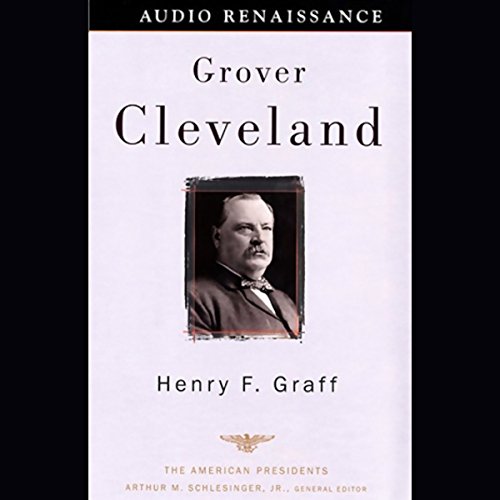
Grover Cleveland
Summary
Though often overlooked, Grover Cleveland was a significant figure in American presidential history. Having run for President three times and gaining the popular vote majority each time, despite losing the electoral college in 1892, Cleveland was unique in the line of nineteenth-century Chief Executives. Presidential historian Henry F. Graff revives Cleveland's fame, explaining how he fought to restore stature to the office in the wake of several weak administrations. The elements of a rags-to-riches story and accounts of the political world that created American leaders before the advent of modern media are also presented here.
©2002 by Henry F. Graff (P)2002 by Audio Renaissance, a division of Holtzbrinck Publishers, LLC
John Quincy Adams
Summary
Robert V. Remini, Professor Emeritus of History and the Humanities at the University of Illinois at Chicago, offers us a fascinating portrait of a brilliant and complex man, and of a truly influential American life. Heavy were the burdens of John Quincy Adams' upbringing. Son of the forbidding John Adams and the domineering Abigail, puritanical New Englanders both, he was driven from the earliest age to a life of faith, observance, and public distinction - a life that was considered to be his birthright, and his obligation. While his natural tendencies were toward a contemplative life filled with art and literature, his path was pre-destined - the law, and then public service. It is no wonder that later, as a grown man, accomplished and admired, he was spoken of as cold and austere, even misanthropic. Adams' career suffered little from his demeanor. A learned and well-traveled intellectual as well as a shrewd negotiator, Adams rose through the diplomatic ranks, eventually serving as a dynamic and influential secretary of state under President James Monroe. In this role, he helped solidify many basic cornerstones of American foreign policy, including the Monroe Doctrine. The greatest triumph of this period was undoubtedly his negotiation of the Transcontinental Treaty, through which Spain acknowledged Florida to be a part of the United States. Eventually, Adams arrived in the White House, chosen by the House of Representatives after an inconclusive election against Andrew Jackson. His administration, however, had less of a long-term impact than much of Adams pre- and post-presidential endeavors. He often failed to mesh with the ethos of his times, pushing unsuccessfully, for example, for a strong, consolidated national government. After leaving office, Adams served nine consecutive terms in the House, earning the nickname "Old Man Eloquent" for his passionate anti-slavery oratory.
©2002 Robert V. Remini (P)2002 Audio Renaissance, a division of Holtbrinck Publishers, LLC.
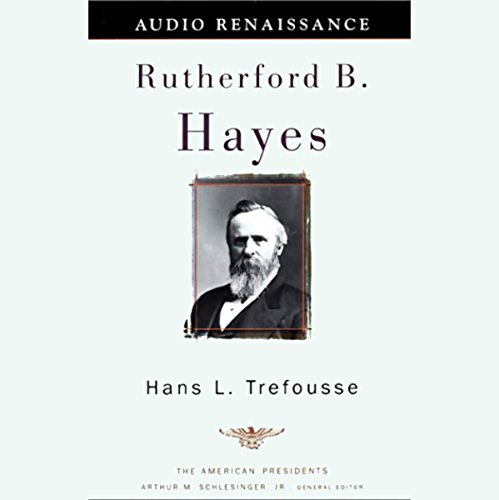
Rutherford B. Hayes
Summary
If Rutherford B. Hayes's significance as chief executive had faded in the public memory, nothing brought it back into our consciousness more than the similarities between the controversial elections of 1876 and 2000. In 1876, Hayes's opponent, Samuel Tilden, won the popular vote and led the Electoral College, but the returns in several states were in dispute. A special electoral commission convened and handed the presidency to Hayes. Newspapers of the time cried of "the iniquity in Florida." Yet this cry of foul was only one of several obstacles facing the new president. After years of Grant-era corruption, the Republican Party looked to the earnest and upright Hayes to revitalize their flagging and scandalized party. As the volume of protest over election results increased, the Southern Democrats threatened to oust Hayes, and so he was forced to conciliate. To the dismay of the more conservative Republicans, he struck a deal to end military occupation of the South, thus ending the Reconstruction. In retrospect, as historian Hans L. Trefousse points out, it was this decision that helped unify the country and which restored legitimacy to the Oval Office. As chief executive, Hayes's accomplishments were mixed. His conservative financial policies helped lift the country's economic depression, and he was able to reform the civil service and quell the 1877 labor uprising. But many of his well-intentioned goals, such as a bill that would help fund education for black children, were never realized, and many contemporary historians fault him for his lack of action on these fronts. Rather than pursue a second term, Hayes decided to retire, maintaining his reputation for temperance, authority, and stability. Ultimately, it was Hayes's ability to compromise in order to help revitalize a floundering and factionalized nation that serves as his real legacy.
©2002 Hans L. Trefousse (P)2003 Audio Renaissance, a division of Holtzbrinck Publishers, LLC

Jacob's Ladder
Summary
With the vivid canvas of the Civil War as a backdrop, Donald McCaig conjures a passionate and richly textured story set in the heart of America's greatest and most devastating time. On Gatewood Plantation, both blacks and whites fulfill their unforgettable destinies. Duncan Gatewood, falls in love with Maggie, a mulatto slave, who gives birth to their son, Jacob. Duncan's irate father sells Maggie and Jacob and sends Duncan to the Virginia Military Institute. From the interlocked lives of masters and slaves, and a wealth of historical detail, Jacob's Ladder examines the loves, letters, and struggles of the characters, and leads to the nightmare of the lurid anguish of the battlefields.
©1998 Donald McCaig (P)1998 Audio Renaissance Tapes