James K. White has narrated 5 audiobooks on Listento.it by 5 authors. The most-rated is Thirteen Loops.

22 Short Scifi Stories
Summary
"It was hot and muggy inside the desalinization plant. The building was drenched in sunshine, but enclosed, allowing no wind." This is a collection of 22 Sci-Fi stories. Enjoy tales of time travel, dystopian futures, apocalypse, aliens, genetic engineering, and much more.
©2014 Angela Cavanaugh (P)2014 Angela Cavanaugh

One Nation Divided by Slavery
Summary
In the two decades before the Civil War, free Americans engaged in history wars every bit as ferocious as those waged today over the proposed National History Standards or the commemoration at the Smithsonian Institution of the atomic bombing of Hiroshima. In One Nation Divided by Slavery, author Michael F. Conlin investigates the different ways antebellum Americans celebrated civic holidays, read the Declaration of Independence, and commemorated Revolutionary War battles, revealing much about their contrasting views of American nationalism. While antebellum Americans agreed on many elements of national identity in particular that their republic was the special abode of liberty on earth, they disagreed on the role of slavery. The historic truths that many of the founders were slaveholders who had doubts about the morality of slavery, and that all 13 original states practiced slavery to some extent in 1776, offered plenty of ambiguity for Americans to remember selectively. Fire-Eaters defended Jefferson, Washington, and other leading patriots as paternalistic slaveholders, if not positive good apologists for the institution, who founded a slaveholding republic. In contrast, abolitionists cited the same slaveholders as opponents of bondage, who took steps to end slavery and establish a free republic. Moderates in the North and the South took solace in the fact that the North had managed to end slavery in its own way through gradual emancipation while allowing the South to continue to practice slavery. They believed that the founders had established a nation that balanced free and slave labor. Because the American Revolution and the American Civil War were pivotal and crucial elements in shaping the United States, the intertwined themes in One Nation Divided By Slavery provide a new lens through which to view American history and national identity. The book is published by The Kent State University Press.
©2015 The Kent State University Press (P)2016 Redwood Audiobooks

Winter's Fire
Summary
Ex-Army sniper Sam Winter is home from the war. But it wasn't an act of heroism that got him medically discharged. After his team found out he was gay, they beat him so severely he was forced to retire. Now, at his family's horse farm in Kentucky, Sam faces not only an uncertain future, but his father's condemnation and prejudice, as well. The one thing he is certain about are his feelings for his best friend, Cooper Brown, who Sam has secretly been attracted to since high school. For years, Cooper has harbored his own secret attraction for Sam. But when Sam left to join the Army, Coop never got the chance to tell Sam how he felt. Now that Sam is home, Coop doesn't intend to make the same mistake twice. When Coop and Sam finally reveal their secrets to one another, the bonds of friendship expand in ways neither thought possible. As his relationship with Coop grows stronger, Sam feels he is finally on course, especially when he discovers a new career path. But when an infernal stable fire threatens the family business, shocking, long-hidden truths will be forced into the light, changing Sam's life forever.
©2014 Donya Lynne (P)2017 Donya Lynne
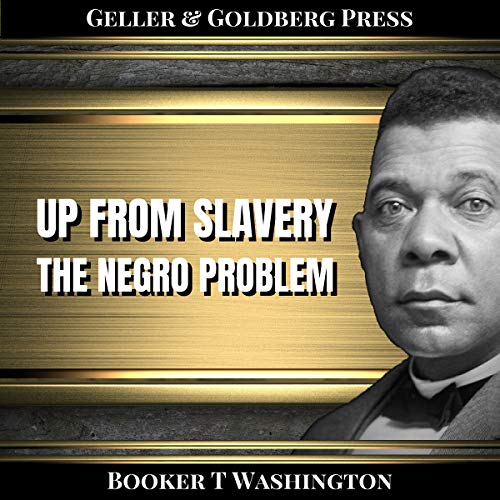
Up from Slavery & The Negro Problem (Annotated)
Summary
Booker T. Washington was born a slave on a Virginia farm in 1856 and died November 14, 1915. Even though Booker was born a slave, he went on to become one of the most influential African American intellectuals of the 19th century. Booker was many things, and among them, he was an orator, author, teacher, and advisor to presidents Theodore Roosevelt and William Howard Taft. Between the years 1890 and 1915, Booker was the controlling leader in the African American community.
©2018 Geller & Goldberg Press (P)2018 Geller & Goldberg Press

Thirteen Loops
Summary
Thirteen Loops: Race, Violence, and the Last Lynching in America recounts the story of three innocent victims, all of whom suffered violent deaths through no fault of their own: Vaudine Maddox in 1933 in Tuscaloosa, Sergeant Gene Ballard in 1979 in Birmingham, and Michael Donald in 1981 in Mobile. The death of Vaudine Maddox - and the lynchings that followed - serves as a cautionary tale about the violence that occurred in the same region nearly 50 years later, highlighting the cowardice, ignorance, and happenstance that sustained a culture of racial intolerance far into the future. Nearly half a century later, after a black bank robber was acquitted for the murder of police sergeant Gene Ballard, two Klansmen took it upon themselves to exact revenge on an innocent victim - 19-year-old African American Michael Donald. Donald's murder - deemed the last lynching in America - reignited the race debate in America and culminated in a courtroom drama in which the United Klans of America were at long last put on trial. A work of literary journalism, Thirteen Loops draws upon rarely examined primary sources, court documents, newspaper reports, and firsthand accounts in an effort to unravel the twisted tale of a pair of interconnected murders that forever altered United States' race relations.
©2011 B. J. Hollars (P)2016 Redwood Audiobooks