John Lee has narrated 329 audiobooks on Listento.it by 240 authors, with an average listener rating of 4.6★ across 25,868 ratings. The most-rated is Harry Potter and the Deathly Hallows, Book 7.
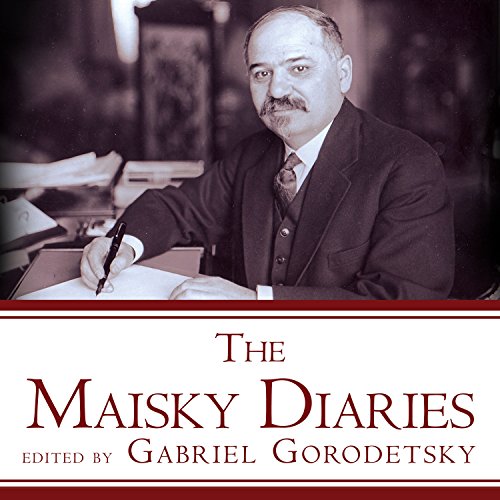
The Maisky Diaries
Summary
The terror and purges of Stalin's Russia in the 1930s discouraged Soviet officials from leaving documentary records, let alone keeping personal diaries. A remarkable exception is the unique diary assiduously kept by Ivan Maisky, the Soviet ambassador to London between 1932 and 1943. This selection from Maisky's diary grippingly documents Britain's drift to war during the 1930s, appeasement in the Munich era, negotiations leading to the signature of the Ribbentrop-Molotov Pact, Churchill's rise to power, the German invasion of Russia, and the intense debate over the opening of the second front. Maisky was distinguished by his great sociability and access to the key players in British public life. Among his range of regular contacts were politicians, press barons, ambassadors, intellectuals, writers, and indeed royalty. His diary further reveals the role personal rivalries within the Kremlin played in the formulation of Soviet policy at the time. Scrupulously edited and checked against a vast range of Russian and Western archival evidence, this extraordinary narrative diary offers a fascinating revision of the events surrounding the Second World War.
©2015 Gabriel Gorodetsky (P)2015 Tantor

The Lineup
Summary
A great recurring character in a series you love becomes an old friend. You learn about their strange quirks and their haunted pasts and root for them every time they face danger. But where do some of the most fascinating sleuths in the mystery and thriller world really come from? What was the real-life location that inspired Michael Connelly to make Harry Bosch a Vietnam vet tunnel rat? Why is Lee Child's Jack Reacher a drifter? How did a brief encounter in Botswana inspire Alexander McCall Smith to create Precious Ramotswe? In The Lineup, some of the top mystery writers in the world tell about the genesis of their most beloved characters - or, in some cases, let their creations do the talking.
©2009 Otto Penzler (P)2010 Tantor

Headstone
Summary
Acclaimed Irish crime writer Ken Bruen has won numerous awards for his hard-charging, dark thrillers, which have been translated into ten languages. In Headstone, an elderly priest is nearly beaten to death and a special-needs boy is brutally attacked. Evil has many guises and Jack Taylor has encountered most of them, and has the scars to prove it. But nothing before has ever truly terrified him until he confronts an evil coterie named Headstone, who have committed a series of random, insane, violent crimes in Galway, Ireland that leave even the national police shaken. And Jack is especially vulnerable now that he has finally found love and happiness. Jack, slowly accepting the sheer power of Headstone, comes to realize that in order to fight back he must relinquish the remaining shreds of what has made him human. Headstone barrels along its deadly path right to the center of his life and the heart of Galway. In a moment of awful clarity, Jack realizes that not only might he be powerless to stop Headstone; he may not have the grit needed to even face it. A terrific read from a writer called "a Celtic Dashiell Hammett", Headstone is an excellent addition to the Jack Taylor series.
©2011 Original material © 2011 Ken Bruen. Recorded by arrangement with Mysterious Press, an imprint of Grove/Atlantic, Inc. (P)2011 (p) 2011 HighBridge Company

Paul McCartney
Summary
The best-selling author of Catch a Wave: The Rise, Fall and Redemption of the Beach Boys' Brian Wilson now presents an in-depth biography of the legendary musician and icon Paul McCartney, exploring his impact on music and culture, his personal triumphs and defeats, and his post-Beatles relationships with John Lennon, George Harrison, and Ringo Starr. The book explores McCartney through the perspective of his lyrics, spanning his career from his years with the Beatles to his solo albums today.The composer of "Yesterday", "Hey Jude", "Eleanor Rigby", and "Let It Be", Paul McCartney is one of the most famous men in the world, yet one of the most elusive. An international superstar for more than 40 years, he has not only sold hundreds of millions of records but has also altered the course of popular culture. He has been worshiped and ridiculed, his work revered and reviled. Governments have celebrated him, persecuted him, thrown him in prison, and knighted him.More than a rock star, more than a celebrity, McCartney is a cultural touchstone. Yet no book has revealed the headwaters of his genius or, for that matter, explained why the Beatles' talented and adventurous musician seemed to abandon his position as an innovator, trading the daring of Sgt. Pepper's Lonely Hearts Club Band for an endless procession of what even he has called silly love songs. But McCartney never lost the spark of genius. And at any given moment, McCartney can reach into himself and pull out something phenomenal.Drawing on years of research, Paul McCartney: A Life spans McCartney's roots in England's working class to his life in the present day, performing around the world and working for causes he believes in. Informed by new, exclusive interviews with friends, bandmates, and collaborators, the book describes McCartney's many triumphs as well as his failures, from the Beatles era through his decade with Wings and his subsequent solo career.
©2009 Peter Ames Carlin (P)2009 Tantor Media

A Matter of Honor
Summary
Featuring a bonus interview with author Jeffrey Archer A disgraced British colonel bequeaths a mysterious letter to his only son. The moment Adam Scott opens the yellowing envelope, he sets into motion a deadly chain of events. Within days he's running for his life, pursued by the KGB, the CIA, and his own countrymen. Powerful men plot his destruction, and Adam is betrayed and abandoned even by those he holds most dear. When he finally realizes what he possesses, he's even more determined to protect it, for it's more than a matter of life and death - it's a matter of honor.
©1986 Jeffrey Archer (P)2014 Macmillan Audio

Flight of Dreams
Summary
With everyone onboard harboring dark secrets and at least one person determined to make sure the airship doesn't make the return trip, Flight of Dreams gives an utterly suspenseful, heart-wrenching explanation for one of the most enduring mysteries of the 20th century. On the evening of May 3, 1937, Emilie Imhof boards the Hindenburg. As the only female crew member, Emilie has access to the entire airship, from the lavish dining rooms and passenger suites to the gritty engine cars and control room. She hears everything, but with rumors circulating about bomb threats, Emilie's focus is on maintaining a professional air...and keeping her own plans under wraps. What Emilie can't see is that everyone - from the dynamic vaudeville acrobat to the high-standing German officer - seems to be hiding something. Giving free rein to countless theories of sabotage, charade, and mishap, Flight of Dreams takes us on the thrilling three-day transatlantic flight through the alternating perspectives of Emilie; Max, the ship's navigator, who is sweet on her; Gertrud, a bold female journalist who's been blacklisted in her native Germany; Werner, a 13-year-old cabin boy with a bad habit of sneaking up on people; and a brash American who's never without a drink in his hand. Everyone knows more than they initially let on, and as the novel moves inexorably toward its tragic climax, the question of which of the passengers will survive the trip infuses every scene with a deliciously unbearable tension. With enthralling atmospheric details that immediately transport and spellbinding plotting that would make Agatha Christie proud, Flight of Dreams will keep you guessing till the last minute. And, as The New York Times Book Review said of her last novel, "This book is more meticulously choreographed than a chorus line. It all pays off".
©2016 Ariel Lawhon (P)2016 Random House Audio

SPQR IX: The Princess and the Pirates
Summary
As I walked back through the City, my mood was moderately elevated. This appointment did not displease me nearly as much as I pretended. Like most Romans I abhorred the very thought of sea duty, but this was one of the rare occasions when I was looking forward to getting away from Rome...For years I had complained of the disorder of the City, and now that it was gone, I found that I missed it. All the peace and quiet seemed unnatural. I did not expect it to last.- Decius Caecilius Metellus the Younger in SPQR IX: The Princess and the Pirates. His two years of aedileship over, Decius is ready for his next adventure. He would rather do anything than join the war with Caesar in the dismal forests of Gaul, so he and his slave/protg Hermes find themselves on a mission to rid the Mediterranean of pirates. They set off with shoddy ships and sailors to the island of Cyprus, where a young Cleopatra is staying. Between her impressive crew and the ex-pirate Ariston providing insider knowledge of that cutthroat occupation, Decius thinks he stands a good chance of bringing himself some glory. That would be too simple, though. The ruler of the island, Silvanus, is murdered in a most peculiar fashion and Decius, as a guest in his home, has a sacred duty to find and punish the guilty party. Because world relations are already strained, he would rather not suspect Cleopatra, heir to the Egyptian throne. But she has plenty of reasons to hate Rome and murder runs in her family. Another guest and suspect is Gabinius, who is in exile and could have easily given up loyalty toward his friend if it meant a quicker return to Rome. In the meantime, Decius is being humiliated in his pirate hunt, and as if this weren't enough, Aphrodite herself seeks Decius's help by appearing to him in a dream vision. As Decius investigates world trade, the island history, and the new kind of piracy plaguing the waters, he is finding connections more menacing than he had ever imagined possible. In this ninth book in the series, Roberts crafts another skillful mystery, this time fervently pulsing with the collision of Roman, Greek, and Egyptian interests.
©2005 John Maddox Roberts (P)2013 Audible, Inc.

The Trinity Six
Summary
The most closely guarded secret of the Cold War is about to be exposed – the identity of a SIXTH member of the infamous Cambridge spy ring. And people are killing for it.... London, 1992. Late one night, Edward Crane, 76, is declared dead at a London hospital. An obituary describes him only as a 'resourceful career diplomat'. But Crane was much more than that – and the circumstances surrounding his death are far from what they seem. Fifteen years later, academic Sam Gaddis needs money. When a journalist friend asks for his help researching a possible sixth member of the notorious Trinity spy ring, Gaddis knows that she's onto a story that could turn his fortunes around. But within hours the journalist is dead, apparently from a heart attack. Taking over her investigation, Gaddis trails a man who claims to know the truth about Edward Crane. Europe still echoes with decades of deadly disinformation on both sides of the Iron Curtain. And as Gaddis follows a series of leads across the continent, he approaches a shocking revelation – one which will rock the foundations of politics from London to Moscow.
©2011 Charles Cumming (P)2011 Macmillan

The Nightwalker
Summary
US expatriate Bobby Ives is an aimless Vietnam veteran living in London with his girlfriend. The extremely volatile Ives is obsessed with two strange events in his past: the fact that he was declared dead in Vietnam via administrative error, and the time he experienced a vivid waking dream in which he became a zombie. Ives finds himself becoming more susceptible to uncontrolled rage; he also experiences quasi-fugue states where he lets that rage overwhelm him. In the midst of such a fugue state, he's capable of great violence. His girlfriend dies as the result of one of his rages; other victims soon follow. At first, he perversely revels in the changes that have occurred. Then, realizing that he is swiftly losing control, he seeks help from a clairvoyant who seems to have insight into his condition. She initially refuses, and his rampages continue. Eventually, she relents, and tries to help him by imprisoning him. Her efforts prove unsuccessful, as he escapes confinement, forcing her to take more drastic action.
©2008 Thomas Tessier (P)2012 Audio Realms

Sailing the Wine-Dark Sea
Summary
Best selling history writer Thomas Cahill continues his series on the roots of Western civilization with this volume about the contributions of ancient Greece to the development of contemporary culture. Tracing the origin of Greek culture in the migrations of armed Indo-European horsemen into Attica and the Peloponnesian peninsula, he follows their progress into the creation of the Greek city-states, the refinement of their machinery of war, and the flowering of intellectual and artistic culture. Cahill credits the Greeks with creating Western militarism, shaping Christianity, and giving us the intellectual foundations on which we base everything from dictionaries to filing systems. Cahill ably demonstrates the fascinating uniqueness of ancient Greek culture, but also shows its startling reincarnations in contemporary contexts.
©2003 Thomas Cahill (P)2003 Books on Tape, Inc.

Mysteries of the Middle Ages
Summary
After the long period of cultural decline known as the Dark Ages, Europe experienced a rebirth of scholarship, art, literature, philosophy, and science and began to develop a vision of Western society that remains at the heart of Western civilization today. By placing the image of the Virgin Mary at the center of their churches and their lives, medieval people exalted womanhood to a level unknown in any previous society. For the first time, men began to treat women with dignity and women took up professions that had always been closed to them. The communion bread, believed to be the body of Jesus, encouraged the formulation of new questions in philosophy: Could reality be so fluid that one substance could be transformed into another? Could ordinary bread become a holy reality? Could mud become gold, as the alchemists believed? These new questions pushed the minds of medieval thinkers toward what would become modern science. Artists began to ask themselves similar questions. How can we depict human anatomy so that it looks real to the viewer? How can we depict motion in a composition that never moves? How can two dimensions appear to be three? Medieval artists (and writers, too) invented the Western tradition of realism. On visits to the great cities of Europe - monumental Rome; the intellectually explosive Paris of Peter Abelard and Thomas Aquinas; the hotbed of scientific study that was Oxford; and the incomparable Florence of Dante and Giotto - Cahill brilliantly captures the spirit of experimentation, the colorful pageantry, and the passionate pursuit of knowledge that built the foundations for the modern world.
©2006 Thomas Cahill (P)2006 Books on Tape

Scotsman of My Dreams
Summary
In New York Times best-selling author Karen Ranney's second novel in her breathtaking series, an unconventional woman and a former scoundrel embark on a daring mission of desire. Once the ton's most notorious rake, Dalton MacIain has returned from his expedition to America during the Civil War - wounded and a changed man. Instead of returning to his old haunts, he now spends his time at home. But Dalton's peace is disturbed when Minerva Todd barges into his London townhouse, insisting he help search for her missing brother, Neville. Though Dalton would love to spend more time with the bewitching beauty, he has no interest in finding Neville, whom he blames for his injury. Minerva has never met a more infuriating man than the earl of Rathsmere, yet she is intrigued by the torrid rumors she has heard about him...and the fierce attraction pulling her toward him. Dalton does not count on Minerva's persistence or the desire she awakens in him, compelling him to discover her brother's fate. But when danger surrounds them, Dalton fears he will lose the tantalizing, thoroughly unpredictable woman he has come to love.
©2015 Karen Ranney LLC (P)2015 HarperCollins Publishers

The Red Keep
Summary
In the country of Burgundy, the Sauval brothers have begun to terrorize the surrounding lands in an attempt to bring the area under their control. They raid the Red Keep, in hope of gaining it for themselves, only to be thwarted by Sir Roger and young Conan. Now they plot anew to steal the Keep from its rightful owner, Lady Anne. She, with Conan and her loyal followers, sets out to bring justice upon the evil brothers. An action-filled tale with the authentic flavor of the 12th century, by the author of The Story of Rolf and the Viking Bow and The Lost Baron. Cover art by N.C. Wyeth.
©1967 Ellen Spalt (P)2017 Bethlehem Books

The Rivals of Sherlock Holmes
Summary
This masterful collection of 17 classic mystery stories, dating from 1837 to 1914, traces the earliest history of popular detective fiction. Today, the figure of Sherlock Holmes towers over detective fiction like a colossus - but it was not always so. Edgar Allan Poe’s French detective Dupin, the hero of “The Murders in the Rue Morgue”, preceded Holmes’s deductive reasoning by more than 40 years with his “tales of ratiocination.” In A Study in Scarlet, the first of Holmes’ adventures, Doyle acknowledged his debt to Poe - and to Émile Gaboriau, whose thief-turned-detective Monsieur Lecoq debuted in France 20 years earlier. If “Rue Morgue” was the first true detective story in English, the title of the first full-length detective novel is more hotly contested. Two books by Wilkie Collins - The Woman in White (1859) and The Moonstone (1868) - are often given that honor, with the latter showing many of the features that came to identify the genre: a locked-room murder in an English country house; bungling local detectives outmatched by a brilliant amateur detective; a large cast of suspects and a plethora of red herrings; and a final twist before the truth is revealed. Others point to Mary Elizabeth Braddon’s The Trail of the Serpent (1861) or Aurora Floyd (1862), and others still to The Notting Hill Mystery (1862-3) by the pseudonymous “Charles Felix.” As the early years of detective fiction gave way to two separate golden ages - of hard-boiled tales in America and intricately-plotted, so-called “cozy” murders in Britain - the legacy of Sherlock Holmes, with his fierce devotion to science and logic, gave way to street smarts on the one hand and social insight on the other - but even though these new sub-genres went their own ways, their detectives still required the intelligence and clear-sightedness that characterized the earliest works of detective fiction: the trademarks of Sherlock Holmes, and of all the detectives featured here.
©2019 Compilation by Graeme Davis. Introduction © 2019 by Graeme Davis. "The Origins of Sherlock Holmes": © 2019 by Leslie S. Klinger (P)2019 Blackstone Publishing

The Fear and the Freedom
Summary
The Fear and the Freedom is Keith Lowe's follow-up to Savage Continent. While that book painted a picture of Europe in all its horror as World War II was ending, The Fear and the Freedom looks at all that has happened since, focusing on the changes that were brought about because of World War II - simultaneously one of the most catastrophic and most innovative events in history. It killed millions and eradicated empires, while at the same time creating the idea of human rights and giving birth to the UN. It was because of the war that penicillin was first mass-produced, computers were developed, and rockets first sent to the edge of space. The war created new philosophies, new ways of living, new architecture: this was the era of Le Corbusier, Simone de Beauvoir, and Chairman Mao. But amidst the waves of revolution and idealism there were also fears of globalization, a dread of the atom bomb, and an unexpressed longing for a past forever gone. All of these things and more came about as direct consequences of the war and continue to affect the world that we live in today.
©2017 Keith Lowe (P)2018 Tantor

SPQR XII: Oracle of the Dead
Summary
Decius Caecilius Metellus, this year's magistrate for cases involving foreigners, is living the good life in southern Italy, happy to be away from Rome, a city suffering war jitters over Caesar's impending actions. He thinks he is merely visiting one of the local sights when he takes a party to visit the Oracle of the Dead, a pre-Roman cult site located at the end of a tunnel dug beneath a temple of Apollo. He quickly learns that there is a bitter rivalry between the priests of Apollo and those of Hecate, who guard the oracle. When the priests of Apollo are all killed, the countryside looks to explode in violence as Greeks, Romans, and native Italians of several conquered nations bring out old enmities. Decius is caught squarely in the middle, desperate to find a way out that will pacify the district and, incidentally, save his own skin.
©2008 John Maddox Roberts (P)2013 Audible, Inc.

Red Hugh, Prince of Donegal
Summary
Here's another one of those "They could make it into a movie!" books that keeps you always wanting to hear just one more chapter. Red Hugh was a true champion for Irish liberty from Queen Elizabeth's constricting reign in the late 1580's and beyond. Hugh's capture, imprisonment, and escape from the Dublin Castle; his triumph over a blizzard and frostbite; his dramatic rescue of his family's castle; his conflict with the evil Captain Leeds; and his inexhaustible love for Ireland make this a wonderful book for the entire family. You learn an astonishing amount of Irish geography and culture while relishing this true adventure, as well.
©1985 Robert T. Reilly (P)2016 Bethlehem Books

Animals
Summary
Wild Things... They've been with us forever - prowling the smoky roadhouse dives that are their watering holes and hunting grounds. Predators, lurking amidst the human herd. Changing shape at will. Lusting for blood and meat they are gods in the wild. Gods in disguise. And they feed on the spark inside each of us. Syd was just another lonely working class guy singing the steel-town blues. Then he met Nora. She's sensual, Erotic. Amoral. A creature of the night and she's luring Syd across the line that few can cross - and fewer survive: the line that separates man from beast. This will be a Crossroad Press production.
©1993 John Skipp & Craig Spector (P)2012 David N. Wilson

Even
Summary
David Trevellyan, a Royal Navy intelligence operative, takes a late-night walk to his New York City hotel. A huddled shape in an alley catches his eye - a homeless man has been shot to death. Trevellyan steps forward and a cop car arrives. A split second too late, Trevellyan realizes he's been set up. Obliged to clear his name, and with no idea who's a friend and who's a foe, he penetrates deep into a huge international conspiracy. The price of failure will be death, and the reward for success will be redemption, both for himself and the huddled corpse from the alley.
©2009 Andrew Grant (P)2009 Blackstone Audio, Inc.

Mystery Writers of America Presents
Summary
From the Civil War-era south, to 1950's New York, to the present day's gritty cities and seemingly innocuous suburbs, the 18 stories in this anthology, edited by the award-winning mystery writer Harlan Coben, chart the complications - always surprising, sometimes deadly - that arise between lovers, dear friends, and even complete strangers coming together for a single, shocking encounter. In Lee Child's "Safe Enough", a blue-collar city boy takes up with a wealthy suburban wife, with dire consequences. In Harlan Coben's "Entrapped", a woman's husband disappears and is replaced by a handsome impostor. In Laura Lippman's "One True Love", a high-end prostitute seeks a radical solution to a public relations problem. Finally, in P. J. Parrish's "One Shot", a man returns to his childhood home to learn the truth about a long-ago tragedy. Other contributors of original stories include Ridley Pearson, R. L. Stine, Jim Fusilli, Jeff Abbott, Charles Todd, and Tom Savage.
©2006 Mystery Writers of America, Inc. (P)2008 Tantor