Robertson Dean has narrated 197 audiobooks on Listento.it by 213 authors, with an average listener rating of 4.6★ across 3,310 ratings. The most-rated is Dark Places.

Dark Places
Summary
Libby Day was seven when her mother and two sisters were murdered in "The Satan Sacrifice of Kinnakee, Kansas". As her family lay dying, little Libby fled their tiny farmhouse into the freezing January snow. She lost some fingers and toes, but she survived, and famously testified that her 15-year-old brother, Ben, was the killer. Twenty-five years later, Ben sits in prison, and troubled Libby lives off the dregs of a trust created by well-wishers who've long forgotten her. The Kill Club is a macabre secret society obsessed with notorious crimes. When they locate Libby and pump her for details, proof they hope may free Ben, Libby hatches a plan to profit off her tragic history. For a fee, she'll reconnect with the players from that night and report her findings to the club...and maybe she'll admit her testimony wasn't so solid after all. As Libby's search takes her from shabby Missouri strip clubs to abandoned Oklahoma tourist towns, the narrative flashes back to January 2, 1985. The events of that day are relayed through the eyes of Libby's doomed family members, including Ben, a loner whose rage over his shiftless father and their failing farm have driven him into a disturbing friendship with the new girl in town. Piece by piece, the unimaginable truth emerges, and Libby finds herself right back where she started...on the run from a killer.
©2009 Gillian Flynn (P)2009 Random House

The Stone Sky
Summary
This is the way the world ends...for the last time. The Moon will soon return. Whether this heralds the destruction of humankind or something worse will depend on two women. Essun has inherited the power of Alabaster Tenring. With it, she hopes to find her daughter, Nassun, and forge a world in which every orogene child can grow up safe. For Nassun, her mother's mastery of the Obelisk Gate comes too late. She has seen the evil of the world and accepted what her mother will not admit: that sometimes what is corrupt cannot be cleansed, only destroyed. The remarkable conclusion to the postapocalyptic and highly acclaimed trilogy that began with the multiaward-nominated The Fifth Season.
©2017 N. K. Jemisin (P)2017 Hachette Audio

I Am Legend
Summary
In I Am Legend, a plague has decimated the world, and those unfortunate enough to survive are transformed into blood-thirsty creatures of the night. Robert Neville is the last living man on earth. Every other man, woman, and child has become a vampire, and they are all hungry for Neville's blood. By day, he is the hunter, stalking the sleeping undead through the abandoned ruins of civilization. By night, he barricades himself in his home and prays for the dawn. How long can one man survive in a world of vampires?
©1954, 1982 by Richard Matheson (P)2007 Blackstone Audio Inc.
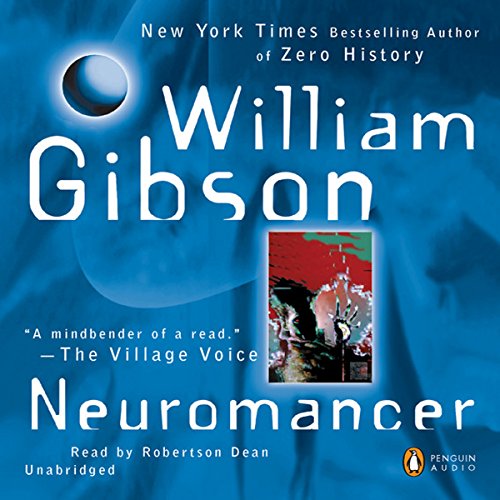
Neuromancer
Summary
Twenty years ago, it was as if someone turned on a light. The future blazed into existence with each deliberate word that William Gibson laid down. The winner of Hugo, Nebula, and Philip K. Dick Awards, Neuromancer didn't just explode onto the science fiction scene - it permeated into the collective consciousness, culture, science, and technology.Today, there is only one science fiction masterpiece to thank for the term "cyberpunk," for easing the way into the information age and Internet society. Neuromancer's virtual reality has become real. And yet, William Gibson's gritty, sophisticated vision still manages to inspire the minds that lead mankind ever further into the future.
©1984 William Gibson (P)2011 Penguin Audio

Discrimination and Disparities
Summary
Discrimination and Disparities challenges believers in such one-factor explanations of economic outcome differences as discrimination, exploitation, or genetics. It is listenable enough for people with no prior knowledge of economics. Yet the empirical evidence with which it backs up its analysis spans the globe and challenges beliefs across the ideological spectrum. The point of Discrimination and Disparities is not to recommend some particular policy "fix" at the end, but to clarify why so many policy fixes have turned out to be counterproductive, and to expose some seemingly invincible fallacies behind many counterproductive policies. The final chapter deals with social visions and their human consequences.
©2018 Thomas Sowell (P)2018 Blackstone Audio, Inc.

Inside Delta Force
Summary
Delta Force—the US Army’s most elite top-secret strike force. They dominate the modern battlefield, but you won’t hear about their heroics on CNN. No headlines can reveal their top-secret missions, and no book has ever taken readers inside—until now. Here, a founding member of Delta Force takes us behind the veil of secrecy and into the action to reveal the never-before-told story of First Special Forces Operational Detachment-D (Delta Force). He is a master of espionage, trained to take on hijackers, terrorists, and enemy armies. He can deploy by parachute or arrive by commercial aircraft, survive alone in hostile cities, speak foreign languages fluently, strike at enemy targets with stunning swiftness and extraordinary teamwork. He is the ultimate modern warrior: the Delta Force operator. In this dramatic chronicle, Eric Haney, one of the founding members of Delta Force, takes us inside this legendary counterterrorist unit. Here, for the first time, are details of the grueling selection process—designed to break the strongest of men—that singles out the best of the best. With heart-stopping immediacy, Haney tells what it’s really like to enter a hostage-held airplane. From his days in Beirut, he tells a remarkable tale of bodyguards and bombs, of a day-to-day life of madness and beauty, and of how he and a teammate are called on to kill two gunmen targeting US Marines at an airport. As part of the team sent to rescue American hostages in Tehran, Haney offers a first-person description of that failed mission that is a chilling, compelling account of a bold maneuver undone by chance—and a few fatal mistakes. From fighting guerrilla warfare in Honduras to rescuing missionaries in Sudan and leading the way onto the island of Grenada, Haney captures the daring and discipline that distinguish the men of Delta Force. Inside Delta Force brings honor to these singular men while it puts us in the middle of around-the-world action that is sudden, frightening, and nonstop.
©2002 Eric L. Haney; Afterword 2005 by Eric L. Haney (P)2011 Blackstone Audio, Inc.

A Higher Call
Summary
Four days before Christmas in 1943, a badly damaged American bomber struggled to fly over wartime Germany. At its controls was a 21-year-old pilot. Half his crew lay wounded or dead. It was their first mission. Suddenly a sleek, dark shape pulled up on the bomber’s tail - a German Messerschmitt fighter. Worse, the German pilot was an ace, a man able to destroy the American bomber with the squeeze of a trigger. What happened next would defy imagination and later be called the most incredible encounter between enemies in World War II. This is the true story of the two pilots whose lives collided in the skies that day - the American - Second Lieutenant Charlie Brown, a former farm boy from West Virginia who came to captain a B-17 - and the German - Second Lieutenant Franz Stigler, a former airline pilot from Bavaria who sought to avoid fighting in World War II. A Higher Call follows both Charlie and Franz’s harrowing missions. Charlie would face takeoffs in English fog over the flaming wreckage of his buddies’ planes, flak bursts so close they would light his cockpit, and packs of enemy fighters that would circle his plane like sharks. Franz would face sandstorms in the desert, a crash alone at sea, and the spectacle of one thousand bombers, each with eleven guns, waiting for his attack. Ultimately, Charlie and Franz would stare across the frozen skies at one another. What happened between them, the American Eighth Air Force would later classify as top secret. It was an act that Franz could never mention without facing a firing squad. It was the encounter that would haunt both Charlie and Franz for 40 years until, as old men, they would search for one another, a last mission that could change their lives forever.
©2012 Adam Makos (P)2013 Penguin Group (USA) Inc.

The Power Broker
Summary
Everywhere acknowledged as a modern American classic, winner of the Pulitzer Prize, and chosen by the Modern Library as one of the hundred greatest books of the 20th century, The Power Broker is a galvanizing biography revealing not only the saga of one man's incredible accumulation of power, but the story of the shaping (and mis-shaping) of New York in the 20th century.
Robert Caro's monumental book makes public what few outsiders knew: that Robert Moses was the single most powerful man of his time in the City and in the State of New York. And in telling the Moses story, Caro both opens up to an unprecedented degree the way in which politics really happens - the way things really get done in America's city halls and statehouses - and brings to light a bonanza of vital information about such national figures as Alfred E. Smith and Franklin D. Roosevelt (and the genesis of their blood feud), about Fiorello La Guardia, John V. Lindsay and Nelson Rockefeller.
But The Power Broker is first and foremost a brilliant multidimensional portrait of a man - an extraordinary man who, denied power within the normal framework of the democratic process, stepped outside that framework to grasp power sufficient to shape a great city and to hold sway over the very texture of millions of lives. We see how Moses began: the handsome, intellectual young heir to the world of Our Crowd, an idealist. How, rebuffed by the entrenched political establishment, he fought for the power to accomplish his ideals. How he first created a miraculous flowering of parks and parkways, playlands and beaches - and then ultimately brought down on the city the smog-choked aridity of our urban landscape, the endless miles of (never sufficient) highway, the hopeless sprawl of Long Island, the massive failures of public housing, and countless other barriers to humane living. How, inevitably, the accumulation of power became an end in itself.
Moses built an empire and lived like an emperor. He was held in fear - his dossiers could disgorge the dark secrets of anyone who opposed him. He was, he claimed, above politics, above deals; and through decade after decade, the newspapers and the public believed.
Meanwhile, he was developing his public authorities into a fourth branch of government known as "Triborough" - a government whose records were closed to the public, whose policies and plans were decided not by voters or elected officials but solely by Moses - an immense economic force directing pressure on labor unions, on banks, on all the city's political and economic institutions, and on the press, and on the Church. He doled out millions of dollars' worth of legal fees, insurance commissions, lucrative contracts on the basis of who could best pay him back in the only coin he coveted: power. He dominated the politics and politicians of his time - without ever having been elected to any office. He was, in essence, above our democratic system.
Robert Moses held power in the state for 44 years, through the governorships of Smith, Roosevelt, Lehman, Dewey, Harriman, and Rockefeller, and in the city for 34 years, through the mayoralties of La Guardia, O'Dwyer, Impellitteri, Wagner, and Lindsay. He personally conceived and carried through public works costing $27 billion - he was undoubtedly America's greatest builder.
This is how he built and dominated New York - before, finally, he was stripped of his reputation (by the press) and of his power (by Nelson Rockefeller). But his work, and his will, had been done.
©1975 Robert A. Caro (P)2011 Random House Audio

The Fish That Ate the Whale
Summary
When Samuel Zemurray arrived in America in 1891, he was tall, gangly, and penniless. When he died in the grandest house in New Orleans 69 years later, he was among the richest, most powerful men in the world. In between, he worked as a fruit peddler, banana hauler, dockside hustler, and plantation owner. He battled and conquered the United Fruit Company, becoming a symbol of the best and worst of the United States: proof America is the land of opportunity, but also a classic example of the corporate pirate who treats foreign nations as the backdrop for his adventures. Starting with nothing but a cart of freckled bananas, he built a sprawling empire of banana cowboys, mercenary soldiers, Honduran peasants, CIA agents, and American statesmen.
©2012 Rich Cohen (P)2012 Dreamscape Media, LLC

Anthropology and the Study of Humanity
Summary
What does it mean to be human? Where did we come from? And what unites us in our diversity today? Anthropology and the Study of Humanity is your chance to tackle these big questions as you survey one of the world's most engaging - and human - sciences. Taught by acclaimed professor and field researcher Scott M. Lacy of Fairfield University, these 24 wide-ranging lectures are the ideal guide through the world of anthropology, or the study of humanity across time and space. Professor Lacy gives you an elegant blend of theory and application to help you understand this extraordinarily interdisciplinary field as a whole. You will examine how humans evolved and built civilizations, review humanity's changing attitudes about our relationship to the cosmos, and consider the many ways we express ourselves. In the end, what you'll discover is that while our species is rich with diversity, we are all one human race. To anchor this course, Professor Lacy gives you a historical overview of Homo sapiens, starting at the very root of our family tree, when proto-humans split away from other primates in the animal kingdom. As he wends his way across time and around the world, he also introduces the field's four major academic sub-disciplines: biological, archaeological, linguistic, and cultural anthropology. One of the joys of this course is that it is truly global in the way Professor Lacy introduces you to the boots-on-the-ground practice of the field. When you complete this course, you will have a new appreciation for our world and its many cultures, but you will also have a new appreciation for the cultural connections and similarities we share as one race of Homo sapiens. With a passionate and knowledgeable professor as your guide, this course gives you a broad understanding of academic anthropology, as well as a deeper appreciation for humanity as a whole. PLEASE NOTE: When you purchase this title, the accompanying reference material will be available in your Library section along with the audio.
©2017 The Teaching Company, LLC (P)2017 The Great Courses

The Quest for Cosmic Justice
Summary
This book is about the great moral issues underlying many of the headline-making political controversies of our times. It is not a comforting book but a book about disturbing and dangerous trends. The Quest for Cosmic Justice shows how confused conceptions of justice end up promoting injustice, how confused conceptions of equality end up promoting inequality, and how the tyranny of social visions prevents many people from confronting the actual consequences of their own beliefs and policies. Those consequences include the steady and dangerous erosion of fundamental principles of freedom - amounting to a quiet repeal of the American revolution. The Quest for Cosmic Justice is the summation of a lifetime of study and thought about where we as a society are headed - and why we need to change course before we do irretrievable damage.
©2001 Thomas Sowell (P)2017 Blackstone Audio Inc.

The Perfect Weapon
Summary
SOON TO BE AN HBO® DOCUMENTARY FROM AWARD-WINNING DIRECTOR JOHN MAGGIO • “An important - and deeply sobering - new book about cyberwarfare” (Nicholas Kristof, New York Times) The Perfect Weapon is the startling inside story of how the rise of cyberweapons transformed geopolitics like nothing since the invention of the atomic bomb. Cheap to acquire, easy to deny, and usable for a variety of malicious purposes, cyber is now the weapon of choice for democracies, dictators, and terrorists. Two presidents - Bush and Obama - drew first blood with Operation Olympic Games, which used malicious code to blow up Iran’s nuclear centrifuges, and yet America proved remarkably unprepared when its own weapons were stolen from its arsenal and, during President Trump’s first year, turned back on the United States and its allies. And if Obama would begin his presidency by helping to launch the new era of cyberwar, he would end it struggling unsuccessfully to defend against Russia’s broad attack on the 2016 US election. Moving from the White House Situation Room to the dens of Chinese government hackers to the boardrooms of Silicon Valley, New York Times national security correspondent David Sanger reveals a world coming face-to-face with the perils of technological revolution, where everyone is a target. “Timely and bracing...With the deep knowledge and bright clarity that have long characterized his work, Sanger recounts the cunning and dangerous development of cyberspace into the global battlefield of the 21st century.” (Washington Post)
©2018, 2019 David E. Sanger (P)2018, 2019 Penguin Random House LLC

How to Own Your Own Mind
Summary
Locked in a vault since 1941, here is Napoleon Hill's definitive lesson on how to organize your thinking to attain success! In How to Own Your Own Mind, you receive a one-of-a-kind master class in how to think for success from motivational pioneer and author of Think and Grow Rich, Napoleon Hill. In three compelling chapters, Hill demonstrates how to organize, prioritize, and act on information so it translates into opportunity. Knowledge is not power. Only applied knowledge is power. This book teaches you how to use what you know, and how to know what's worth knowing. PLEASE NOTE: When you purchase this title, the accompanying reference material will be available in your Library section along with the audio.
Public Domain (P)2017 Blackstone Audio, Inc.

La jeune fille et la nuit suivi d'un entretien avec l'auteur
Summary
Un campus prestigieux figé sous la neige. Trois amis liés par un secret tragique. Une jeune fille emportée par la nuit. Côte d'Azur, hiver 1992. Une nuit glaciale, alors que le campus de son lycée est paralysé par une tempête de neige, Vinca Rockwell, 19 ans, l'une des plus brillantes élèves des classes prépas, s'enfuit avec son professeur de philo avec qui elle entretenait une relation secrète. Pour la jeune fille, "l'amour est tout ou il n'est rien". Personne ne la reverra jamais. Côte d'Azur, printemps 2017. Autrefois inséparables, Fanny, Thomas et Maxime, les meilleurs amis de Vinca, ne se sont plus parlé depuis la fin de leurs études. Ils se retrouvent lors d'une réunion d'anciens élèves. Vingt-cinq ans plus tôt, dans des circonstances terribles, ils ont tous les trois commis un meurtre et emmuré le cadavre dans le gymnase du lycée. Celui que l'on doit entièrement détruire aujourd'hui pour construire un autre bâtiment. Dès lors, plus rien ne s'oppose à ce qu'éclate la vérité. Dérangeante. Douloureuse. Démoniaque...
©2018 Calmann-Lévy (P)2018 Audiolib

A Brief History of Seven Killings
Summary
Winner, The Man Booker Prize, 2015 On December 3, 1976, just before the Jamaican general election and two days before Bob Marley was to play the Smile Jamaica Concert, gunmen stormed his house, machine guns blazing. The attack nearly killed the Reggae superstar, his wife, and his manager, and injured several others. Marley would go on to perform at the free concert on December 5, but he left the country the next day, not to return for two years. Deftly spanning decades and continents and peopled with a wide range of characters - assassins, journalists, drug dealers, and even ghosts - A Brief History of Seven Killings is the fictional exploration of that dangerous and unstable time and its bloody aftermath, from the streets and slums of Kingston in the 1970s, to the crack wars in 1980s New York, to a radically altered Jamaica in the 1990s. Brilliantly inventive and stunningly ambitious, this novel is a revealing modern epic that will secure Marlon James' place among the great literary talents of his generation.
©2014 Marlon James. Recorded by arrangement with Penguin Books. (P)2014 HighBridge, a division of Recorded Books

The House of Morgan
Summary
Winner of the National Book Award and now considered a classic, The House of Morgan is the most ambitious history ever written about an American banking dynasty. Acclaimed by the Wall Street Journal as "brilliantly researched and written", the book tells the rich, panoramic story of four generations of Morgans and the powerful, secretive firms they spawned. It is the definitive account of the rise of the modern financial world. A gripping history of banking and the booms and busts that shaped the world on both sides of the Atlantic, The House of Morgan traces the trajectory of the J. P.Morgan empire from its obscure beginnings in Victorian London to the crash of 1987. Ron Chernow paints a fascinating portrait of the private saga of the Morgans and the rarefied world of the American and British elite in which they moved. Based on extensive interviews and access to the family and business archives, The House of Morgan is an investigative masterpiece, a compelling account of a remarkable institution and the men who ran it, and an essential book for understanding the money and power behind the major historical events of the last 150 years.
©2014 Ron Chernow (P)2014 Blackstone Audio

Knowledge and Decisions
Summary
This reissue of Thomas Sowell’s classic study of decision making, which includes a preface by the author, updates his seminal work in the context of The Vision of the Anointed. Sowell, one of America’s most celebrated public intellectuals, describes in concrete detail how knowledge is shared and disseminated throughout modern society. He warns that society suffers from an ever-widening gap between firsthand knowledge and decision making—a gap that threatens not only our economic and political efficiency but our very freedom. This is because actual knowledge is being replaced by assumptions based on an abstract and elitist social vision of what ought to be. Knowledge and Decisions, a winner of the 1980 Law and Economics Center Prize, was heralded as a landmark work and selected for this prize “because of its cogent contribution to our understanding of the differences between the market process and the process of government.” In announcing the award, the center acclaimed that the “contribution to our understanding of the process of regulation alone would make the book important, but in reemphasizing the diversity and efficiency that the market makes possible, [this] work goes deeper and becomes even more significant.” Thomas Sowell is currently a scholar in residence at the Hoover Institution, Stanford University. He has been published in both academic journals and such popular media as the Wall Street Journal, Forbes, and Fortune and writes a syndicated column for newspapers across the country.
©1980 Basic Books, Inc. Preface 1996 by Thomas Sowell (P)2012 Blackstone Audio, Inc.

1493
Summary
From the author of 1491 - the best-selling study of the pre-Columbian Americas - a deeply engaging new history that explores the most momentous biological event since the death of the dinosaurs. More than 200 million years ago, geological forces split apart the continents. Isolated from each other, the two halves of the world developed radically different suites of plants and animals. When Christopher Columbus set foot in the Americas, he ended that separation at a stroke. Driven by the economic goal of establishing trade with China, he accidentally set off an ecological convulsion as European vessels carried thousands of species to new homes across the oceans. The Columbian Exchange, as researchers call it, is the reason there are tomatoes in Italy, oranges in Florida, chocolates in Switzerland, and chili peppers in Thailand. More important, creatures the colonists knew nothing about hitched along for the ride. Earthworms, mosquitoes, and cockroaches; honeybees, dandelions, and African grasses; bacteria, fungi, and viruses; rats of every description - all of them rushed like eager tourists into lands that had never seen their like before, changing lives and landscapes across the planet. Eight decades after Columbus, a Spaniard named Legazpi succeeded where Columbus had failed. He sailed west to establish continual trade with China, then the richest, most powerful country in the world. In Manila, a city Legazpi founded, silver from the Americas, mined by African and Indian slaves, was sold to Asians in return for silk for Europeans. It was the first time that goods and people from every corner of the globe were connected in a single worldwide exchange. Much as Columbus created a new world biologically, Legazpi and the Spanish empire he served created a new world economically. As Charles C. Mann shows, the Columbian Exchange underlies much of subsequent human history. Presenting the latest research by ecologists, anthropologists, archaeologists, and historians, Mann shows how the creation of this worldwide network of exchange fostered the rise of Europe, devastated imperial China, convulsed Africa, and for two centuries made Mexico City - where Asia, Europe, and the new frontier of the Americas dynamically interacted - the center of the world. In such encounters, he uncovers the germ of today’s fiercest political disputes, from immigration to trade policy to culture wars. In 1493, Charles Mann gives us an eye-opening scientific interpretation of our past, unequaled in its authority and fascination.
©2011 Charles C. Mann (P)2011 Random House Audio

Mao
Summary
“Ever since the spectacular success of Chang’s Wild Swans we have waited impatiently for her to complete with her husband this monumental study of China’s most notorious modern leader. The expectation has been that she would rewrite modern Chinese history. The wait has been worthwhile and the expectation justified. This is a bombshell of a book.” (Chris Patten, the last governor of Hong Kong, in The Times, London) Based on a decade of research and on interviews with many of Mao’s close circle in China who have never talked before - and with virtually everyone outside China who had significant dealings with him - this is the most authoritative life of Mao ever written. It is full of startling revelations, exploding the myth of the Long March, and showing a completely unknown Mao: he was not driven by idealism or ideology; his intimate and intricate relationship with Stalin went back to the 1920s, ultimately bringing him to power; he welcomed Japanese occupation of much of China; and he schemed, poisoned and blackmailed to get his way. After Mao conquered China in 1949, his secret goal was to dominate the world. In chasing this dream he caused the deaths of 38 million people in the greatest famine in history. In all, well over 70 million Chinese perished under Mao’s rule - in peacetime. Combining meticulous research with the story-telling style of Wild Swans, this biography offers a harrowing portrait of Mao’s ruthless accumulation of power through the exercise of terror: his first victims were the peasants, then the intellectuals and, finally, the inner circle of his own advisors. The listeners enters the shadowy chambers of Mao’s court and eavesdrops on the drama in its hidden recesses. Mao’s character and the enormity of his behavior toward his wives, mistresses and children are unveiled for the first time. This is an entirely fresh look at Mao in both content and approach. It will astonish historians and the general listener alike.
©2005 Jung Chang and Jon Halliday (P)2006 Books on Tape

Neptune's Inferno
Summary
With The Last Stand of the Tin Can Sailors and Ship of Ghosts, James D. Hornfischer created essential and enduring narratives about America’s World War II Navy, works of unique immediacy distinguished by rich portraits of ordinary men in extremis and exclusive new information. Now he does the same for the deadliest, most pivotal naval campaign of the Pacific war: Guadalcanal. Neptune’s Inferno is at once the most epic and the most intimate account ever written of the contest for control of the seaways of the Solomon Islands, America’s first concerted offensive against the Imperial Japanese juggernaut and the true turning point of the Pacific conflict. This grim, protracted campaign has long been heralded as a Marine victory. Now, with his powerful portrait of the Navy’s sacrifice - three sailors died at sea for every man lost ashore - Hornfischer tells for the first time the full story of the men who fought in destroyers, cruisers, and battleships in the narrow, deadly waters of “Ironbottom Sound.” Here, in brilliant cinematic detail, are the seven major naval actions that began in August of 1942, a time when the war seemed unwinnable and America fought on a shoestring, with the outcome always in doubt. But at Guadalcanal the U.S. proved it had the implacable will to match the Imperial war machine blow for violent blow. Working from new interviews with survivors, unpublished eyewitness accounts, and newly available documents, Hornfischer paints a vivid picture of the officers and enlisted men who took on the Japanese in America’s hour of need.
©2011 James D. Hornfischer (P)2011 Random House Audio