Stuart Appleton has narrated 5 audiobooks on Listento.it by 6 authors. The most-rated is Invasion of Laos, 1971: Lam Son 719.
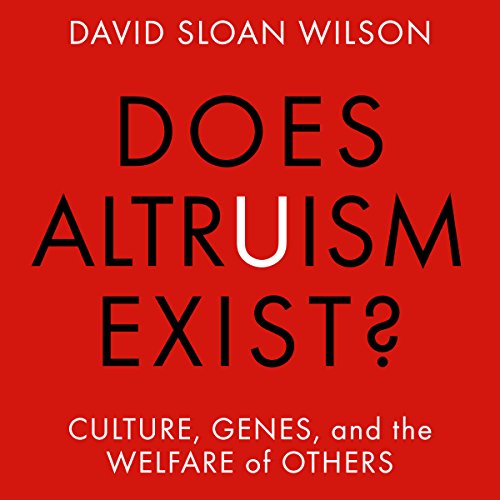
Does Altruism Exist?
Summary
A powerful treatise that demonstrates the existence of altruism in nature, with surprising implications for human society. Does altruism exist? Or is human nature entirely selfish? In this eloquent and accessible book, famed biologist David Sloan Wilson provides new answers to this age-old question based on the latest developments in evolutionary science. From an evolutionary viewpoint, Wilson argues, altruism is inextricably linked to the functional organization of groups. Humans are one of the most groupish species on earth, in some ways comparable to social insect colonies and multi-cellular organisms. The case that altruism evolves in all social species is surprisingly simple to make. Yet the implications for human society are far from obvious. Some of the most venerable criteria for defining altruism aren’t worth caring much about, any more than we care much whether we are paid by cash or check. Altruism defined in terms of thoughts and feelings is notably absent from religion, even though altruism defined in terms of action is notably present. The economic case for selfishness can be decisively rejected. The quality of everyday life depends critically on people who overtly care about the welfare of others. Yet, like any other adaptation, altruism can have pathological manifestations. Wilson concludes by showing how a social theory that goes beyond altruism by focusing on group function can help to improve the human condition. The book is published by Yale University Press.
©2015 David Sloan Wilson (P)2018 Redwood Audiobooks

Breaking the Magic Spell
Summary
This revised, expanded, and updated edition of the 1979 landmark Breaking the Magic Spell examines the enduring power of fairy tales and the ways they invade our subjective world. In seven provocative essays, Zipes discusses the importance of investigating oral folk tales in their socio-political context and traces their evolution into literary fairy tales, a metamorphosis that often diminished the ideology of the original narrative. Zipes also looks at how folk tales influence our popular beliefs and the ways they have been exploited by a corporate media network intent on regulating the mystical elements of the stories. He examines a range of authors, including the Brothers Grimm, Hans Christian Anderson, Ernst Bloch, Tolkien, Bettelheim, and J.K. Rowling to demonstrate the continuing symbiotic relationship between folklore and literature.
©1979 Jack Zipes (P)2016 Redwood Audiobooks

Following Oil
Summary
In a 40-year career as an oil and gas investment analyst and as an investment banker and strategic adviser on petroleum-sector mergers, acquisitions, and financings, Thomas A. Petrie has witnessed dramatic changes in the business. In Following Oil, he shares useful lessons he has learned about domestic and global trends in population and economic growth, a maturing resource base, variable national energy policies, and dynamic changes in geopolitical forces - and how these variables affect energy markets. More important, he applies those lessons to charting a course of energy development for the nation as the 21st century unfolds. Addressing the current need for greener, more sustainable energy sources, Petrie points to recent large domestic gas discoveries and the use of new technologies such as horizontal drilling to unlock unconventional hydrocarbons. With these new sources, the United States can increase production and ensure itself enough oil and gas to sustain economic growth during the next several decades. Petrie urges the pursuit of cleaner fossil fuel development in order to buy the time... The book is published by University of Oklahoma Press.
©2014 University of Oklahoma Press (P)2014 Redwood Audiobooks

Bioethics and the Human Goods
Summary
Bioethics and the Human Goods offers students and general listeners a brief introduction to bioethics from a "natural law" philosophical perspective. This perspective, which traces its origins to classical antiquity, has profoundly shaped Western ethics and law and is enjoying an exciting renaissance. While compatible with much in the ethical thought of the great religions, it is grounded in reason, not religion. The book is divided into two sections: Foundations and Issues. Foundations sketches a natural law understanding of the important ethical principles of autonomy, non-maleficence, beneficence, and justice and explores different understandings of "personhood" and whether human embryos are persons. Issues applies a natural law perspective to some of the most controversial debates in contemporary bioethics at the beginning and end of life: research on human embryos, abortion, infanticide, euthanasia, the withdrawal of tube-feeding from patients in a "persistent vegetative state", and the definition of death. The text is completed by appendixes featuring personal statements by Alfonso Gomez-Lobo on the status of the human embryo and on the definition and determination of death.
©2015 Georgetown University Press (P)2016 Redwood Audiobooks

Invasion of Laos, 1971: Lam Son 719
Summary
In 1971, while US ground forces were prohibited from crossing the Laotian border, a South Vietnamese Army corps, with US air support, launched the largest airmobile operation in the history of warfare, Lam Son 719. The objective: to sever the North Vietnamese Army's main logistical artery, the Ho Chi Minh Trail, at its hub, Tchepone in Laos, an operation that, according to General Creighton Abrams, could have been the decisive battle of the war. Hastening the withdrawal of US forces and ensuring the survival of South Vietnam. The outcome: defeat of the South Vietnamese Army and heavy losses of US helicopters and aircrews, but a successful preemptive strike that met President Nixon's near-term political objectives. Author Robert Sander, a helicopter pilot in Lam Son 719, explores why an operation of such importance failed. Sander's conclusion is at once powerful and persuasively clear. Lam Son 719 was doomed in both the planning and execution-a casualty of domestic and international politics, flawed assumptions, incompetent execution, and the resolve of the North Vietnamese Army. A powerful work of military and political history, this book offers eloquent testimony that "failure, like success, cannot be measured in absolute terms."
©2014 University of Oklahoma Press (P)2015 Redwood Audiobooks