The Americas category has 777 audiobooks on Listento.it, with an average listener rating of 4.5★ across 2,631 ratings. The most-rated is Endurance.

The Poison Squad
Summary
A New York Times Notable Book. The inspiration for PBS's American Experience film The Poison Squad. From Pulitzer Prize winner and New York Times best-selling author Deborah Blum, the dramatic true story of how food was made safe in the United States and the heroes, led by the inimitable Dr. Harvey Washington Wiley, who fought for change By the end of 19th century, food was dangerous. Lethal, even. "Milk" might contain formaldehyde, most often used to embalm corpses. Decaying meat was preserved with both salicylic acid, a pharmaceutical chemical, and borax, a compound first identified as a cleaning product. This was not by accident; food manufacturers had rushed to embrace the rise of industrial chemistry and were knowingly selling harmful products. Unchecked by government regulation, basic safety, or even labelling requirements, they put profit before the health of their customers. By some estimates, in New York City alone, thousands of children were killed by "embalmed milk" every year. Citizens - activists, journalists, scientists, and women's groups - began agitating for change. But even as protective measures were enacted in Europe, American corporations blocked even modest regulations. Then, in 1883, Dr. Harvey Washington Wiley, a chemistry professor from Purdue University, was named chief chemist of the agriculture department, and the agency began methodically investigating food and drink fraud, even conducting shocking human tests on groups of young men who came to be known as, "The Poison Squad". Over the next 30 years, a titanic struggle took place, with the courageous and fascinating Dr. Wiley campaigning indefatigably for food safety and consumer protection. Together with a gallant cast, including the muckraking reporter Upton Sinclair, whose fiction revealed the horrific truth about the Chicago stockyards; Fannie Farmer, then the most famous cookbook author in the country; and Henry J. Heinz, one of the few food producers who actively advocated for pure food, Dr. Wiley changed history. When the landmark 1906 Food and Drug Act was finally passed, it was known across the land, as "Dr. Wiley's Law". Blum brings to life this timeless and hugely satisfying "David and Goliath" tale with righteous verve and style, driving home the moral imperative of confronting corporate greed and government corruption with a bracing clarity, which speaks resoundingly to the enormous social and political challenges we face today.
©2018 Deborah Blum (P)2018 Penguin Audio

The Great Depression
Summary
This title offers a first-person diary account of living through the Great Depression, with haunting parallels to our own time. Benjamin Roth was born in New York City in 1894. When the stock market crashed in 1929, he had been practicing law for approximately 10 years, largely representing local businesses. After nearly two years, he began to grasp the magnitude of what had happened to American economic life, and he began writing down his impressions in a diary that he maintained intermittently until he died in 1978. Roth's words from that unique time seem to speak directly to readers today. His perceptions and experiences have a chilling similarity to our own era. Like many of us, Roth struggles both to understand and to educate himself about what was going on around him. He is sceptical of big government, yet ultimately won over by FDR's New Deal. This collection of his diary entries, edited by James Ledbetter, editor of Slate's "The Big Money," reveals another side of the Great Depression - one lived through by ordinary, middle-class folks, who on a daily basis grappled with a swiftly changing economy coupled with anxiety about the unknown future. It is highly topical - and timely. The greatest financial disaster since the Great Depression has many Americans wondering what things were like as the Great Depression unfolded and people did not yet know how or when it would end. It is clear-eyed, readable - and eerily familiar. In short, concise, and thoughtful entries, Roth chronicles the most telling moments of the Great Depression, from the drop in the price of movie tickets to Hoover's failed free-market solutions, to the rise in foreclosures in his hometown and how to benefit from 'bargains' at the much-diminished stock exchange. It is published one-year after the bankruptcy of Lehman Bros sent the world markets on a deep downward slide, and around the 80th anniversary of "Black Tuesday".
©2009 PublicAffairs (P)2009 Audible, Inc.

Kissinger: Volume I
Summary
The definitive biography of Henry Kissinger, based on unprecedented access to his private papers, by an acclaimed historian at the height of his powers.
No American statesman has been as revered and as reviled as Henry Kissinger. Once hailed as "Super-K" - the "indispensable man" whose advice has been sought by every president from Kennedy to Obama - he has also been hounded by conspiracy theorists, scouring his every "telcon" for evidence of Machiavellian malfeasance. Yet as Niall Ferguson shows in this magisterial biography, the idea of Kissinger as the ruthless arch-realist is based on a profound misunderstanding. Drawing not only on Kissinger's hitherto closed private papers but also on documents from more than a hundred archives around the world, Ferguson argues that the true foundation of Kissinger's thought is philosophical idealism - combined with history itself.
The first half of Kissinger's life is usually skimmed over as a quintessential tale of American ascent: the Jewish refugee from Hitler's Germany who made it to the White House. But in this first of two volumes, Ferguson shows that what Kissinger achieved before his appointment as Richard Nixon's national security adviser was astonishing in its own right. Toiling as a teenager in a New York factory, he studied indefatigably at night. He was drafted into the US infantry and saw action at the Battle of the Bulge - as well as the liberation of a concentration camp - but ended his army career interrogating Nazis. It was at Harvard that Kissinger found his vocation. Having immersed himself in the philosophy of Kant and the diplomacy of Metternich, he shot to celebrity by arguing for "limited nuclear war". Nelson Rockefeller hired him. Kennedy called him to Camelot. Yet Kissinger's rise was anything but irresistible. Dogged by press gaffes and disappointed by "Rocky", Kissinger seemed stuck - until a trip to Vietnam changed everything.
©2015 Niall Ferguson (P)2015 Brilliance Audio, all rights reserved.

A Night to Remember
Summary
One hundred years ago, the mightiest "unsinkable" ship began her maiden voyage to cross the Atlantic. An engineering feat 11 stories high, the Titanic contained a list of passengers collectively worth $250 million when she left port on April 10, 1912, but she would never reach her destination. The Titanic collided with an iceberg on the night of April 14, and 1,500 people died in the freezing waters as the ship met her watery grave. Spectacular in many ways, it's a story that has spurred legends and still sends shivers down the spine a century later. This minute-by-minute account of the sinking is based on over 20 years of research and offers amazing detail of that fateful night. Read by Martin Jarvis, it's a riveting account of one of the world's biggest maritime disasters and the behavior of the passengers and crew. Some sacrificed their lives, while others fought like animals for their own survival. Wives beseeched husbands to join them in lifeboats; gentlemen went taut-lipped to their deaths in full evening dress; and hundreds of steerage passengers, trapped below decks, sought help in vain. From the initial distress flares to the struggles of those left adrift for hours in freezing waters, this audiobook brings that moonlit night in 1912 to life for a new generation of listeners.
©1955 Walter Lord. All rights reserved. (P)2015 AudioGO

The United States and the Middle East: 1914 to 9/11
Summary
At the dawn of World War I, the United States was only a rising power. Our reputation was relatively benign among Middle Easterners, who saw no imperial ambitions in our presence and were grateful for the educational and philanthropic services Americans provided. Yet by September 11, 2001, everything had changed. The United States had now become the unquestioned target of those bent on attacking the West for its perceived offenses against Islam. How and why did this transformation come about? And how did each of the factors that make the Middle East so complex contribute to this transformation? This series of 24 lectures by an award-winning scholar is a narrative history of U.S. political involvement in the Middle East from World War I to the present day. Presented from a historian's balanced perspective, it will strengthen your ability to place today's headlines into historical context, evaluate what is most likely to happen next, and understand those oncoming events when they occur. Step by step, with attention to the viewpoints and motivations of each nation and leader involved, the lectures explore growing American involvement in the Middle East; the ongoing quest for political independence and self-mastery by Middle Easterners; the difficulty the United States has experienced in weighing diverse and conflicting objectives in the region, especially as the cold war against the Soviet Union intensified; and the increasing antagonism between Americans and Middle Easterners that came to such a shocking culmination on September 11, 2001. PLEASE NOTE: When you purchase this title, the accompanying reference material will be available in your Library section along with the audio.
©2003 The Teaching Company, LLC (P)2003 The Great Courses

Dodge City
Summary
Dodge City, Kansas, is a place of legend. The town that started as a small military site exploded with the coming of the railroad, cattle drives, eager miners, settlers, and various entrepreneurs passing through to populate the expanding West. Before long Dodge City's streets were lined with saloons and brothels, and its populace was thick with gunmen, horse thieves, and desperadoes of every sort. By the 1870s Dodge City was known as the most violent and turbulent town in the West. Enter Wyatt Earp and Bat Masterson. Young and largely self-trained men, the lawmen led the effort that established frontier justice and the rule of law in the American West and did it in the wickedest place in the United States. When they moved on, Wyatt to Tombstone and Bat to Colorado, a tamed Dodge was left in the hands of Jim Masterson. But before long Wyatt and Bat, each having had a lawman brother killed, returned to that threatened Western Kansas town to team up to restore order again in what became known as the Dodge City War before riding off into the sunset. Number-one New York Times best-selling author Tom Clavin's Dodge City tells the true story of their friendship, romances, gunfights, and adventures along with the remarkable cast of characters they encountered along the way (including Wild Bill Hickock, Jesse James, Doc Holliday, Buffalo Bill Cody, John Wesley Hardin, Billy the Kid, and Theodore Roosevelt) that has gone largely untold, lost in the haze of Hollywood films and Western fiction, until now.
©2017 Tom Clavin (P)2017 Macmillan Audio

Crow Killer
Summary
The true story (on which the film Jeremiah Johnson was partially based) of John Johnson, who in 1847 found his wife and her unborn child had been killed by Crow braves. Out of this tragedy came one of the most gripping feuds - one man against a whole tribe - in American history.
©1958, 1969 Indiana University Press (P)2014 Redwood Audiobooks

Turning Points in American History
Summary
These 48 lectures are your chance to relive the most groundbreaking moments in the fascinating story of the United States. They offer you a different perspective on the sweeping narrative of U.S. history. Spanning the arrival of the first English colonists to the chaos of the Civil War to the birth of the computer age and beyond, this lecture series is a captivating and comprehensive tour of those particular moments in the story of America, after which the nation would never be the same again. Taking a chronological approach, Professor O'Donnell gives you new ways to understand American history and to appreciate it as a grand narrative pinpointed with key moments that changed things forever. Each lecture focuses on a single turning point, explaining the conditions that led up to it, immersing you in the experience of the event itself, and exploring its immediate and long-term ramifications. Among the great turning points you'll investigate in depth are the trial of John Peter Zenger (1735), which popularized the ideas that freedom of the press is essential to liberty; the battle of Antietam (1862), which eliminated the possibility of England and France intervening on behalf of the Confederacy; and the Watergate scandal (1974), which signaled a heightened level of public distrust toward elected officials. Along the way, Professor O'Donnell often dispels some intriguing myths and half-truths about American history and provides an honest, unabashed look at the subject matter. These lectures are packed with unfamiliar anecdotes, stories, and side notes that just may change your views on the grand narrative of American history. PLEASE NOTE: When you purchase this title, the accompanying reference material will be available in your Library section along with the audio.
©2011 The Teaching Company, LLC (P)2011 The Great Courses

The Dead Are Arising
Summary
An epic biography of Malcolm X finally emerges, drawing on hundreds of hours of the author's interviews, rewriting much of the known narrative. Les Payne, the renowned Pulitzer Prize-winning investigative journalist, embarked in 1990 on a nearly 30-year-long quest to interview anyone he could find who had actually known Malcolm X - all living siblings of the Malcolm Little family, classmates, street friends, cellmates, Nation of Islam figures, FBI moles and cops, and political leaders around the world. His goal was ambitious: to transform what would become more than a hundred hours of interviews into an unprecedented portrait of Malcolm X, one that would separate fact from fiction. The result is this historic biography that conjures a never-before-seen world of its protagonist, a work whose title is inspired by a phrase Malcolm X used when he saw his Hartford followers stir with purpose, as if the dead were truly arising, to overcome the obstacles of racism. Setting Malcolm's life not only within the Nation of Islam but against the larger backdrop of American history, the book traces the life of one of the 20th century's most politically relevant figures from street criminal to devoted moralist and revolutionary. In tracing Malcolm X's life from his Nebraska birth in 1925 to his Harlem assassination in 1965, Payne provides searing vignettes culled from Malcolm's Depression-era youth, describing the influence of his Garveyite parents: his father, Earl, a circuit-riding preacher who was run over by a street car in Lansing, Michigan, in 1929, and his mother, Louise, who continued to instill Black pride in her children after Earl's death. Filling each chapter with resonant drama, Payne follows Malcolm's exploits as a petty criminal in Boston and Harlem in the 1930s and early 1940s to his religious awakening and conversion to the Nation of Islam in a Massachusetts penitentiary. With a biographer's unwavering determination, Payne corrects the historical record and delivers extraordinary revelations - from the unmasking of the mysterious NOI founder Fard Muhammad, who preceded Elijah Muhammad; to a hair-rising scene, conveyed in cinematic detail, of Malcolm and Minister Jeremiah X Shabazz's 1961 clandestine meeting with the KKK; to a minute-by-minute account of Malcolm X's murder at the Audubon Ballroom. Introduced by Payne's daughter and primary researcher, Tamara Payne, who, following her father's death, heroically completed the biography, The Dead Are Arising is a penetrating and riveting work that affirms the centrality of Malcolm X to the African American freedom struggle.
©2020 Les Payne and Tamara Payne (P)2020 Recorded Books
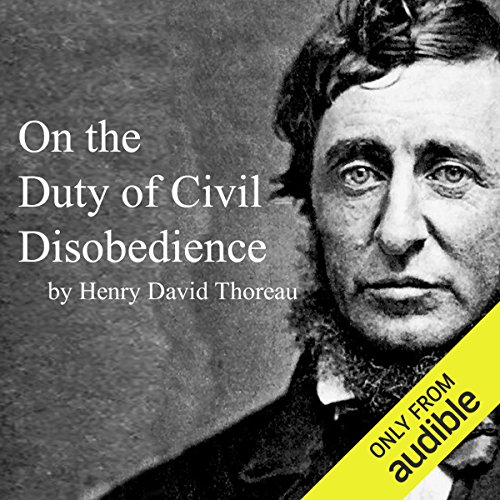
On the Duty of Civil Disobedience
Summary
This essay by Thoreau first published in 1849, argues that individuals should not permit governments to overrule their consciences. It goes on to say that individuals have a duty to avoid allowing the government to make them the agents of injustice. The quote: "That government is best which governs least," sometimes attributed to Thomas Jefferson or Thomas Paine, actually was first found in this essay. Thoreaus' thoughts were motivated by his disgust with slavery and the Mexican-American War but they are still relevant and resonate today.
Public Domain (P)2011 Jimcin Recordings

Desperate Passage
Summary
In late October 1846, the last wagon train of that year's westward migration stopped overnight before resuming its arduous climb over the Sierra Nevada Mountains, unaware that a fearsome storm was gathering force. After months of grueling travel, the 81 men, women and children would be trapped for a brutal winter with little food and only primitive shelter. The conclusion is known: by spring of the next year, the Donner Party was synonymous with the most harrowing extremes of human survival. But until now, the full story of what happened--and what it tells us about human nature and about America's westward expansion--remained shrouded in myth. Drawing on fresh archeological evidence, recent research on topics ranging from survival rates to snowfall totals, and heartbreaking letters and diaries made public by descendants a century-and-a-half after the tragedy, Ethan Rarick offers an intimate portrait of the Donner party and their unimaginable ordeal: a mother who must divide her family, a little girl who shines with courage, a devoted wife who refuses to abandon her husband, a man who risks his life merely to keep his word. Rarick resists both the gruesomely sensationalist accounts of the Donner party as well as later attempts to turn the survivors into archetypal pioneer heroes. "The Donner Party," Rarick writes, "is a story of hard decisions that were neither heroic nor villainous. Often, the emigrants displayed a more realistic and typically human mixture of generosity and selfishness, an alloy born of necessity." A fast-paced, heart-wrenching, clear-eyed narrative history, Desperate Passage casts new light on one of America's most horrific encounters between the dream of a better life and the harsh realities such dreams so often must confront.
©2009 Ethan Rarick (P)2009 Audible, Inc.

America's Founding Fathers
Summary
Today, the US Constitution is the oldest, continually-operating instrument of government in the world. But to think of the Constitution as a fully-formed, canonical document is to miss out on an honest, well-rounded grasp of American history. Now, more than ever, any well-informed citizen should understand how the Constitution lives, breathes, and endures. In collaboration with Smithsonian, these 36 lectures are a deep dive into the creation of the US Constitution as it actually happened - and the remarkable men who played their own unique role in the creation (and survival) of American democracy. Designed to be enjoyed in chronological order, they take you from the closing days of the American Revolution to the opening decades of the United States under the newly created US Constitution. Told like a dramatic story, each lecture uses a Founder as a doorway through which to examine the process involved in crafting the Constitution. You'll encounter fresh perspectives on familiar Founders including George Washington, Thomas Jefferson, James Madison, and Alexander Hamilton, as well as people not necessarily considered Founders, including James McHenry, Secretary of War under John Adams; and Alexis de Tocqueville, author of the insightful Democracy in America. While detailed, the lectures are highly accessible for all learners, high school students and history buffs alike. Less a biography of individuals, Professor Guelzo's lectures are instead a composite biography of one of the greatest political documents in history. PLEASE NOTE: When you purchase this title, the accompanying reference material will be available in your Library section along with the audio.
©2017 The Teaching Company, LLC (P)2017 The Great Courses

The Island at the Center of the World
Summary
In a landmark work of history, Russell Shorto presents astonishing information on the founding of our nation and reveals in riveting detail the crucial role of the Dutch in making America what it is today. In the late 1960s, an archivist in the New York State Library made an astounding discovery: 12,000 pages of centuries-old correspondence, court cases, legal contracts, and reports from a forgotten society - the Dutch colony centered on Manhattan, which predated the 13 "original" American colonies. For the past 30 years, scholar Charles Gehring has been translating this trove, which was recently declared a national treasure. Now Russell Shorto has made use of this vital material to construct a sweeping narrative of Manhattan's founding that gives a startling, fresh perspective on how America began. In an account that blends a novelist's grasp of storytelling with cutting-edge scholarship, The Island at the Center of the World strips Manhattan of its asphalt, bringing us back to a wilderness island - a hunting ground for Indians, populated by wolves and bears - that became a prize in the global power struggle between the English and the Dutch. Indeed, Russell Shorto shows that America's founding was not the work of English settlers alone but a result of the clashing of these two 17th-century powers. In fact it was Amsterdam - Europe's most liberal city, with an unusual policy of tolerance and a polyglot society dedicated to free trade - that became the model for the city of New Amsterdam on Manhattan. While the Puritans of New England were founding a society based on intolerance, on Manhattan the Dutch created a free-trade, upwardly mobile melting pot that would help shape not only New York but America. The story moves from the halls of power in London and The Hague to bloody naval encounters on the high seas. The characters in the saga - the men and women who played a part in Manhattan's founding - range from the philosopher Rene Descartes to James, the Duke of York, to prostitutes and smugglers. At the heart of the story is a bitter power struggle between two men: Peter Stuyvesant, the autocratic director of the Dutch colony; and a forgotten American hero named Adriaen van der Donck, a maverick, liberal-minded lawyer whose brilliant political gamesmanship, commitment to individual freedom, and exuberant love of his new country would have a lasting impact on the history of this nation.
©2005 Russell Shorto (P)2016 Random House Audio

His Truth Is Marching On
Summary
An intimate and revealing portrait of civil rights icon and longtime US congressman John Lewis, linking his life to the painful quest for justice in America from the 1950s to the present - from the Pulitzer Prize-winning author of The Soul of America John Lewis, who at age 25 marched in Selma, Alabama, and was beaten on the Edmund Pettus Bridge, was a visionary and a man of faith. Drawing on decades of wide-ranging interviews with Lewis, Jon Meacham writes of how this great-grandson of a slave and son of an Alabama tenant farmer was inspired by the Bible and his teachers in nonviolence, Reverend James Lawson and Martin Luther King, Jr., to put his life on the line in the service of what Abraham Lincoln called "the better angels of our nature." From an early age, Lewis learned that nonviolence was not only a tactic but a philosophy, a biblical imperative, and a transforming reality. At the age of four, Lewis, ambitious to become a minister, practiced by preaching to his family’s chickens. When his mother cooked one of the chickens, the boy refused to eat it - his first act, he wryly recalled, of nonviolent protest. Integral to Lewis' commitment to bettering the nation was his faith in humanity and in God - and an unshakable belief in the power of hope. Meacham calls Lewis "as important to the founding of a modern and multiethnic twentieth- and twenty-first-century America as Thomas Jefferson and James Madison and Samuel Adams were to the initial creation of the Republic itself in the eighteenth century." A believer in the injunction that one should love one's neighbor as oneself, Lewis was arguably a saint in our time, risking limb and life to bear witness for the powerless in the face of the powerful. In many ways he brought a still-evolving nation closer to realizing its ideals, and his story offers inspiration and illumination for Americans today who are working for social and political change. This audiobook includes a PDF of the book’s Appendix. PLEASE NOTE: When you purchase this title, the accompanying PDF will be available in your Audible Library along with the audio.
©2020 Jon Meacham (P)2020 Random House Audio

Native American Tribes: The History of the Blackfeet and the Blackfoot Confederacy
Summary
They call themselves "Niitsitapi" ("Original People"), but in the United States, they are known as the Blackfeet. In Canada, they are known by their more particular band names, one of which is Blackfoot, but regardless of the name, they are a tribe of Native American peoples ("First Nations" in Canada) who, until the modern time period, lived in small, decentralized bands and hunted the bison on the northern Great Plains. Stories vary, but the name "Blackfeet" or "Blackfoot," applied to them by others, may have come originally from their practice of dying their moccasin soles black. That said, their use of an Algonquian language group may indicate that they were relatively recent newcomers to the region from somewhere in the Northeast. The territory of the Blackfeet, at its greatest extent, encompassed a vast area from the eastern Rocky Mountains of Alberta and Montana and extending several hundred miles out onto the Great Plains, around the upper reaches of the Saskatchewan River and its tributaries in Alberta and the upper reaches of the Missouri River and its tributaries in Montana. The area of the land most sacred to the Blackfeet is the Sweet Grass Hills, which are located just south of the Canadian border in the central part of Montana. These are a group of buttes forested with balsam firs rising several thousand feet above the surrounding plains and which can be seen for a considerable distance. This was also Napi's favorite resting place in the mythology of the Blackfeet. Young Blackfeet went up into the Hills on their vision quests and, as their predecessors had done for several thousands of years, left inscriptions and petroglyphs on the surface of the tall sandstone cliffs. Many of the stories told by the Blackfeet take place there.
©2012 Charles River Editors (P)2015 Charles River Editors

The Age of Eisenhower
Summary
An original and penetrating assessment of President Dwight D. Eisenhower, showing Ike's enormous influence on modern America, the Cold War, and on the presidency itself. In a 2017 survey, presidential historians ranked Dwight D. Eisenhower fifth on the list of great presidents, behind the perennial top four: Lincoln, Washington, Franklin D. Roosevelt, and Teddy Roosevelt. Historian William Hitchcock shows that this high ranking is justified. Eisenhower's accomplishments were enormous and loom ever larger from the vantage point of our own tumultuous times. A former general, Ike kept the peace: He ended the Korean War, avoided a war in Vietnam, adroitly managed a potential confrontation with China, and soothed relations with the Soviet Union after Stalin's death. He guided the Republican Party to embrace central aspects of the New Deal like Social Security. He thwarted the demagoguery of McCarthy, and he advanced the agenda of civil rights for African Americans. As part of his strategy to wage and win the Cold War, Eisenhower expanded American military power, built a fearsome nuclear arsenal and launched the space race. In his famous Farewell Address, he acknowledged that Americans needed such weapons in order to keep global peace - but he also admonished his citizens to remain alert to the potentially harmful influence of the "military-industrial complex". From 1953 to 1961, no one dominated the world stage as did President Dwight D. Eisenhower. The Age of Eisenhower is the definitive account of this presidency, drawing extensively on declassified material from the Eisenhower Library, the CIA, and the Defense Department and troves of unpublished documents. In his masterful account, Hitchcock shows how Ike shaped modern America, and he astutely assesses Eisenhower's close confidants, from Attorney General Brownell to Secretary of State Dulles. The result is an eye-opening reevaluation that explains why this "do-nothing" president is rightly regarded as one of the best leaders our country has ever had.
©2018 William I. Hitchcock (P)2018 Simon & Schuster Audio

Marcus Garvey: The Life and Legacy of the Jamaican Political Leader Who Championed Pan-Africanism
Summary
After the Civil War, the fight for civil rights spawned a multitude of heroic African American activists, but it is remembered in large part for the work of a few iconic African American men of stature. Much like their later counterparts, Reverend Martin Luther King, Jr., and Malcolm X, the debate between gradual integration through temporary accommodation and overtly insistent activism was led by Booker T. Washington and W. E. B. Du Bois. Through the last years of the 19th century, Washington’s gentler approach of enhancing Black prospects through vocational education, largely accomplished with white permission and funds, seemed the popular choice. His legacy can be sensed in King’s subsequent willingness to extend an olive branch to white Americans in a sense of unity, although Washington’s propensity for accommodation held no place in King’s ministry. Ultimately, however, the vision that oversaw the creation of the Tuskegee Institute faded in the early 20th century as Black intellectualism and stiffening resolve came to the fore. This side’s greatest proponent, William Edward Burghardt Du Bois, still stands among the greatest and most controversial minds of any Black leader in his country. The first African American to receive a doctorate from Harvard University, Du Bois rose to become one of the most important social thinkers of his time in a 70-year career of combined scholarship, teaching, and activism. The third and most improbable approach toward American civil rights for Black citizens blended the beliefs of Washington and Du Bois, and it was spearheaded by global activist Marcus Aurelius Garvey. The Jamaican began his career as an activist with a devotion to Washington’s path, but he subsequently leaned to the alternative and beyond. Beyond the worldview of both colleagues, Marcus Garvey’s bigger-than-life scheme was to establish a Black-owned and managed shipping line to transport much of America’s Black population back to Africa. Repatriation of Black residents to the African continent had been proposed and debated before, even by Abraham Lincoln, but Garvey’s second and equally prodigious vision proposed that once the African diaspora returned to its homeland, an immense empire would assume rule over the continent, housing Black cultures from around the globe. This realization of racial segregation would be a boon to Black and White societies, at peace but thriving in distinctly separate cultures and economies from the white world.
©2018 Charles River Editors (P)2018 Charles River Editors

Night of the Grizzlies
Summary
Jack Olsen's true account, traces the causes of the tragic night in August 1967 when two separate and unrelated campers, a distance apart, were savagely mangled and killed by enraged bears.
©2014 Jack Olsen (P)2014 Gregg Olsen

Truth, Lies, and O-Rings
Summary
On a cold January morning in 1986, NASA launched the Space Shuttle Challenger, despite warnings against doing so by many individuals including Allan McDonald. The fiery destruction of Challenger on live television moments after launch remains an indelible image in the nation's collective memory. In Truth, Lies, and O-Rings, McDonald, a skilled engineer and executive, relives the tragedy from where he stood at Launch Control Center. As he fought to draw attention to the real reasons behind the disaster, he was the only one targeted for retribution by both NASA and his employer, Morton Thiokol, Inc., makers of the shuttle's solid rocket boosters. In this whistle-blowing yet rigorous and fair-minded book, McDonald, with the assistance of internationally distinguished aerospace historian James R. Hansen, addresses all of the factors that led to the accident, some of which were never included in NASA's Failure Team report submitted to the Presidential Commission. Truth, Lies, and O-Rings is the first look at the Challenger tragedy and its aftermath from someone who was on the inside, recognized the potential disaster, and tried to prevent it. It also addresses the early warnings of very severe debris issues from the first two post-Challenger flights, which ultimately resulted in the loss of Columbia some 15 years later.
©2009 Allan J. McDonald (P)2018 Tantor
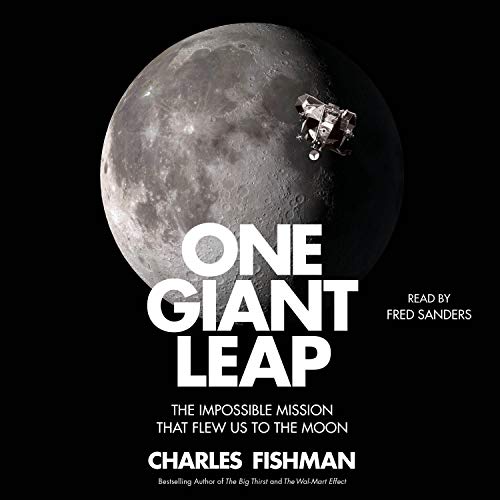
One Giant Leap
Summary
The New York Times best-selling, "meticulously researched and absorbingly written" (The Washington Post) story of the trailblazers and the ordinary Americans on the front lines of the epic Apollo 11 moon mission. President John F. Kennedy astonished the world on May 25, 1961, when he announced to Congress that the United States should land a man on the Moon by 1970. No group was more surprised than the scientists and engineers at NASA, who suddenly had less than a decade to invent space travel. When Kennedy announced that goal, no one knew how to navigate to the Moon. No one knew how to build a rocket big enough to reach the Moon, or how to build a computer small enough (and powerful enough) to fly a spaceship there. No one knew what the surface of the Moon was like, or what astronauts could eat as they flew there. On the day of Kennedy’s historic speech, America had a total of 15 minutes of spaceflight experience - with just five of those minutes outside the atmosphere. Russian dogs had more time in space than US astronauts. Over the next decade, more than 400,000 scientists, engineers, and factory workers would send 24 astronauts to the Moon. Each hour of space flight would require one million hours of work back on Earth to get America to the Moon on July 20, 1969. "A veteran space reporter with a vibrant touch - nearly every sentence has a fact, an insight, a colorful quote or part of a piquant anecdote" (The Wall Street Journal), and in One Giant Leap, Fishman has written the sweeping, definitive behind-the-scenes account of the furious race to complete one of mankind’s greatest achievements. It’s a story filled with surprises - from the item the astronauts almost forgot to take with them (the American flag), to the extraordinary impact Apollo would have back on Earth, and on the way we live today. From the research labs of MIT, where the eccentric and legendary pioneer Charles Draper created the tools to fly the Apollo spaceships, to the factories where dozens of women sewed spacesuits, parachutes, and even computer hardware by hand, Fishman captures the exceptional feats of these ordinary Americans. "It’s been 50 years since Neil Armstrong took that one small step. Fishman explains in dazzling form just how unbelievable it actually was" (Newsweek).
©2019 Charles Fishman (P)2019 Simon & Schuster