Dan Gallagher has narrated 27 audiobooks on Listento.it by 9 authors, with an average listener rating of 4.4★ across 132 ratings. The most-rated is The Gift of Therapy.

The Gift of Therapy
Summary
The culmination of master psychiatrist Dr. Irvin D. Yalom's more than 35 years in clinical practice, The Gift of Therapy is a remarkable and essential guidebook that illustrates through real case studies how patients and therapists alike can get the most out of therapy. The best-selling author of Love's Executioner shares his uniquely fresh approach and the valuable insights he has gained - presented as 85 personal and provocative "tips for beginner therapists", including: Let the patient matter to you Acknowledge your errors Create a new therapy for each patient Do home visits (Almost) never make decisions for the patient Freud was not always wrong A book aimed at enriching the therapeutic process for a new generation of patients and counselors, Yalom's Gift of Therapy is an entertaining, informative, and insightful read for anyone with an interest in the subject.
©2002 Irvin D. Yalom (P)2012 HarperCollins Publishers

Buddhism: A Beginners Guide Book for True Self Discovery and Living a Balanced and Peaceful Life
Summary
Find out all about mysterious Buddhism, its origins, its secrets, and its answers to the challenges of modern life. This book contains a basic overview of Buddhism, including the life of Buddha and the various kinds of Buddhism that have developed. It takes a look at all the key concepts and most important teachings, methods, and insights in a way that is easy to understand. Filled with a wealth of common sense and other worldly wisdom, the path to enlightenment is considered. Learn about meditation, mindfulness, happiness, samadhi, nirvana, and all the other important concepts that have helped shape our understanding of reality. Find out about Zen Buddhism and study all the basic elements that make the Buddha dharma so compelling to people of all walks of life. What you'll learn.... Learn about Siddartha Guatama, who became the Buddha Find out about different Buddhist schools Understand meditation, mindfulness, and awareness Learn about relaxing and letting go and their benefits Find out what samadhi is all about Find out about karma, whether good or bad Discover the teachings about reincarnation Learn about impermanence and how that affects you Consider the status of women in Buddhism Find out what Buddhism means in practical life Discover the wisdom latent inside you Learn to let go of anger and frustration Learn how all things are connected, including you Discover new mental possibilities Find your own path to enlightenment Much, much more! Make use of this book today to educate yourself about one of the most popular ideas in history: transcending the mundane and discovering the ultimate. Get to know Buddhism intimately and understand why it has had such a powerful effect on the world. Download today!
©2015 Sam Siv (P)2015 Sam Siv

Marcus Garvey: The Life and Legacy of the Jamaican Political Leader Who Championed Pan-Africanism
Summary
After the Civil War, the fight for civil rights spawned a multitude of heroic African American activists, but it is remembered in large part for the work of a few iconic African American men of stature. Much like their later counterparts, Reverend Martin Luther King, Jr., and Malcolm X, the debate between gradual integration through temporary accommodation and overtly insistent activism was led by Booker T. Washington and W. E. B. Du Bois. Through the last years of the 19th century, Washington’s gentler approach of enhancing Black prospects through vocational education, largely accomplished with white permission and funds, seemed the popular choice. His legacy can be sensed in King’s subsequent willingness to extend an olive branch to white Americans in a sense of unity, although Washington’s propensity for accommodation held no place in King’s ministry. Ultimately, however, the vision that oversaw the creation of the Tuskegee Institute faded in the early 20th century as Black intellectualism and stiffening resolve came to the fore. This side’s greatest proponent, William Edward Burghardt Du Bois, still stands among the greatest and most controversial minds of any Black leader in his country. The first African American to receive a doctorate from Harvard University, Du Bois rose to become one of the most important social thinkers of his time in a 70-year career of combined scholarship, teaching, and activism. The third and most improbable approach toward American civil rights for Black citizens blended the beliefs of Washington and Du Bois, and it was spearheaded by global activist Marcus Aurelius Garvey. The Jamaican began his career as an activist with a devotion to Washington’s path, but he subsequently leaned to the alternative and beyond. Beyond the worldview of both colleagues, Marcus Garvey’s bigger-than-life scheme was to establish a Black-owned and managed shipping line to transport much of America’s Black population back to Africa. Repatriation of Black residents to the African continent had been proposed and debated before, even by Abraham Lincoln, but Garvey’s second and equally prodigious vision proposed that once the African diaspora returned to its homeland, an immense empire would assume rule over the continent, housing Black cultures from around the globe. This realization of racial segregation would be a boon to Black and White societies, at peace but thriving in distinctly separate cultures and economies from the white world.
©2018 Charles River Editors (P)2018 Charles River Editors

The Arawak: The History and Legacy of the Indigenous Natives in South America and the Caribbean
Summary
On October 12, 1492, one of the most important “first contacts” of the modern era was made when three ships of Spanish origin approached the island archipelago now known as the Bahamas, cautiously dropping anchor as the captain of the fleet gazed across to what he assumed was the coast of India. According to the popular version of the story, amazed at the sight of ships and men of such unfamiliar appearance, the native people of the island plunged into the clear waters of the Western Atlantic, expertly swimming or aboard dugout canoes, and came out to greet the strangers. In all probability, the meeting was much more cautious and incremental, but the idea that these innocent people, raised in a tropical Eden, might embrace with such open enthusiasm their own destruction is picturesque and no doubt appeals to contemporary perceptions. By whatever means one might choose to view it, this meeting of cultures certainly did mark the beginning of a bold new chapter in the history of Europe and the beginning of the end of an ancient race of native people occupying a vast new continent. The entries into Christopher Columbus’ log as he recorded his first encounters with the indigenous people of the “Indies” are very telling. The island people arrived alongside his ships, offering humble gifts that Columbus described as “parrots and balls of cotton and spears and many other things, which they exchanged for the glass beads and hawks' bells”. These were the Taínos people, or the “Arawaks”, as they would come to be known, and Columbus described them as “well built...with good bodies and handsome features”. This description, while deceptively simple, had a chilling implication, because Columbus was not taking note of these facts out of idle interest but in terms of how best to exploit them. As the natives offered up gifts and the open hand of friendship, and by implication the freedom of their islands, Columbus remarked simply on their primitive appearance, their primeval technology, and how easy they would be to overcome. He noted, “They do not bear arms, and do not know them, for I showed them a sword, they took it by the edge and cut themselves out of ignorance. They have no iron.... They would make fine servants.” What Columbus wanted in the first instance was gold, and he was quick to observe the small items of gold jewelry worn by his visitors, which alerted him immediately to the fact there was gold to be found somewhere on these islands. To get to the bottom of it, Columbus would waste no time. Thus, a chain of events was set in motion that would permanently affect Western civilization. The Arawak: The History and Legacy of the Indigenous Natives in South America and the Caribbean examines the culture and history of the indigenous groups and what happened when they came into contact with the Europeans. You will learn about the Arawak like never before.
©2019 Charles River Editors (P)2019 Charles River Editors

How We Know What Isn't So
Summary
Thomas Gilovich offers a wise and readable guide to the fallacy of the obvious in everyday life. When can we trust what we believe - that "teams and players have winning streaks", that "flattery works", or that "the more people who agree, the more likely they are to be right" - and when are such beliefs suspect? Thomas Gilovich offers a guide to the fallacy of the obvious in everyday life. Illustrating his points with examples, and supporting them with the latest research findings, he documents the cognitive, social, and motivational processes that distort our thoughts, beliefs, judgments and decisions. In a rapidly changing world, the biases and stereotypes that help us process an overload of complex information inevitably distort what we would like to believe is reality. Awareness of our propensity to make these systematic errors, Gilovich argues, is the first step to more effective analysis and action. PLEASE NOTE: When you purchase this title, the accompanying PDF will be available in your Audible Library along with the audio.
©2008 Thomas Gilovitch (P)2019 Echo Point Books & Media

The Maori
Summary
In 1769, Captain James Cook’s historic expedition in the region would lead to an English claim on Australia, but before he reached Australia, he sailed near New Zealand and spent weeks mapping part of New Zealand’s coast. Thus, he was also one of the first to observe and take note of the indigenous peoples of the two islands. His instructions from the Admiralty were to endeavor at all costs to cultivate friendly relations with tribes and peoples he might encounter, and to regard any native people as the natural and legal possessors of any land they were found to occupy. Cook, of course, was not engaged on an expedition of colonization, so when he encountered for the first time a war party of Maori, he certainly had no intention of challenging their overlordship of Aotearoa, although he certainly was interested in discovering more about them. Approaching from the east, having rounded Cape Horn and calling in at Tahiti, the HMS Endeavour arrived off the coast of New Zealand, and two days later it dropped anchor in what would later be known as Poverty Bay. No sign of life or habitation was seen until on the morning of the 9 October when smoke was observed to be rising inland. Cook and a group of sailors set off for shore in two boats and leaving four men behind to mind the boats, the remainder set off inland over a line of low hills. The sentries, however, were surprised by the arrival of a group of four Maori, who adopted an aggressive posture, and when one lifted a lance to hurl, he was immediately shot down. The impression that all of this left on Cook and the scientific members of the expedition was mixed. By then there had already been several encounters with Polynesian people scattered about the South Pacific, and although occasionally warlike, there were none quite so aggressive as the Maori. In fairness, it must be added that the Maori understanding of Cook’s appearance, and what it represented was by necessity partial, and in approaching it they simply fell back on default behavior, applicable to any stranger approaching their shores. Taking into account similarities of appearance, customs, and languages spread across a vast region of scattered islands, it was obvious that the Polynesian race emerged from a single origin, and that origin Cook speculated was somewhere in the Malay Peninsula or the “East Indies”. In this regard, he was not too far from the truth. The origins of the Polynesian race have been fiercely debated since then, and it was only relatively recently, through genetic and linguistic research, that it can now be stated with certainty that the Polynesian race originated on the Chinese mainland and the islands of Taiwan, the Philippines, Malaysia, and Indonesia. Oceania was, indeed, the last major region of the Earth to be penetrated and settled by people, and Polynesia was the last region of Oceania to be inhabited.
©2018 Charles River Editors (P)2018 Charles River Editors

The Iranian Revolutionary Guards
Summary
In early November 2016, Salar Abnoush, a leader in the Iranian Revolutionary Guard Corps (IRGC), stated that the IRGC "will be in the US and Europe very soon." This quote came just before the US presidential election, a time when President Barack Obama was winding down his presidency and American society was busy reflecting on his past actions over the eight years of his presidency. Of those actions that incoming President Donald Trump has decided to focus on, "tearing up" the Joint Comprehensive Plan of Action (also more commonly known as the Iran Nuclear Deal) was near the top of the list. The crux of the deal focuses on Iran's agreement to roll back uranium stockpiles and enrichment capabilities in exchange for the ending of nuclear-related sanctions against Iran. Due to the IRGC's current involvement in the Iranian economy, they stand to gain from the ending of the sanctions. Possible threats to the deal by the incoming Trump Administration are of concern in Iran, and the threat of the IRGC spreading in western countries is a concern as well. The impact of the changing of terms to the Iran Nuclear Deal is just one concern among many of members of the IRGC. The multi-party conflict of the Syrian Civil War has pulled Iran deeper into this global conflict, as the numbers of refugees and internally displaced people rise. Through it all, the Iranian Revolutionary Guard Corps has held a position of power and prestige in Iranian society and has inspired both revolution and concern around the world. The IRGC is notable for its involvement in conflicts around the Middle East, particularly in supporting Shi'a groups through military training and finance, as well as backup support on the battlefield. This is not to say the IRGC enters into conflicts for the sake of being involved, but rather, they see these particular situations as serving the interests of Iran and furthering their brand of Shi'ism, a sect of Islam. The IRGC sees itself as a protector of Islam, Iran's theocracy, and the principles of the 1979 Iranian Revolution, so its involvement is always framed in terms of benefits to the overall goals of promoting revolutionary ideals. As analyst Afshon Ostovar puts it, "The IRGC is a multifaceted organization with reach into many different areas. It is a security service, an intelligence operation, a social and cultural force, and a complex industrial economic conglomerate." The IRGC operates in a very similar manner to other Islamist paramilitary organizations, such as Hezbollah, Hamas, the Muslim Brotherhood, and - their current enemies on the battlefield - the Islamic State of Iraq and the Levant (ISIL) and Jabhat Al-Nusra. These Islamist groups' power and influence comes from their control over the societies in which they operate and whether or not they have influential allies. The main difference for the IRGC, however, is the support of Iranian leadership in carrying out their main mission of maintaining and exporting the revolution. In essence, the IRGC has rooted itself in Iranian society and spread its influence through association with the society's most integral components - the education system, businesses, civil organizations, and religion - all at the request and blessing of the Supreme Leader of Iran. This is a similar model ISIL and Jabhat Al-Nusra are attempting to carry out in Syria and Iraq, and the one that Hamas and Hezbollah currently carry out in Lebanon and the Palestinian territories. The IRGC is also very much involved in Iran's economy and has a stake in its nuclear ambitions.
©2017 Charles River Editors (P)2017 Charles River Editors

Learning From Strangers: The Art and Method of Qualitative Interview Studies
Summary
Learning From Strangers is the definitive work on qualitative research interviewing. It draws on Robert Weiss's 30 years of experience in interviewing and teaching others how to do it. The most effective interviews, says Weiss, rely on creating cooperation - an open and trusting alliance between interviewer and respondent, dedicated to specific and honest accounts of both internal and external events. Against the eclectic background of his work in national sample surveys, studies based on semi-structured interviewing, and participant observation, Weiss walks the listener through the method of qualitative interview studies: sample selection, development of an interview guide, the conduct of the interview, analysis, and preparation of the data. Weiss gives examples of successful and less successful interviews and offers specific techniques and guidelines for the practitioner. Learning From Strangers is wonderfully narrated by Dan Gallagher.
©1994 Robert S. Weiss (P)2018 Echo Point Books & Media, LLC

Osman I
Summary
In terms of geopolitics, perhaps the most seminal event of the Middle Ages was the successful Ottoman siege of Constantinople in 1453. The city had been an imperial capital as far back as the fourth century, when Constantine the Great shifted the power center of the Roman Empire there, effectively establishing two almost equally powerful halves of antiquity’s greatest empire. Constantinople would continue to serve as the capital of the Byzantine Empire even after the Western half of the Roman Empire collapsed in the late fifth century. Naturally, the Ottoman Empire would also use Constantinople as the capital of its empire after their conquest effectively ended the Byzantine Empire, and thanks to its strategic location, it has been a trading center for years and remains one today under the Turkish name of Istanbul. The Ottoman Empire would spend the next few centuries expanding its size, power, and influence, and becoming one of the world’s most important geopolitical players. It was a rise that would not truly start to wane until the 19th century, and the Ottomans would maintain their empire until the end of World War I. Osman I is one of history’s most important leaders; the founder of the Ottoman Empire, which conquered Asia Minor, most of the Middle East, North Africa, and the Balkans before reaching the walls of Vienna. In the struggle between Christian and Islamic powers, it was the first state to challenge hegemony over Europe since the Umayyad Caliphate was defeated by the Franks at the Battle of Tours in 732. Even after its demise, the politics of the Balkan states are very much influenced by the Ottoman past, and Muslim populations remain in the European lands once occupied by the Ottomans. The Middle East’s politics and conflicts trace back to the dissolution of the empire, and in Turkey, the Ottoman legacy remains a topic of national debate. President Recep Tayyip Erdogan has declared that modern Turkey is the “continuation” of the Ottoman Empire, arguing that Turkey needs to return to its Islamic roots. While there may be no contemporary records about Osman, plenty of evidence exists about his deeds, the times he lived in, and Ottoman society under his leadership. Accounts of his life where written more than 100 years after his death, and his date of birth is unknown. Even his name is not entirely clear; “Osman” suggests an Arabic origin, but he was a Turk and his name was probably Atman or Ataman. This is certainly how the contemporary Greek historian Pachymeres (1242-c.1310) renders the name, and it is possible that Atman adopted the more prestigious name Osman later in life. Most importantly, according to tradition he was the son of Ertugrul, leader of the Kayi tribe of the Oghuz Turks. Osman I: The Life and Legacy of the Ottoman Empire’s First Sultan chronicles his life and accomplishments, and the massive impact he had on the Ottomans and the world around him.
©2019 Charles River Editors (P)2019 Charles River Editors

The Civilian Conservation Corps
Summary
In 1932, America faced an economic crisis even more severe than the one it has been experiencing recently. The issue then, as now, was how to address it. When President Franklin Roosevelt came into office, he faced more economic problems than any president since has ever faced, but he came equipped with unique and creative solutions to them. One of his most important programs was the Civilian Conservation Corps (CCC), which recruited and employed more than two million young men in the prime of life and put them to work in the much threatened forests and farms around the nation. He gave these young men jobs, something they could be proud of doing, and offered them a level of education many had been denied. The CCC also taught them discipline and teamwork, skills that easily translated into workplace success. In less than eight years, the CCC planted billions of trees, built thousands of cabins and other rustic buildings, cleared thousands of acres of land, and created thousands of miles of walking and hiking trails. In the process, it shaped the lives of millions of young men, many of whom were dangerously close to embracing a life of crime.
©2016 Charles River Editors (P)2017 Charles River Editors

Osiris
Summary
To the ancient Egyptians, as was the case with any society made up of inquiring humans, the world was a confusing and often terrifying place of destruction, death, and unexplained phenomena. In order to make sense of such an existence, they resorted to teleological stories. Giving a phenomenon a story made it less horrifying, and it also helped them make sense of the world around them. Unsurprisingly, then, the ancient Egyptian gods permeated every aspect of existence. Given the abundance of funerary artifacts that have been found within the sands of Egypt, it sometimes seems as though the ancient Egyptians were more concerned with the matters of the afterlife than they were with matters of the life they experienced from day to day. This is underscored most prominently by the pyramids, which have captured the world’s imagination for centuries. Thus, it’s little surprise that Osiris was one of the most important gods in the Egyptian pantheon, and he could well be the most famous of the Egyptian gods today. Aside from the ubiquity of the sun-god Re in much of modern popular culture, it is Osiris who captivates the minds of modern readers most. His story is both familiar and strangely alien. He is the god of the dead, but he became so by the very fact of his mortality. All the gods of ancient Egypt were capable of dying, but Osiris was also a symbol of resurrection, not unlike Christ in Christian theology. Osiris was betrayed by somebody close to him (in this case, his brother Seth) and was murdered and reborn, but here is where Osiris and Christ part ways. Osiris’ death is brutal, and his resurrection is the product of his wife Isis’ love for him. Furthermore, Osiris was associated with the kings of Egypt because the Egyptians believed he was a king himself. The ancient Egyptians could trace their kings back, one by one, to a time when the gods were believed to have ruled the land in person. Osiris was the third or fourth successor to the Egyptian throne after creation, and the Egyptians believed that Osiris’ connection with kingship is what allowed their kings to be reborn in a way themselves. He was also said to be physically enormous – almost 15-and-a-half feet, according to some sources – which was said to have aided him in his military campaigns. Osiris: The History and Legacy of the Ancient Egyptian God of the Dead looks at the mythology surrounding one of antiquity’s most famous deities. You will learn about Osiris like never before.
©2018 Charles River Editors (P)2018 Charles River Editors

The Iran Hostage Crisis
Summary
On February 1, 1979, amid great fanfare, exiled cleric Ayatollah Ruhollah Khomeini landed in Tehran. The return of the leader of the revolution to his home country was one of the final markers of the Iranian Revolution, a national phenomenon that had global implications. The Iranian Revolution of 1979 has been described as an epochal event, called the peak of 20th century Islamic revivalism and revitalization, and analyzed as the one key incident that continues to impact politics across Iran, the Middle East, and the even the world as a whole. As a phenomenon that led to the creation of the first modern Islamic Republic in the world, the revolution marked the victory of Islam over secular politics, and Iran quickly became the aspiring model for Islamic fundamentalists and revivalists across the globe, regardless of nationality, culture, or religious sect. When Ayatollah Khomeini was declared ruler in December 1979 and the judicial system originally modeled on that of the West was swiftly replaced by one purely based on Islamic law, much of the world was in shock that such a religiously driven revolution could succeed so quickly, especially when it had such sweeping consequences beyond the realm of religion. Furthermore, while the focus of the revolution was primarily about Islam, the revolution was also colored by disdain for the West, distaste for autocracy, and a yearning for religious and cultural identity. This point was driven home on November 4, 1979 when Iranians stormed the US embassy and took dozens of Americans hostage, sparking a crisis that would last for the rest of President Jimmy Carter's term. A few Americans escaped the embassy and hid in Tehran before being extracted (a mission that was recently adapted into the movie Argo), but for nearly 450 days, the crisis remained at the forefront of America's daily life, and aside from an embarrassing failed rescue mission, the administration seemed uncertain over how to approach the crisis and protect the American hostages. Eventually, all of the hostages were freed on the day Ronald Reagan was inaugurated as president in 1981, but the Iran hostage crisis had far reaching ramifications that have lasted to this day. Most notably, formal diplomatic contact between the United States and Iran ended, and no American embassy is open in that country nearly 35 years later. For anyone born during the 1960s, the Iran Hostage Crisis marked a change in American identity both as people and a nation. Those born in earlier decades had little to no understanding of radical Islam, and those born later could not conceive of a world without it. Some would say that the crisis was ultimately a good thing, in that it ushered Ronald Reagan into the White House and thus led to the fall of communism, while others would say that it was a harbinger of doom, a demonstration that even as one geopolitical foe declined, another was on the rise. Some say America was singled out because it was seen as too strong, others because it was seen as too weak. The bottom line is that, while no one knows what might have been done to prevent it, everyone has an idea about how it might have been ended sooner.
©2016 Charles River Editors (P)2017 Charles River Editors
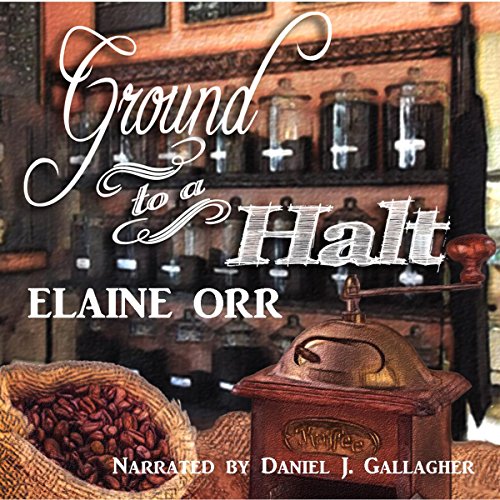
Ground to a Halt
Summary
When Jolie Gentil goes to buy a cup of coffee the morning after a storm knocks out power at her house in Ocean Alley, she finds Java Jolt unlocked and minus its owner. A bigger surprise is seeing proprietor Joe Regan a few minutes later, badly injured. It seems a potential killer thinks Jolie has something Joe was hiding. The normal routine of appraising houses and volunteering at the Harvest for All food pantry is interrupted by an SUV that nearly smashes Jolie, a break-in at the home Jolie and Scoobie share, and a terrifying kidnapping. Jolie needs to figure out who's telling the truth and how far the thugs will go to find what they want. Only solving the puzzle will keep Jolie safe, protect a vulnerable Iraqi vet, and make sure everyone stays alive. But if Jolie keeps searching, her budding romance with Scoobie may grind to a halt.
©2014 Elaine L. Orr (P)2015 Elaine L. Orr

American Legends: The Life of Jerry Lewis
Summary
"I've had great success being a total idiot." - Jerry Lewis A lot of ink has been spilled covering the lives of history's most influential figures, but how much of the forest is lost for the trees? In Charles River Editors' American Legends series, listeners can get caught up to speed on the lives of America's most important men and women in the time it takes to finish a commute, while learning interesting facts long forgotten or never known. Jerry Lewis has been in show business for over seven decades, a multi-talented entertainer known for comedy, acting, singing, and producing, and directing films to match. In many ways, his versatility is unprecedented even today, an era in which stars routinely alternate between film and musical careers, and Lewis has enjoyed it, as he once happily noted, "I get paid for what most kids get punished for." He has been paid in several ways, including with too many lifetime awards to count, and he remains a household name today. At the same time, however, Lewis remains best known for his work with Dean Martin, and in that sense, he remains overshadowed by his more famous partner. There's no doubt part of this was due to the stark contrast between their images, as Martin was suave and traditionally masculine while Lewis was a bundle of frantic energy. Although the circumstances that initiated their partnership are unusual and purely coincidental, the natural contrasts between the two ensured a perfect and complementary comedic fit. Working as "Martin and Lewis", the team became the most popular nightclub act in America, commanding huge fees for their appearances all across the country.
©2013 Charles River Editors (P)2017 Charles River Editors

Thoth
Summary
Perhaps the most intriguing aspect of ancient Egyptian civilization was its inception from the ground up, as the ancient Egyptians had no prior civilization they could use as a template. In fact, ancient Egypt itself became a template for the civilizations that followed. The Greeks and the Romans were so impressed with Egyptian culture that they often attributed many attributes of their own culture - usually erroneously - to the Egyptians. To the ancient Egyptians, as was the case with any society made up of inquiring humans, the world was a confusing and often terrifying place of destruction, death, and unexplained phenomena. In order to make sense of such an existence, they resorted to teleological stories. Giving a phenomenon a story made it less horrifying, and it also helped them make sense of the world around them. Unsurprisingly, then, the ancient Egyptian gods permeated every aspect of existence. Baboons held a prestigious place in Egyptian religion. They were kept as sacred animals in many temples because contemporary Egyptians considered them the original religious observers, particularly with respect to the sun god Re. Ancient Egyptians took the wild baboons stretching on their hind legs, forelegs raised to the sky, to be an oration to the sun god at dawn. Furthermore, these ancient ancestors of the land of Egypt were greeted at dawn by the concatenations of the baboons nattering, which the religious-minded took to be an early-morning devotion. They even believed the baboons spoke the original language of religion, and a claim they could understand baboons was often one asserted by certain members of the priestly class. However, it is his association with the ibis that most defines Thoth’s visual imagery. Since the ancient Egyptians believed the universe arose from the swamplike waters of Nun, it was the water bird that garnered the most prestigious veneration. Birds like geese, herons, and the ibises were associated with this period of creation, and according to some beliefs, the world came about thanks to the great “honk” of a primordial goose, whose eggshell was said to be preserved in the temple of Thoth. It was believed Re created Thoth’s baboon form to be that of his “shining moon”, but his ibis form was that of a messenger between heaven and earth (although he was much more than this). Thoth: The History and Legacy of the Ancient Egyptian God Who Maintains the Universe looks at the mythology surrounding one of antiquity’s most famous deities. You will learn about Thoth like never before.
©2018 Charles River Editors (P)2018 Charles River Editors

American Legends: The Life of Tony Curtis
Summary
"If you know how to live in Vegas you can have the best time." - Tony Curtis A lot of ink has been spilled covering the lives of history's most influential figures, but how much of the forest is lost for the trees? In Charles River Editors' American Legends series, readers can get caught up to speed on the lives of America's most important men and women in the time it takes to finish a commute, while learning interesting facts long forgotten or never known. At the height of Hollywood's golden age; of the 1940s through the early 60s, many of the industry's brightest stars could boast of unique stories describing how they were discovered. Their distinctiveness as on-screen personalities was an important part of that stardom, but one unlikely actor, a mismatch of contrasts, dialects, looks, and personal behavior, was to become an icon of the age, revered and disdained, but in the end, fondly remembered by the movie industry and fan base. Tony Curtis was, in the beginning, considered by most of his colleagues as a hack actor, but in time, one who took it upon himself to develop into a true screen artist. At his height as a matinee idol, Curtis was blessed with piercing blue eyes and good looks, a physicality described as classically handsome. He was to set a new criteria in place for male beauty in his era, a feminized but rugged heroism, able to portray grisly scenes with a pretty boy appearance, then immediately turn cute and excel in light comedy. Off-screen, Curtis was one of Hollywood's most prodigious womanizers, with a predatory sexual magnetism that was both alluring and feared.
©2015 Charles River Editors (P)2017 Charles River Editors

Last Stop: Paris
Summary
When readers last saw Eddie Grant in Treasure of Saint-Lazare, he was hot on the trail of Nazi war loot in the company of his on-again, off-again lover, Jen. As readers and listeners return to Eddie's shadowy world of undercover deals and thugs in the employ of crime bosses, they find a quieter, more mature Eddie, now married to Aurélie, a scholar of some note, and living in pleasant domestic bliss. Onto this romantic scene come several of Eddie's friends, who alert him to suspicious activity within his social circle, involving a man with criminal intentions and an interest in gold. Shortly afterward, a mysterious murder implicates another character from Eddie's past. As he looks into the matter, Aurélie soon finds herself in danger; at the same time, Jen reappears in Eddie's life, and he's simultaneously drawn to her and eager to avoid falling into bed with her again. Soon, he and his comrades must track down another ring of criminals and protect themselves from fatal retribution.
©2015 John Pearce (P)2015 John Pearce

The Bronze Age in Europe
Summary
While the Bronze Age is recognized as one of history’s most important phases, it’s been hard for historians to precisely date. The idea of the Bronze Age comes from a three-age system developed in the 19th century through which archaeologists and historians believe cultures evolved. These three ages are the Stone Age, the Bronze Age, and the Iron Age, and the concept of the system stems from the simultaneous development of museums in Europe during that time. In the Royal Museum of Nordic Antiquities in Denmark, Christian Jürgensen Thomsen, the director of the museum, began classifying objects of stone, bronze, or iron to better categorize and exhibit them. Each archaeological artifact was thus sorted according to their materials and further organized by shape and style. Through such methodology, working alongside archaeological reports, he was able to show how certain objects changed over time (Fagan 1996, 712). Such a typology, combined with stratigraphy noted in archaeological reports, was useful to early archaeologists with no reliable method for dating artifacts. By understanding which object came before or after, early archaeologists had a relative dating system with which to assess the age of an object or culture. This kind of system was useful to the archaeologists who often encountered objects from above-ground burials that lacked stratigraphy. When this three-age system reached England, John Lubbock expanded on it by applying cultural anthropology to the ages. Over time, other researchers would gradually add their interpretations to the system, with many arguing for sub-divisions of the Stone Age or the introduction of a Copper Age between the Neolithic and the Bronze Ages (Rowley-Conwy 2007, 243). The Bronze Age in Europe: The History and Legacy of Civilizations Across Europe from 3200-600 BCE looks at the different cultures that emerged over those crucial years. You will learn about the Bronze Age in Europe like never before.
©2019 Charles River Editors (P)2019 Charles River Editors

Ancient Greek Technology
Summary
"What I would prefer is that you should fix your eyes every day on the greatness of Athens as she really is, and should fall in love with her. When you realize her greatness, then reflect that what made her great was men with a spirit of adventure, men who knew their duty, men who were ashamed to fall below a certain standard. If they ever failed in an enterprise, they made up their minds that at any rate the city should not find their courage lacking to her, and they gave to her the best contribution that they could." ("The Funeral Oration of Pericles", quoted by Thucydides) In virtually all fields of human endeavor, ancient Athens was so much at the forefront of dynamism and innovation that the products of its most brilliant minds remain not only influential but entirely relevant to this day. In the field of medicine, the great physician Hippocrates not only advanced the practical knowledge of human anatomy and care-giving but changed the entire face of the medical profession. The great philosophers of Athens, men like Aristotle, Socrates, and Plato, interrogated themselves with startling complexity about the nature of good and evil, questioned the existence of divinity, advocated intelligent design, and went so far as to argue that all life was composed of infinitesimal particles. The flowering of Greek civilization was further made possible by an increase of trade between the cities and with other civilizations. Trade became a major occupation on account of the scarcity of agricultural land in the largely mountainous regions of the Balkan peninsula. The polis of Athens, in particular, assumed economic dominance in the Aegean from the sixth-century BC. The consequent increase in wealth, resources and population made a cultural renaissance possible. Commerce, in turn, led to the rise of an affluent aristocratic class which had the leisure to devote itself to learning, philosophy, and art. It also led to an industrial class of freemen who were artists and craftsmen. Religion also played a role in the development of Greek culture and technology. The ancient Greeks worshiped a multiplicity of gods, the chief of which dwelt on Mount Olympus in the first mountainous region of central Greece. The city-states would regularly send athletes to compete in the Olympic Games in their honor. Thales of Miletus (c. 524 - 546 BC), named by the classicist John Burnet "the first scientist", observed the natural world and sought rational explanations for it. From him a tradition emerged which explored the world and the actions of humans through natural science, reason, mathematics, metaphysics, and ontology. After Thales a stream of philosophers, mathematicians, and engineers emerged, including names that are well known today, including Plato, Aristotle, Socrates, Pythagoras, Archimedes, Heraclitus, Epicurus, Diogenes, and Plutarch.
©2019 Charles River Editors (P)2019 Charles River Editors

Mansa Musa and Timbuktu
Summary
“From the far reaches of the Mediterranean Sea to the Indus River, the faithful approached the city of Mecca. All had the same objective: to worship together at the most sacred shrine of Islam, the Kaaba in Mecca. One such traveler was Mansa Musa, Sultan of Mali in Western Africa. Mansa Musa had prepared carefully for the long journey he and his attendants would take. He was determined to travel not only for his own religious fulfillment but also for recruiting teachers and leaders, so that his realms could learn more of the Prophet's teachings.” (Mahmud Kati, Chronicle of the Seeker) Recent research has revealed that the richest person of all time lived in the 14th century in West Africa and went by many names, including Kankan Musa Keita, Emir of Melle, Lord of the Mines of Wangara, Conqueror of Ghanata, and the Lion of Mali II, but today he is usually referred to as Mansa Musa. Adjusting his wealth to modern values, he was worth about an estimated $400 billion as the Sultan of ancient Mali, which controlled the trade routes across the Sahara Desert. About 6,000 years ago, the ancient Sahara was a tropical jungle with lush grasslands and substantial rivers until it moved north of the Equator as a result of tectonic plate movements. The seismic activity changed the location of land and the composition of the atmosphere. By about 600 BCE, the terrain and habitat had become much less hospitable, so much so that it was no longer possible to use horses and oxen to carry commodities. As a result, trading became difficult and sporadic and slowly disappeared. This all changed when camels were introduced to the Sahara, initially via Roman invaders and then by the Berber traders from Arabia moving across North Africa in search of gold and salt. As they reached southern Sahel, they encountered the old, established trading system and routes of the Garamantes, the people who handled the trade in and out of the Sahara from West Africa. The combination of the use of camels with the re-established West African trade routes brought about rapid economic progress that resulted in the area supplying more than half the world’s gold for more than a thousand years, beginning around 400 CE. Of course, this timing coincided with the rise of global trade routes such as the Silk Road and the beginning of Europe’s Age of Discovery. The belief in the existence of fabled African kingdoms and kings ensured that real African kings were also shrouded in lore, and few would become as legendary as Mansa Musa.
©2019 Charles River Editors (P)2019 Charles River Editors