Jack Chekijian has narrated 32 audiobooks on Listento.it by 35 authors, with an average listener rating of 4.6★ across 84 ratings. The most-rated is A Handful of Hard Men.

A Handful of Hard Men
Summary
It is difficult to find another soldier's story to equal Captain Darrell Watt's in terms of time spent on the field of battle and challenges faced. Even by the lofty standards of the SAS and Special Forces, one has to look far to find anyone who can match his record of resilience and valor in the face of such daunting odds and with resources so paltry. In the fight, he showed himself to be a military maestro. A bush-lore genius, blessed with uncanny instincts and an unbridled determination to close with the enemy, he had no peers as a combat-tracker (and there was plenty of competition). But the Rhodesian theater was a fluid and volatile one in which he performed in almost every imaginable fighting role. After 12 years in the cauldron of war, his cause slipped from beneath him, and Rhodesia gave way to Zimbabwe. When the guns went quiet, Watt had won all his battles but lost the war. In this fascinating biography, we learn that in his twilight years, he is now concerned with saving wildlife on a continent where they are in continued danger and devoting himself to both the fauna and African people he cares so deeply about.
©2015 Hannes Wessels (P)2017 Tantor

Farther Than Any Man
Summary
In the annals of seafaring and exploration, there is one name that immediately evokes visions of the open ocean, billowing sails, visiting strange, exotic lands previously uncharted, and civilizations never before encountered - Captain James Cook. This is the true story of a legendary man and explorer. Noted modern-day adventurer Martin Dugard, using James Cook's personal journals, strips away the myths surrounding Cook's life and portrays his tremendous ambition, intellect, and sheer hardheadedness to rise through the ranks of the Royal Navy - and by his courageous exploits become one of the most enduring figures in naval history. Full of realistic action, lush descriptions of places and events, and fascinating historical characters such as King George III and the soon-to-be-notorious Master William Bligh, Dugard's gripping account of the life and death of Captain James Cook is a thrilling story of a discoverer hell-bent on going farther than any man.
©2001 Martin Dugard (P)2017 Tantor

The Works of Julius Caesar: The Gallic Wars
Summary
Contained here is Julius Caesar's own account of his military adventures in Gaul at the head of the Roman army, uniquely presented in Caesar's first-person perspective (rather than as a third-person narrative as in the original Latin). Included are seven sections ("books") of the Gallic War, each encompassing one year of Caesar's battles and intrigues; though there is an eighth book, it is generally accepted to have been written by another general, shortly after Caesar's death in 44 BCE. This production is based on a translation of the work by W.A. McDevitte and W.S. Bohn published in New York in 1869.
Public Domain (P)2016 Jack Chekijian

Native American Tribes: The History of the Blackfeet and the Blackfoot Confederacy
Summary
They call themselves "Niitsitapi" ("Original People"), but in the United States, they are known as the Blackfeet. In Canada, they are known by their more particular band names, one of which is Blackfoot, but regardless of the name, they are a tribe of Native American peoples ("First Nations" in Canada) who, until the modern time period, lived in small, decentralized bands and hunted the bison on the northern Great Plains. Stories vary, but the name "Blackfeet" or "Blackfoot," applied to them by others, may have come originally from their practice of dying their moccasin soles black. That said, their use of an Algonquian language group may indicate that they were relatively recent newcomers to the region from somewhere in the Northeast. The territory of the Blackfeet, at its greatest extent, encompassed a vast area from the eastern Rocky Mountains of Alberta and Montana and extending several hundred miles out onto the Great Plains, around the upper reaches of the Saskatchewan River and its tributaries in Alberta and the upper reaches of the Missouri River and its tributaries in Montana. The area of the land most sacred to the Blackfeet is the Sweet Grass Hills, which are located just south of the Canadian border in the central part of Montana. These are a group of buttes forested with balsam firs rising several thousand feet above the surrounding plains and which can be seen for a considerable distance. This was also Napi's favorite resting place in the mythology of the Blackfeet. Young Blackfeet went up into the Hills on their vision quests and, as their predecessors had done for several thousands of years, left inscriptions and petroglyphs on the surface of the tall sandstone cliffs. Many of the stories told by the Blackfeet take place there.
©2012 Charles River Editors (P)2015 Charles River Editors

The Celtic Twilight
Summary
One of the best-known collections of W. B. Yeats' prose, The Celtic Twilight explores the old connection between the Irish people and the magical world of fairies. Yeats, by traveling the land in the early 20th century and talking to the common people about their experiences with the creatures, yielded a colorful overview of Celtic fairy folklore.
Public Domain (P)2016 Jack Chekijian

The Landscape of History
Summary
What is history, and why should we study it? Is there such a thing as historical truth? Is history a science? One of the most accomplished historians at work today, John Lewis Gaddis, answers these and other questions in this short, witty, and humane book. The Landscape of History provides a searching look at the historian's craft as well as a strong argument for why a historical consciousness should matter to us today. Gaddis points out that while the historical method is more sophisticated than most historians realize, it doesn't require unintelligible prose to explain. Like cartographers mapping landscapes, historians represent what they can never replicate. In doing so, they combine the techniques of artists, geologists, paleontologists, and evolutionary biologists. Their approaches parallel, in intriguing ways, the new sciences of chaos, complexity, and criticality. They don't much resemble what happens in the social sciences, where the pursuit of independent variables functioning with static systems seems increasingly divorced from the world as we know it. So who's really being scientific, and who isn't? This question, too, is one Gaddis explores in ways that are certain to spark interdisciplinary controversy.
©2002 John Lewis Gaddis (P)2017 Tantor

The Story of Beowulf
Summary
A prose translation of the oldest surviving long poem in Old English, this production captures the mood of the original legend of a pagan hero defeating a monster, its mother, and a dragon in Scandinavia.
Public Domain (P)2016 Jack Chekijian

Life Under Open Skies: Adventures in Bushcraft
Summary
Inspired by over 25 years of practicing and teaching bushcraft throughout North America, survival instructor Tony Nester recounts backcountry tales of nomadic adventures using traditional skills that have faded from the modern world. Laced with humor, insight, and nerve-wracking encounters with wildlife, sandstorms, flash floods, brutal cold, and unpredictable clients, Life Under Open Skies reveals a rare look into the often misunderstood world of survival. Chapters include: Bare Bones Survival Guardian Flash Flood! Survival Is All in Your Perspective Cold A Five Scorpion Night KUYI The Cave Where Tom Lived Gramps A Tale of Two Countries Nightmare on Elm Creek A Real Man Ground Tales Cowboy Tough Bake Chill Repeat Gift of the Deer The Amazing Cowpie Firestarting Technique Three Dog Night When Yucca Was King Al Sieber: Master of Bushcraft The Schism Between Worlds About the author: Tony Nester is the author of numerous books and DVDs on survival. His school, Ancient Pathways, is the primary provider of survival training for the military Special Operations community, and he has served as a consultant for the NTSB, FAA, Travel Channel, NY Times, Backpacker Magazine, and the film Into the Wild. For years he wrote a popular monthly column for Outside Magazine, and his freelance writing is frequently featured in numerous print publications.
©2015 Tony Nester (P)2015 Tony Nester

Leadership Lessons from Winston Churchill: The Remarkable Teachings from the Last Lion!
Summary
Discover the leadership lessons from Winston Churchill that can transform your life! For a wide variety of reasons, Winston Churchill is one of the most fascinating figures in recent history. His life so definitively embodies the process of becoming a great leader. This book aims to teach those interested in the subject of leadership many lessons Churchill's life has to offer. It begins with a brief overview of the great man's life story, ranging from the aristocratic, but often challenging, circumstances of his birth and early life to the height of his power and his subsequent decline. It then explains 10 especially significant lessons in leadership from the famous life, each springing from the circumstances of a particular stage of Churchill's development and his responses to them. So are you ready to learn from the Winston Churchill's life? Are you interested in learning about leadership? And most importantly, are you ready to learn about life? Find out all this and more in this fascinating book. Here's a preview of what you will learn: Turn Weakness into Strength Leverage Every Tool Bounce Back Quickly Stand on Principle Innovate to Challenge Conventional Wisdom Regroup and Gain New Perspectives Hold Steady Against Impossible Odds Inspire Others to Do and Give More Forge Relationships with Other Leaders Live a Passionate, Well-Rounded Life
©2015 Lazaro Droznes (P)2015 Lazaro Droznes

The Fairy-Faith in Celtic Countries
Summary
The mysticism and fairy folklore of Celtic England, Scotland, the Isle of Man, Brittany, and Wales is explored in this production, which focuses on interviews conducted with everyday citizens about their beliefs, sightings, and encounters in the early 20th century, followed by an anthropological examination of evidence. It is an exploration of the spirit world, of the Sidhe, the "good people", who are claimed to interact mischievously with the populace - sometimes even abducting them and leaving only the victims' clothes behind, transporting them far distances, and killing their livestock.
Public Domain (P)2020 Jack Chekijian

Pathologies of Power
Summary
Pathologies of Power uses harrowing stories of life - and death - in extreme situations to interrogate our understanding of human rights. Paul Farmer argues that promoting the social and economic rights of the world's poor is the most important human rights struggle of our times. With passionate eyewitness accounts from the prisons of Russia and the beleaguered villages of Haiti and Chiapas, this book links the lived experiences of individual victims to a broader analysis of structural violence. Farmer challenges conventional thinking within human rights circles and exposes the relationships between political and economic injustice, on one hand, and the suffering and illness of the powerless, on the other. Farmer shows that the same social forces that give rise to epidemic diseases such as HIV and tuberculosis also sculpt risk for human rights violations. He illustrates the ways that racism and gender inequality in the United States are embodied as disease and death. Yet this book is far from a hopeless inventory of abuse. Farmer's disturbing examples are linked to a guarded optimism that new medical and social technologies will develop in tandem with a more informed sense of social justice. Otherwise, he concludes, we will be guilty of managing social inequality rather than addressing structural violence.
©2003 The Regents of the University of California (P)2017 Tantor

Geronimo's Story of His Life
Summary
The editor, Oklahoma school superintendent Stephen Melvil Barrett, first met Geronimo in the summer of 1904, and felt that the 76 year old Bedonkohe Apache leader and medicine man from New Mexico and Arizona, a prisoner of war for 20 years far from his home, who had never told his side of history before, should finally do so. President Theodore Roosevelt granted Barrett's request to interview Geronimo, and this is the result, without Barrett's clarifications or intrusions - "write what I have spoken," as Geronimo said. Topics covered include his early life, the origin of the Apaches, their tribal structure, raids in Mexico, and interactions with the American military.
Public Domain (P)2020 Jack Chekijian

Business Lessons from Bill Gates
Summary
Discover the lessons from Bill Gates that can transform your business! Are you interested in learning about business and entrepreneurship? And most importantly, are you ready to learn about life? Find out all this and more in this fascinating book. Here is a preview of what you will learn: How to do what you consider appropriate, not what others expect How to make calculated risks and succeed! How to build up the willpower to face the odds and triumph How to best take advantage of the inevitable failures on your journey The do's and don'ts of Bill's career
©2015 Michael Winicott (P)2015 Michael Winicott, Jack Chekijian

Desert Voices
Summary
America's strength has always been her people. Never has this strength been more evident than in time of war. From the Revolution on, the history of America at war has always been the history of ordinary men and women doing extraordinary things. But in the past, it has taken years, sometimes even decades, for those heroic men and women to be heard, for their individual stories to be told. In the current era, with electronic media making the news instantaneously available around the world, one would think that would no longer be the case. In America's latest war, the electronic media brought us only the men and women at the top - leaders like General Schwarzkopf, General Kelly, and Pete Williams, the official voice of the Pentagon. But the real stories, the stories of courage under fire, were half a world away - in Khafji and Dhahran, Basra and the barren wastes of the Iraqi desert. The stories were there because America's men and women were there, with M-16s and artillery, in tanks and in attack aircraft, in the tents and in the trenches. Every service was represented - Army, Navy, Air Force, and U.S. Coast Guard. The career soldiers were there and so were the citizen soldiers of the reserves. These are their stories, told in their own way. These are the Desert Voices.
©1990 William H. Labarge (P)2012 David N. Wilson

Serial Killers
Summary
Charles Manson, the Yorkshire Ripper, Aileen Wuornos: take a closer look at some of the world's most prolific serial killers with in-depth profiles of history's most evil men and women. Explore their early lives, their twisted predilections, their horrifying crimes and the chase to bring them to justice, and marvel at how so many of these brutal murderers were, until their crimes came to light, seemingly just another face in the crowd.
©2015 Go Entertain (P)2016 Go Entertain

Hallows Eve
Summary
After 12 years, Corrie Phaeder is returning home to Orangefield - the last place in the world he wants to be. Orangefield is a town of nightmares, a town where the impossible and the horrific happen all too often, where ghosts rise screaming from their graves, and where trick-or-treating goblins have no need for scary costumes. Something is waiting patiently for Corrie's homecoming. This Halloween, a messenger from a realm of shadows, with the body of a scarecrow and the head of a pumpkin, will usher Corrie into what might prove to be his last nightmare, a battle to the death with the ultimate darkness.
©2005 Al Sarrantonio (P)2013 David N. Wilson

How to Contact Space People
Summary
New Saucerian presents the original version of psychic Ted Owens' How to Contact Space People. These reprints have been handled with the utmost care, and in some cases are better than the originals (which were hastily printed on small presses).
©2015 Andrew B. Colvin (P)2014 Andrew B. Colvin

Sir Gawain and the Green Knight
Summary
This is the classic tale of a knight from King Arthur's Round Table who makes a dangerous deal with a mysterious visitor. The production is based on Jessie L. Weston's 1900 prose edition of a 14th-century poem.
Public Domain (P)2018 Jack Chekijian
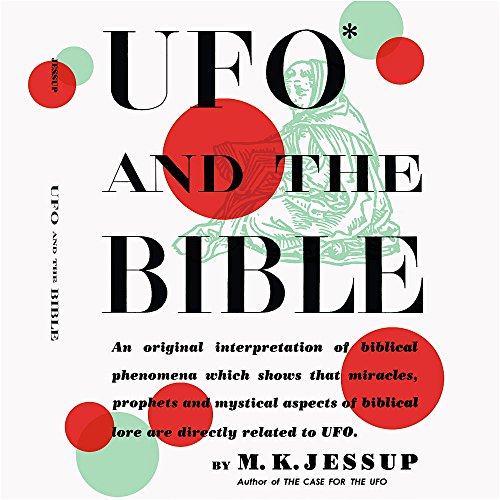
UFO and the Bible
Summary
New Saucerian presents the original version of Dr. Morris K. Jessup's UFO and Bible. These reprints have been handled with the utmost care, and in some cases are better than the originals (which were often hastily printed on small presses). Jessup submitted the material in this book to his publisher as part of his manuscript for The Expanding Case for the UFO. However, in a classic case of censorship, the material was rejected and returned to him, for possible use in a separate book. Luckily, Jessup arranged to have the separate book printed, with a lovely color cover (expensive for that time), so that we today may enjoy its mind-boggling implications.
©1956 M.K. Jessup (P)2014 Andrew B. Colvin

Entrepreneurship Lessons from Henry Ford: Teachings from One of the Most Successful Entrepreneurs in the World
Summary
Discover the lessons from Henry Ford that will unleash your entrepreneurial potential! Among the most famous Americans ever, Henry Ford was one of the greatest inventors and industrialists of the early 20th century. He built one of the most innovative versions of the "horseless carriage" and created the first factory assembly line. But the secrets to Henry Ford's success were not lost when he passed away. Take a journey through the lenses of his life, and see how the secrets to his success unfold. Learn and master the ways of Henry Ford, the man who set the standards for success and paved the way for millions of other entrepreneurs to innovate and impact the world. Henry Ford's experiences each come with a valuable lesson in entrepreneurship, and each of these lessons is one more piece of the puzzle to becoming a great innovator. Being a transformative leader in this world is not limited to those who are gifted. It takes hard work, diligence, and an eye for seeing beyond the curtain. You too can become a great entrepreneur like Ford and find your success in this challenging world. Here's a preview of what you will learn: How to take the leap from a life of certainty to a life of reward How to associate yourself with people who can further your objectives How to persevere in the face of all odds How not to get caught up with money issues
©2015 Lazaro Droznes (P)2015 Lazaro Droznes