The Buddhism category has 290 audiobooks on Listento.it, with an average listener rating of 4.7★ across 2,780 ratings. The most-rated is Think Like a Monk.

Think Like a Monk
Summary
Jay Shetty, social media superstar and host of the number one podcast On Purpose, distills the timeless wisdom he learned as a monk into practical steps anyone can take every day to live a less anxious, more meaningful life. When you think like a monk, you’ll understand: How to overcome negativity How to stop overthinking Why comparison kills love How to use your fear Why you can’t find happiness by looking for it How to learn from everyone you meet Why you are not your thoughts How to find your purpose Why kindness is crucial to success And much more Shetty grew up in a family where you could become one of three things - a doctor, a lawyer, or a failure. His family was convinced he had chosen option three: Instead of attending his college graduation ceremony, he headed to India to become a monk, to meditate every day for four to eight hours, and devote his life to helping others. After three years, one of his teachers told him that he would have more impact on the world if he left the monk’s path to share his experience and wisdom with others. Heavily in debt, and with no recognizable skills on his re´sume´, he moved back home in North London with his parents. Shetty reconnected with old school friends - many working for some of the world’s largest corporations - who were experiencing tremendous stress, pressure, and unhappiness, and they invited Shetty to coach them on well-being, purpose, and mindfulness. Since then, Shetty has become one of the world’s most popular influencers. In 2017, he was named in the Forbes magazine 30-under-30 for being a game-changer in the world of media. In 2018, he had the number one video on Facebook with more than 360 million views. His social media following totals more than 38 million, he has produced more than 400 viral videos that have amassed more than eight billion views, and his podcast, On Purpose, is consistently ranked the world’s number one health and wellness podcast. In this inspiring, empowering book, Shetty draws on his time as a monk to show us how we can clear the roadblocks to our potential and power. Combining ancient wisdom and his own rich experiences in the ashram, Think Like a Monk reveals how to overcome negative thoughts and habits and access the calm and purpose that lie within all of us. He transforms abstract lessons into advice and exercises we can all apply to reduce stress, improve relationships, and give the gifts we find in ourselves to the world. Shetty proves that everyone can - and should - think like a monk. PLEASE NOTE: When you purchase this title, the a.ccompanying PDF will be available in your Audible Library along with the audio.
©2020 Jay Shetty (P)2020 Simon & Schuster Audio

The Book of Joy
Summary
Two great spiritual masters share their own hard-won wisdom about living with joy even in the face of adversity. The occasion was a big birthday. And it inspired two close friends to get together in Dharamsala for a talk about something very important to them. The friends were His Holiness the Dalai Lama and Archbishop Desmond Tutu. The subject was joy. Both winners of the Nobel Prize, both great spiritual masters and moral leaders of our time, they are also known for being among the most infectiously happy people on the planet. From the beginning the book was envisioned as a three-layer birthday cake: their own stories and teachings about joy, the most recent findings in the science of deep happiness, and the daily practices that anchor their own emotional and spiritual lives. Both the Dalai Lama and Archbishop Tutu have been tested by great personal and national adversity, and here they share their personal stories of struggle and renewal. Now that they are both in their 80s, they especially want to spread the core message that to have joy yourself, you must bring joy to others. Most of all, during that landmark week in Dharamsala, they demonstrated by their own exuberance, compassion, and humor how joy can be transformed from a fleeting emotion into an enduring way of life. Narration credits: Douglas Carlton Abrams, read by the author Dalai Lama, read by Francois Chau Desmond Tutu, read by Peter Francis James
©2016 Dalai Lama and Desmond Tutu (P)2016 Penguin Audio

Radical Acceptance
Summary
"Believing that something is wrong with us is a deep and tenacious suffering," says Tara Brach at the start of this illuminating book. This suffering emerges in crippling self-judgments and conflicts in our relationships, in addictions and perfectionism, in loneliness and overwork - all the forces that keep our lives constricted and unfulfilled. Radical Acceptance offers a path to freedom, including the day-to-day practical guidance developed over Dr. Brach's 20 years of work with therapy clients and Buddhist students. Writing with great warmth and clarity, Tara Brach brings her teachings alive through personal stories and case histories, fresh interpretations of Buddhist tales, and guided meditations. Step by step, she leads us to trust our innate goodness, showing how we can develop the balance of clear-sightedness and compassion that is the essence of Radical Acceptance. Radical Acceptance does not mean self-indulgence or passivity. Instead it empowers genuine change: healing fear and shame and helping to build loving, authentic relationships. When we stop being at war with ourselves, we are free to live fully every precious moment of our lives.
©2004 Tara Brach (P)2012 Tantor
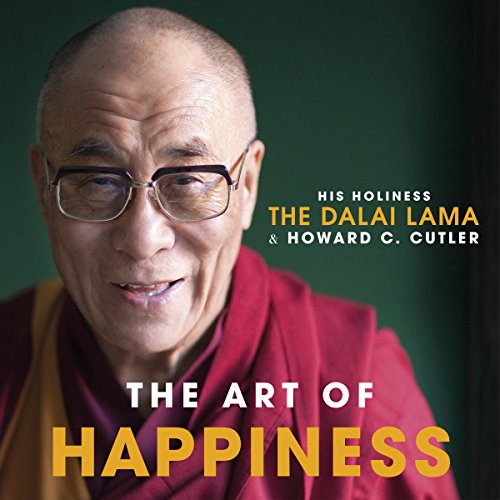
The Art of Happiness
Summary
In this unique and important book, one of the world's great spiritual leaders offers his practical wisdom and advice on how we can overcome everyday human problems and achieve lasting happiness. The Art of Happiness is a highly accessible guide for a Western audience, combining the Dalai Lama's Eastern spiritual tradition with Dr Howard C. Cutler's Western perspective. Covering all key areas of human experience, they apply the principles of Tibetan Buddhism to everyday problems and reveal how one can find balance and complete spiritual and mental freedom. For the many who wish to understand more about the Dalai Lama's approach to living, there has never been a book which brings his beliefs so vividly into the real world.
©1999 The Dalai Lama (P)2018 Hodder & Stoughton Limited

Wherever You Go There You Are
Summary
Warmth, humor, anecdotes, and poems make up this inspirational guide to a revolutionary new way of being, seeing, and living. Exploring principles and practices of mindfulness, Dr. Kabat Zinn has taught this two thousand year old Buddhist method of relaxation to thousands. Learn how to capture the present, to live fully in the moment and reduce anxiety, achieve inner peace, and enrich the quality of life. Let this be your guide to mindfulness meditation in everyday life.
©1994 by Jon Kabat-Zinn, Ph.D. (P)1994 Audio Renaissance Tapes, A Division of Cassette Productions Unlimited, Inc.

Don't Bite the Hook
Summary
Life has a way of provoking us with traffic jams and computer malfunctions, with emotionally distant partners and crying children - and before we know it, we're upset. We feel terrible, and then we end up saying and doing things that only make matters worse. But it doesn't have to be that way, says Pema Chödrön. It is possible to relate constructively to the inevitable shocks, losses, and frustrations of life so that we can find true happiness. The key, Pema explains, is not biting the "hook" of our habitual responses. In this recorded weekend retreat, Pema draws on Buddhist teachings from The Way of the Bodhisattva to reveal how we can: Stay centered in the midst of difficulty Improve stressful relationships Step out of the downward spiral of self-hatred Awaken compassion for ourselves and others
©2018 Pema Chödrön (P)2018 Random House Audio
![Cover art for Buddhism for Beginners [Jack Kornfield]](https://m.media-amazon.com/images/I/51yV-2aujlL._SL500_.jpg)
Buddhism for Beginners [Jack Kornfield]
Summary
Created specifically to address the questions and needs of first-time students, here is Buddhism's vast spiritual legacy, presented by one of America's leading meditation teachers.
©2001 Jack Kornfield

The Art of Happiness
Summary
The Dalai Lama is probably one of the only people who, if you ask him if he's happy, even though he's suffered the loss of his country, will give you an unconditional "yes." What's more, he'll tell you that happiness is the purpose of life, and the "the very motion of our life is toward happiness." How to get there has always been the question. He's tried to answer it before, but he's never had the help of a psychiatrist to get the message across in a context we can easily understand. Through meditation, stories, and the meeting of Buddhism and psychology, the Dalai Lama shows us how to defeat day-to-day depression, anxiety, anger, jealousy, or just an ordinary bad mood. He discusses relationships, health, family, work, and spirituality to show us how to ride through life's obstacles on a deep, abiding source of inner peace. Based on 2,500 years of Buddhist meditations and with a healthy dose of common sense, The Art of Happiness is a program that crosses the boundaries of all traditions to help listeners with the difficulties common to all human beings.
©1998 His Holiness the Dalai Lama and Howard C. Cutler, M.D., All Rights Reserved (P)1998 Simon & Schuster, Inc.

Fear
Summary
Without fear, we are able to see more clearly our connections to others. Without fear, we have more room for understanding and compassion. Without fear, we are truly free. Most of us live in a constant state of fear - of our past, of illness and aging and death, and of losing the things we treasure most. But it doesn't have to be this way, promises Zen master and Buddhist monk Thich Nhat Hanh. Drawing on a lifetime of mindfulness in action, Thich Nhat Hanh shows us how to use the practice of living in the present to acknowledge and embrace our fears, recognize their origins, and render them powerless. The world-renowned Zen teacher guides us through practical exercises for transforming fear into clarity. The worries of the past and the anxiety of the future disappear as we discover the power of the present moment. Not only are we are able to handle challenging emotions as they arise, but we can summon feelings of well-being and contentment, no matter what the unknown may bring. Rooted in the moment, we have the capacity to restore balance and happiness and be present with what is beautiful and affirming inside us and around us, every day.
©2012 Thich Nhat Hanh (P)2012 HarperCollins Publishers

Bodhisattva Mind
Summary
What if you could cultivate the mind of a bodhisattva -- one who has dedicated one's life to the benefit of others? According to Pema Chödrön, best-selling author and American-born Buddhist nun, you can. On Bodhisattva Mind, she examines sheshin, or "guarding alertness", and the other qualities of mind we need to develop on the path to enlightenment. "We all have a consciousness that knows what helps and what causes harm," says Ani Pema. "With this same ability, we can 'tame our minds', and extricate ourselves from suffering." A practicum of insights and meditations from this cherished teacher, Bodhisattva Mind shows us how to connect with the spacious, clear, unbiased nature of our minds and experience the joy of complete freedom.
©2006 Pema Chodron

Abiding in Mindfulness, Volume 1
Summary
In the words of the Buddha, the four foundations of mindfulness (the four satipatthanas) are "the direct path for the purification of beings, for the surmounting of sorrow and lamentation, for the disappearance of dukkha (suffering) and discontent, for acquiring the true method, for the realization of Nibbana." Within the quintessential discourse called the Satipatthana Sutta, we find the Buddha's seminal teachings about the practice of meditation. On Abiding in Mindfulness, Volume I: The Body, esteemed teacher and author Joseph Goldstein presents an audio curriculum to reveal the deeper insights of this vital sutta - and how it serves to inform and guide your own daily practice. Goldstein sets the stage for your journey through the sutta by clarifying the Buddha's initial declaration of the "direct path" to awakening that is its promise. Through the wisdom of Buddhist masters of ancient and modern times and the expertise of his own 40-year study and practice, he shares the subtle nuances of each key term derived from the original Pali. Where do you find the ardency to sustain and balance your efforts along the path? How do you cultivate the breadth of mindfulness that makes any spiritual undertaking possible? What strengthens your perception of impermanence - both internally and externally? With Goldstein's lucid instruction, you will discover a wellspring of profound revelations to revitalize and mature your practice, and help you bring forth its fruits in every area of your life. Course objectives: Explore the four abidings of mindfulness, or qualities of mind, as the direct path for awakening Observe the three kinds of cravings and desires, and how they manifest Analyze how mindfulness of the body is the first foundation of mindfulness as taught by the Buddha Discuss the ways of clearly knowing and the four basic qualities of matter in relationship to the relative (objective or conceptual) and the ultimate (subjective or direct) levels of experience or truth On Abiding in Mindfulness, Volume I: The Body, Goldstein introduces you to the first satipatthana, the domain of the body. Here, you will learn the cornerstone techniques for successful meditation practice, as taught by the Buddha himself. From appropriate places and postures for practice to clear comprehension of all aspects of the body to the elements and energies that make up our physical form, Goldstein brings you to the threshold of the "ultimate truth" of our bodies. PLEASE NOTE: When you purchase this title, the accompanying reference material will be available in your Library section along with the audio.
©2012 Joseph Goldstein (P)2012 Sounds True
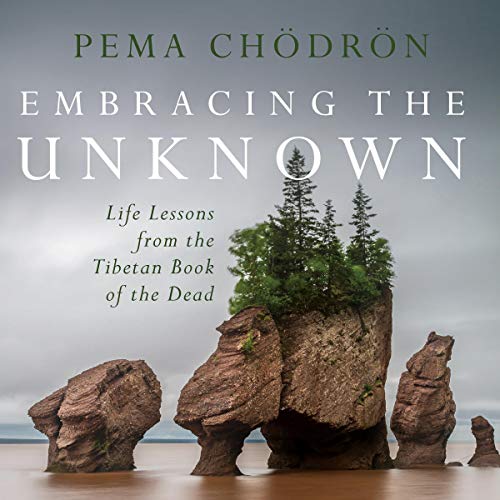
Embracing the Unknown
Summary
Life, death, and rebirth - Pema Chödrön on the Tibetan Book of the Dead What happens when we die? One of the most treasured resources for understanding this essential question is the Tibetan Book of the Dead. With Embracing the Unknown, Pema Chödrön delves into the teachings of this extraordinary Buddhist text - not only for what it tells us about the journey of the soul beyond this life but also as a source of profound wisdom for navigating the uncertainty we face each day in “the bardo of this life”. In this landmark appearance recorded live at the Omega Institute, Pema explores the universal mystery of life, death, and rebirth, including: What is the bardo? How any state between an ending and a beginning gives us an unparalleled opportunity for transformation What is rebirth? Pema takes a deeper look at this concept and how it also occurs in our moment-to-moment experience Can we let go? Guidance for honoring the difficult emotions of fear, sadness, and grief with an open and curious heart How can we prepare? Meditation techniques and everyday practices for befriending change, groundlessness, and the unknown What can we really know about death? Why the teachings of the Book of the Dead are valuable no matter what you believe “Death isn’t just something that happens at the end,” teaches Pema. “Life is continually arising, dwelling, ceasing, and arising. It’s a cycle that goes on every day, and continues to go on forever.” Featuring insightful Q&A sessions with a live audience, Embracing the Unknown invites you to explore the most daunting and liberating truth of our human experience - guided by Pema Chödrön’s hallmark blend of insight, humor, and fearless love. PLEASE NOTE: When you purchase this title, the accompanying PDF will be available in your Audible Library along with the audio.
©2019 Pema Chödrön (P)2019 Sounds True

The Five Keys to Mindful Communication
Summary
Good communiation is essential to any healthy relationship, whether it's between spouses, family members, friends, or co-workers. In this book Susan Chapman, a marriage and family therapist and a longtime meditation teacher, explains how mindfulness can be brought to bear in the way we speak and listen to each other so that we can strengthen our connections and better accomplish our goals. Drawing on Buddhist principles and on her training as a psychotherapist, Chapman explains how the practice of mindfulness - learning to become fully present in the moment - makes it possible for us to listen more deeply to others and to develop greater clarity and confidence about how to respond. Chapman highlights five key elements of mindful communication: silence, mirroring, encouraging, discerning, and responding, and she dedicates a chapter of the book to each. Other topics include identifying your communication patterns and habits; uncovering the hidden fears that often sabotage communication; staying open in the midst of difficult conversations so that we can respond wisely and skillfully; and learning how mindful communication can help us to become more truthful, compassionate, and flexible in our relationships.
©2012 Susan Gillis Chapman (P)2014 Audible Inc.

Smile at Fear
Summary
Many of us, without even realizing it, are dominated by fear. We might be aware of some of our fears - perhaps we are afraid of public speaking, of financial hardship, or of losing a loved one. Chögyam Trungpa shows us that most of us suffer from a far more pervasive fearfulness: fear of ourselves. We feel ashamed and embarrassed to look at our feelings or acknowledge our styles of thinking and acting; we don’t want to face the reality of our moment-to-moment experience. It is this fear that keeps us trapped in cycles of suffering, despair, and distress. Chögyam Trungpa offers us a vision of moving beyond fear to discover the innate bravery, trust, and delight in life that lies at the core of our being. Drawing on the Shambhala Buddhist teachings, he explains how we can each become a spiritual warrior: a person who faces each moment of life with openness and fearlessness. "The ultimate definition of bravery is not being afraid of who you are," writes Chögyam Trungpa. In this audiobook, he offers the insights and strategies to claim victory over fear.
©2009 Diana J. Mukpo (P)2014 Audible Inc.

Buddha's Brain
Summary
The Buddha and other great teachers were born with brains built essentially like anyone else’s - and then they changed their brains in ways that changed the world. Science is now revealing how the flow of thoughts actually sculpts the brain. By combining breakthroughs in neuroscience with insights from thousands of years of contemplative practice, you, too, can use your mind to shape your brain for greater happiness, love, and wisdom. Buddha’s Brain draws on the latest research to show how to stimulate and strengthen your brain for more fulfilling relationships, a deeper spiritual life, and a greater sense of inner confidence and worth. You’ll learn how to activate the brain states of calm, joy, and compassion instead of worry, sorrow, and anger. This clear, down-to-earth book is filled with practical tools and skills that you can use in daily life to tap the unused potential of your brain and rewire it over time for greater well-being and peace of mind.
©2009 Rick Hanson (P)2010 Brilliance Audio, Inc.

Old Path White Clouds
Summary
Old Path White Clouds presents the life and teachings of Gautama Buddha. Drawn directly from 24 Pali, Sanskrit, and Chinese sources, and retold by Thich Nhat Hanh in his inimitably beautiful style, this book traces the Buddha's life slowly and gently over the course of 80 years, partly through the eyes of Svasti, the buffalo boy, and partly through the eyes of the Buddha himself. Old Path White Clouds is destined to become a classic of religious literature.
©2016 Thich Nhat Hanh (P)2016 Blackstone Audio, Inc.

Taming the Tiger Within
Summary
Grounded in the Buddhist practices of mindfulness and compassion, this audio handbook of meditations and reflections offers techniques for diffusing anger, conquering fear, and cultivating love. Distilled from the pages of his best-selling works, Taming the Tiger Within is an audio handbook of meditations, analogies, and reflections that offer pragmatic techniques for diffusing anger, converting fear, and cultivating love in every arena of life - a wise and exquisite guide for bringing harmony and healing to one's life and relationships. Acclaimed scholar, peace activist, and Buddhist master revered by people of all faiths, Thich Nhat Hanh has inspired millions worldwide with his insight into the human heart and mind. Now he focuses his profound spiritual wisdom on the basic human emotions everyone struggles with on a daily basis. Selections are from No Death, No Fear; Anger; and Going Home.
©2018 Thich Nhat Hanh and Pritam Singh (P)2018 Blackstone Audio, Inc.

Welcoming the Unwelcome
Summary
From the best-selling author of When Things Fall Apart comes an open-hearted call for human connection, compassion, and learning to love the world just as it is during these most challenging times. In her first new book of spiritual teachings in over seven years, Pema Chödrön offers a combination of wisdom, heartfelt reflections, and the signature mix of humor and insight that have made her a beloved figure to turn to during times of change. In an increasingly polarized world, Pema shows us how to strengthen our abilities to find common ground, even when we disagree, and influence our environment in positive ways. Sharing never before told personal stories from her remarkable life, simple and powerful everyday practices, and directly relatable advice, Pema encourages us all to become triumphant bodhisattvas - compassionate beings - in times of hardship. Welcoming the Unwelcome includes teachings on the true meaning of karma, recognizing the basic goodness in ourselves and the people we share our lives with - even the most challenging ones, transforming adversity into opportunities for growth, and freeing ourselves from the empty and illusory labels that separate us. Pema also provides step-by-step guides to a basic sitting meditation and a compassion meditation that anyone can use to bring light to the darkness we face, wherever and whatever it may be.
©2019 Pema Chodron (P)2020 Shambhala Publications

Advice Not Given
Summary
"Most people will never find a great psychiatrist or a great Buddhist teacher, but Mark Epstein is both, and the wisdom he imparts in Advice Not Given is an act of generosity and compassion. The book is a tonic for the ailments of our time." (Ann Patchett, New York Times best-selling author of Commonwealth) Our ego, and its accompanying sense of nagging self-doubt as we work to be bigger, better, smarter, and more in control, is one affliction we all share. And while our ego claims to have our best interests at heart, in its never-ending pursuit of attention and power, it sabotages the very goals it sets to achieve. In Advice Not Given, renowned psychiatrist and author Dr. Mark Epstein presents a how-to guide rooted in two traditions, Buddhism and Western psychotherapy, devoted to maximizing the human potential for living a better life. Our ego, and its accompanying sense of nagging self-doubt as we work to be bigger, better, smarter, and more in control, is one affliction we all share. And, while our ego claims to have our best interests at heart, in its never-ending pursuit of attention and power, it sabotages the very goals it sets to achieve. In Advice Not Given, Dr. Mark Epstein reveals how Buddhism and Western psychotherapy, two traditions that developed in entirely different times and places and, until recently, had nothing to do with each other, both identify the ego as the limiting factor in our well-being, and both come to the same conclusion: When we give the ego free reign, we suffer; but when it learns to let go, we are free. With great insight, and in a deeply personal style, Epstein offers listeners a how-to guide that refuses a quick fix, grounded in two traditions devoted to maximizing the human potential for living a better life. Using the Eightfold Path, eight areas of self-reflection that Buddhists believe necessary for enlightenment, as his scaffolding, Epstein looks back productively on his own experience and that of his patients. While the ideas of the Eightfold Path are as old as Buddhism itself, when informed by the sensibility of Western psychotherapy, they become something more: a road map for spiritual and psychological growth, a way of dealing with the intractable problem of the ego. Breaking down the wall between East and West, Epstein brings a Buddhist sensibility to therapy and a therapist's practicality to Buddhism. Speaking clearly and directly, he offers a rethinking of mindfulness that encourages people to be more watchful of their ego, an idea with a strong foothold in Buddhism but now for the first time applied in the context of psychotherapy. Our ego is at once our biggest obstacle and our greatest hope. We can be at its mercy or we can learn to mold it. Completely unique and practical, Epstein's advice can be used by all - each in his or her own way - and will provide wise counsel in a confusing world. After all, as he says, "Our egos can use all the help they can get."
©2018 Mark Epstein (P)2018 Penguin Audio

How to Be an Adult in Relationships
Summary
"Most people think of love as a feeling," says David Richo, "but love is not so much a feeling as a way of being present." In this audiobook, Richo offers a fresh perspective on love and relationships - one that focuses not on finding an ideal mate, but on becoming a more loving and realistic person. Drawing on the Buddhist concept of mindfulness, How to Be an Adult in Relationships explores five hallmarks of mindful loving and how they play a key role in our relationships throughout life: Attention to the present moment; observing, listening, and noticing all the feelings at play in our relationships Acceptance of ourselves and others just as we are Appreciation of all our gifts, our limits, our longings, and our poignant human predicament Affection shown through holding and touching in respectful ways Allowing life and love to be just as they are, with all their ecstasy and ache, without trying to take control When deeply understood and applied, these five simple concepts - what Richo calls the five A's - form the basis of mature love. They help us to move away from judgment, fear, and blame to a position of openness, compassion, and realism about life and relationships. By giving and receiving these five A's, relationships become deeper and more meaningful, and they become a ground for personal transformation.
©2018 David Richo (P)2018 Random House Audio