The Science category has 986 audiobooks on Listento.it, with an average listener rating of 4.5★ across 9,896 ratings. The most-rated is Astrophysics for People in a Hurry.

Quantum Physics for Beginners
Summary
For some, it looks like magic. For others, it is a pure science.... Have you ever felt an interest in the work of Planck, Einstein, or Bohr? Would you like to understand why everything is energy and what energy really is? Or maybe, you want to dive deep into the fascinating science of quantum physics, understand the basics, and more advanced aspects? If you answered "yes" to at least one of these questions, then keep listening.... For hundreds of years, scientists of quantum physics have been telling people things that looked unrealistic at the time they were living in. These scientists understood that everything is energy and discovered the most unbelievable laws that you are probably already familiar with. Today, these scientists are called geniuses, and the knowledge they discovered at that time is recognized and well appreciated. In this book, you will learn the core of quantum physics, everything that these wise men have discovered. The knowledge you are going to put into your head will be explained in elementary terms and examples, so you don't have to think too much about it and spend a lot of time trying to understand it. Here is just a short brief of this book: Complete quantum physics guide for beginners Fundamental principles and laws The material and non-material world made simple Four sciences that quantum physics apply to How is Q.P. being used in today's world? Much, much more.... This is a fascinating topic, something unknown to most people. I think you are very interested in it, so don't wait. Scroll up, click on "Buy Now", and dive deep into the unknown world of quantum physics!
©2020 John Kaplan (P)2020 John Kaplan

Evidence as to Man's Place in Nature
Summary
Evidence as to Man's Place in Nature was written in 1863 by Thomas Henry Huxley. In this work, Huxley presents evidence for the evolution of man and ape from a common ancestor. Evidence as to Man's Place in Nature was the first book in history devoted to the topic of human evolution, and it discussed this theory in light of anatomical and other evidence. Backed by this evidence, the book popularized the theory of evolution amongst a wider readership than ever before, making it known to the layperson that evolution applied as fully to man as to all other life. Huxley was a prominent member of the scientific community and an early advocate of evolutionism. He was a well-respected man, highly visible to the public, and a key figure in the establishment of scientific professionalism. His work and public debates served to explore the idea of evolution and to usher in widespread acceptance, forming the foundation of our current understanding of biology and the place of man in the cosmos. Evidence as to Man's Place in Nature addresses the implications of the theory of evolution for the origin of humanity, and the relation of humans to other animals. It brought Darwin's theory home, forcing the scientific community to face the subject of human evolution head-on. The narration of the full text of Evidence as to Man's Place in Nature is preceded by a summary which includes a biography of the author, as well as an overview and synopsis of the work. Also included are an analysis and an investigation of the historical context, criticisms, and social impact evoked by the work. Evidence as to Man's Place in Nature is a key piece of historical scientific literature, marking a turning point of the Western paradigm. It is a fascinating listen for students of history and science alike.
©2017 AudioLearn (P)2017 AudioLearn
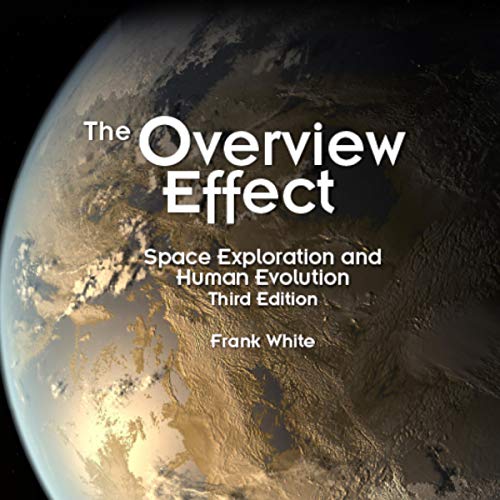
The Overview Effect: Space Exploration and Human Evolution
Summary
"The Overview Effect is an important book in helping people see that your attitude does change when you see the Earth from the space perspective - an experience that seems to be an almost universal phenomenon." - Edgar Mitchell, Apollo 14 astronaut, founder of the Institute of Noetic Sciences, founding member of the Overview Institute
"Space travel needs a new birth, and if we can tap into the desire to go into space, incredible things can come from it." - Sir Richard Branson, founder of the Virgin Group, which includes Virgin Galactic
More than 30 years ago, Frank White coined the term "overview effect", to describe the cognitive shift in awareness that results from the experience of viewing Earth from orbit or the moon. He found, that with great consistency, this experience profoundly affects space travelers' worldviews - their perceptions of themselves and our planet and our understanding of the future. White found that astronauts know from direct experience what the rest of us know only intellectually: We live on a planet that is like a natural spaceship moving through the universe at a high rate of speed. We are, in fact, the crew of "Spaceship Earth", as Buckminster Fuller described our world.
In The Overview Effect, Third Edition, Frank White expands on his original concept, which has now gained worldwide recognition and exposure. Using interviews with and writings by numerous astronauts and cosmonauts, he describes space exploration and settlement as necessary next steps in the evolution of human civilization and consciousness. The third edition features new interviews with the following astronauts, space advocates, and New Space entrepreneurs: Helen P. Sharman, Michael Lopez-Alegria, Sandra H. Magnus, John B. Herrington, Ron Garan, Akihiko Hoshide, Nicole Stott, Sir Richard Branson, George Whitesides, and Loretta Hidalgo Whitesides.
©1987, 1998, 2014 William Frank White (P)2018 William Frank White

Evolving Brains, Emerging Gods
Summary
In this book, E. Fuller Torrey draws on cutting-edge neuroscience research to propose a startling answer to the ultimate question. Evolving Brains, Emerging Gods locates the origin of gods within the human brain, arguing that religious belief is a by-product of evolution. Based on an idea originally proposed by Charles Darwin, Torrey marshals evidence that the emergence of gods was an incidental consequence of several evolutionary factors. Using data ranging from ancient skulls and artifacts to brain imaging, primatology, and child development studies, this book traces how new cognitive abilities gave rise to new behaviors. For instance, autobiographical memory, the ability to project ourselves backward and forward in time, gave Homo sapiens a competitive advantage. However, it also led to comprehension of mortality, spurring belief in an alternative to death. Torrey details the neurobiological sequence that explains why the gods appeared when they did, connecting archaeological findings including clothing, art, farming, and urbanization to cognitive developments. This book does not dismiss belief but rather presents religious belief as an inevitable outcome of brain evolution. Providing clear and accessible explanations of evolutionary neuroscience, Evolving Brains, Emerging Gods will shed new light on the mechanics of our deepest mysteries. The book is published by Columbia University Press. The audiobook is published by University Press Audiobooks. "This is the book I have been waiting for…" (Religion) "Richly rewarding...Highly recommended." (Choice) "A wonderful addition to the current corpus sitting at the intersection of religion and evolution." (Reading Religion)
©2017 Columbia University Press (P)2021 Redwood Audiobooks

Human Anatomy & Physiology - Part 1
Summary
Human Anatomy & Physiology, Part 1 is a college introductory-level text read in a conversational manner. Within each section key words and concepts are introduced and discussed. The audio format allows students to make the most of their time by giving them the freedom to study by listening. The topics covered in this book include: (1) Anatomical Positions; (2) Tissues; (3) The Integumentary System; (4) The Skeletal and Muscular Systems; (5) Bone Growth and Repair; (6) Nervous Tissue; (7) The Central Nervous System; (8) Nerves and Synapses; and (9) The Peripheral Nervous System. Human Anatomy & Physiology, Part 1 is an ideal review for nursing students, biology students, students reviewing for the MCAT and students reviewing for the GRE in biology.
©1996 AudioText (P)2019 AudioText

Ambiente, scienza e sviluppo sostenibile
Summary
"Rispondere alle domande sui maggiori temi di attualità, raccontare come nasce una narrazione giornalistica, condividere le chiavi di lettura per interpretare i fatti. Sono questi gli obiettivi di "Dentro la Notizia", il format - a cadenza settimanale - che Repubblica ha realizzato in esclusiva per Audible: ogni settimana un dialogo tra due firme del quotidiano, per svelare i segreti di un'inchiesta o di un reportage e per sentire la differenza che c'è tra il rumore indistinto dell'informazione e il timbro di un giornalismo di qualità." Il verde e il blu sono i colori dell'ambiente. Per uno sviluppo sostenibile scienza ed economia devono trovare un'alleanza per raggiungere uno sviluppo sostenibile, come chiedono le giovani generazioni, le più preoccupate per il futuro del nostro pianeta. È in questo contesto che, con un ruolo da protagonista, entra in gioco Green&Blue, il nuovo prodotto digitale e di carta del gruppo Gedi, diretto da Fabio Bogo.
©2020 Gedi Gruppo Editoriale S.p.A (P)2020 Gedi Gruppo Editoriale S.p.A

Nano
Summary
It's the ultimate technology: nanotechnology - the attempt to build ordinary objects from the atoms up, molecule by molecule. So named because its building blocks are the smallest pieces of matter, nanotechnology will give us complete control over the structure of matter, allowing us to build any substance or structure permitted by the Laws of Nature. Placing atoms as if they were bricks, nano-machines could turn grass clippings into prime sirloins - directly, without cows. They could turn coal into diamond, and sheets of diamond into rocket engines. Suitably reprogrammed, the tiny machines could repair all of your body's ailing cells. Science fiction? Actually, scientists have already isolated individual atoms and moved them at will, even using them to spell out words on a scale so small that the entire Encyclopedia Britannica can be written on the head of a pin. Conceived by Nobel Prize winning physicist Richard Feynmen, and pioneered by the remarkable K. Eric Drexler, who earned the first Ph.D. in the field he created at MIT more than a decade ago, nanotechnology is astoundingly near. In Nano, acclaimed science writer Ed Regis introduces us to the visionary engineers and scientists - as well as the critics - of this imminent technological revolution and shows how their work may soon begin changing the world as we know it, with fleets of molecular assemblers churning out essential commodities without human labor, the world economy would be transformed, famine and poverty banished forever. With cell-repair devices coursing through the human body, aging could be postponed, even halted, common diseases eradicated permanently. But would this new world be a return to Eden or a rash step into a dangerous future? Programmed differently, those same molecular machines could become agents more potent than the deadliest viruses. Articulate, intelligent, and entertaining, Regis reports on the wonders and perils of this new technology, and traces its philosophical implications.
©1995 Ed Regis (P)2012 Audible, Inc.

Building Beehives for Dummies
Summary
The easy way to build your own beehives and beekeeping equipment Building Beehives for Dummies is the follow-up book to the best-selling Beekeeping for Dummies. It provides everything you need to learn how to build some of the world's most popular hives and beekeeping accessories. For each design the book includes a detailed materials list (what lumber, hardware, and fasteners you'll need) and step-by-step building instructions. There are over a dozen plans in all, including the traditional Langstroth hive, the eight frame garden hive, designs for elevated hive stands, the Warre hive, screened bottom board, the Kenya top-bar hive, four-frame observation hive, hive top feeders, and more. The book contains introductory chapters that teach you the basic carpentry skills necessary to build any of the plans in the book. Whether you are a new beekeeper or a seasoned ol'timer, Building Beehives for Dummies provides you with the information you need to plan and succeed at building beehives (and other cool accessories). You'll discover what type of hive to build, hints on how to maintain your equipment, what bees need to stay happy and healthy, where to locate your hive, and much more.
©2019 John Wiley & Sons, Inc. (P)2020 Tantor

Learn Better
Summary
Supercharge your memory and put your mental abilities on overdrive with this powerful bundle to learn better! This audiobook contains: Self Discipline: How to Grow More Willpower and Improve Your Mental State. Memory Improvement: Learn & Read Faster, Focus Better and Remember More! Memory Improvement If you’ve ever wondered why your memory is so fleeting and transient; if you’ve ever been embarrassed by your inability to remember little, yet important things such as names of acquaintances; if you have a test you need to study for, but aren’t confident in your memory; if you’ve ever wondered if you can do anything to take your memory and brainpower to the stratosphere; then this audiobook is for you. Designed for students and listeners alike, and highly applicable in real-life situations, Memory Improvement contains powerfully effective tips, tricks, and techniques for upgrading your memory and improving your life. Here’s what you’re going to discover in this guide: Five effective techniques to memorize anything. Six powerful tips on reading faster and improving your comprehension Speed up your reading time using special techniques Simple-but-effective tricks to sharpening your focus And many more! Highly potent and powerfully effective, Justin Frind’s Memory Improvement guide will take your brainpower and mental abilities from average to superhuman, making you more efficient, imaginative, and creative at any endeavor you undertake, whether it is work, school, or play. Self Discipline Did you have the motivation to attack this goal, only to lose that motivation almost as quickly as it appeared? Well, I want to tell you that you are not in the minority of folks who have had trouble getting started attaining their goals. All over the world, there are people who have the desire to better their lives but just can’t seem to find the needed ingredient to go out and make it happen. No matter what you want - if it’s to be healthier, wealthier, and/or happier - your failure to achieve these things most likely didn’t come about because of who you are; they happened because you lacked the necessary skills of self-discipline to follow through. Inside, you will find: What self-discipline is and where it comes from Proven tips to help you become more disciplined The ways in which you can make the most out of your limited time How to avoid the excess and temptations of life that tend to derail us Identifying what it is you want from your life and how to go about getting it Ways to become a better, more active person in your own life
©2018 Justin Frind (P)2018 Cyberchill

Come si sceglie un leader
Summary
Rispondere alle domande sui maggiori temi di attualità, raccontare come nasce una narrazione giornalistica, condividere le chiavi di lettura per interpretare i fatti. Sono questi gli obiettivi di "Dentro la Notizia", il format - a cadenza settimanale - che Repubblica ha realizzato in esclusiva per Audible: ogni settimana un dialogo tra due firme del quotidiano, per svelare i segreti di un'inchiesta o di un reportage e per sentire la differenza che c'è tra il rumore indistinto dell'informazione e il timbro di un giornalismo di qualità. Disse Guido Dorso che la formazione della classe dirigente è un mistero divino. A quasi un secolo di distanza l'arcano è rimasto tale, anzi aggravato dalla post politica. Dalle primarie del Pd vinte da Nicola Zingaretti alle "confusionarie" dei 5 Stelle via Internet, passando per i tentativi di successione dinastica di Berlusconi e Bossi.
©2019 Gedi Gruppo Editoriale S.p.A (P)2019 Gedi Gruppo Editoriale S.p.A

Fire
Summary
Fire is rarely out of the headlines, from large natural wildfires raging across the Australian or Californian countrysides to the burning of buildings such as the disasters of Grenfell tower and Notre Dame. Fire on these scales can represent a serious risk to human life and property. But the advent of fire made and controlled by humans also represented a crucial point in our evolution, allowing us to cook our food, forge our weapons, and warm our homes. This Very Short Introduction audiobook covers the fundamentals of fire, whether wild or under human control, starting with the basics of ignition, combustion, and fuel. Andrew Scott considers both natural wildfires and the role of humans in making and suppressing fire. Despite frightening reports of wildfire destruction, he also shows how landscape fires have been part of our planet's history for 400 million years and do not always have to be extinguished. He also considers the problem of fires in urban settings, including new ways to prevent fires. The cost of wildfire can be steep - as well as the burning, post-fire erosion and flooding can have a great impact on both humans and the environment. It can also have a lasting effect in shaping ecosystems and plant life. Scott ends by examining the relationship between fire and the climate and considering the future of wildfire in a warming world.
©2020 Andrew C. Scott (P)2021 Tantor

Die Macht unserer Gene
Summary
Wissenschaftlichen Schätzungen zufolge leidet jeder Mensch unter mindestens 2.000 Gendefekten. Sie lassen unser Immunsystem schlechter funktionieren, führen zu Arthrose und Osteoporose, können Diabetes und Sehschwäche verursachen, und sie machen dick. Aber Gene sind kein Schicksal mehr. Der Molekularbiologe Dr. Daniel Wallerstorfer zeigt, wie wir mit der richtigen Vorsorge, guter Ernährung und dem geeigneten Lebensstil unsere Erbanlagen steuern und unsere Gesundheit kontrollieren können.
©2021 Lübbe Audio (P)2021 Lübbe Audio

A Macat Analysis of Alfred W. Crosby's The Columbian Exchange: Biological and Cultural Consequences of 1492
Summary
Environmental factors shape our history just as much as - and sometimes more than - human factors. That's the premise of Alfred W. Crosby's 1972 work The Columbian Exchange: Biological and Cultural Consequences of 1492, a key text in environmental history. While earlier scholars emphasized cultural and technological factors as defining the way our world developed, Crosby argues that nonhuman factors, such as the exchange of plants, animals, and microbes between the Old and New Worlds had more overall impact. "The most important changes brought on by the Columbian voyages were biological in nature," he says. Crosby was one of the first historians to look at the importance of the spread of certain food crops and diseases in relation to the development of history, to show it was not simply political and social issues that counted. The Columbian Exchange introduces the idea that current human societies are also the product of a wider set of biological relationships, and need to be understood in these contexts.
©2016 Macat Inc (P)2016 Macat Inc

The Periodic Table
Summary
The periodic table is one of the most potent icons in science. It lies at the core of chemistry and embodies the most fundamental principles of the field. The one definitive text on the development of the periodic table by van Spronsen (1969), has been out of print for a considerable time. The present book provides a successor to van Spronsen, but goes further in giving an evaluation of the extent to which modern physics has, or has not, explained the periodic system. The Periodic Table is written in a lively style to appeal to experts and interested lay-persons alike. It begins with an overview of the importance of the periodic table and of the elements and it examines the manner in which the term "element" has been interpreted by chemists and philosophers. The book then turns to a systematic account of the early developments that led to the classification of the elements, including the work of Lavoisier, Boyle, and Dalton and Cannizzaro. The precursors to the periodic system, like Dobereiner and Gmelin, are discussed. In chapter 3 the discovery of the periodic system by six independent scientists is examined in detail. Two chapters are devoted to the discoveries of Mendeleev, the leading discoverer, including his predictions of new elements and his accommodation of already existing elements. Chapters 6 and 7 consider the impact of physics, including the discoveries of radioactivity and isotopy and successive theories of the electron, including Bohr's quantum theoretical approach. Chapter 8 discusses the response to the new physical theories by chemists, such as Lewis and Bury, who were able to draw on detailed chemical knowledge to correct some of the early electronic configurations published by Bohr and others. Chapter 9 provides a critical analysis of the extent to which modern quantum mechanics is, or is not, able to explain the periodic system from first principles. Finally, chapter 10 considers the way that the elements evolved following the Big Bang and in the interior of stars. The book closes with an examination of further chemical aspects, including lesser known trends within the periodic system, such as the knight's move relationship and secondary periodicity, as well at attempts to explain such trends.
©2007 Eric Scerri (P)2011 Audible, Inc.

Cuckoo
Summary
A gifted biologist's careful and beguiling study of why cuckoos have gotten away with tricking other birds into hatching and raising their young for thousands of years. The familiar call of the common cuckoo, "cuck-oo", has been a harbinger of spring ever since our ancestors walked out of Africa many thousands of years ago. However, for naturalist and scientist Nick Davies, the call is an invitation to solve an enduring puzzle: How does the cuckoo get away with laying its eggs in the nests of other birds and tricking them into raising young cuckoos rather than their own offspring? Early observers who noticed a little warbler feeding a monstrously large cuckoo chick concluded the cuckoo's lack of parental care was the result of faulty design by the Creator and that the hosts chose to help the poor cuckoo. These quaint views of bad design and benevolence were banished after Charles Darwin proposed that the cuckoo tricks the hosts in an evolutionary battle where hosts evolve better defenses against cuckoos and cuckoos, in turn, evolve better trickery to outwit the hosts. For the last three decades, Davies has employed observation and field experiments to unravel the details of this evolutionary arms race between cuckoos and their hosts. Like detectives, Davies and his colleagues studied adult cuckoo behavior, cuckoo egg markings, and cuckoo-chick begging calls to discover exactly how cuckoos trick their hosts. For birding and evolution aficionados, The Cuckoo is a lyrical and scientifically satisfying exploration of one of nature's most astonishing and beautiful adaptations. PLEASE NOTE: When you purchase this title, the accompanying reference material will be available in your Library section along with the audio.
©2015 Nick Davies (P)2015 Audible Inc.
The Complete Idiot's Guide to Theories of the Universe
Summary
You're no idiot, of course. You know Heisenburg's uncertainty principle has nothing to do with where you put your car keys. But modern cosmology is relatively complicated. The mystery of the universe definitely isn't one we can flip to the end to see whodunit. That hasn't stopped physicists, astronomers, and philosophers from searching for clues! The topic is infinite (literally), but once you've listened to this audiobook, you'll have a solid idea of our place in the universe and even where the cosmos itself might be headed. In this Complete Idiot's Guide, you'll explore: Major religious, philosophical, and scientific theories concerning the nature and origin of the universe. The theory of everything; one coherent model that would explain how all the forces and particles of nature work. The fascinating and even sometimes bizarre implications of the latest theories.
©2002 Gary F. Moring (P)2021 DK Audio

Fisica della lavatrice
Summary
Il vetro attraverso cui passa la luce che ci sveglia al mattino, la fetta di pane tostato con cui facciamo colazione, i jeans che indossiamo per uscire di casa, le ruote della bici che sostengono il nostro peso mentre torniamo dal lavoro, il palazzo tra le cui mura ci addormentiamo la sera: ogni singolo oggetto del nostro quotidiano funziona e opera grazie alle leggi della fisica, della chimica e della biologia, in modi che di solito ignoriamo completamente. "Fisica della lavatrice" ci porta a scoprire la scienza segreta degli oggetti di ogni giorno: dall'energia cinetica che permette alla macchina di avanzare nel traffico alle leve nascoste in asce, martelli e perfino rotoli di carta igienica; dalla fotodegradazione che stinge le nostre magliette preferite all'elasticità delle scricchiolanti assi di legno del pavimento; dai fluidi non-newtoniani che ingeriamo abitualmente, come il ketchup, alle microcapsule di colla che rendono così magici i post-it. Un viaggio tra elettricità e forza gravitazionale, termodinamica e relatività, che ci fa guardare da un punto di vista inatteso il nostro microcosmo domestico, con rivelazioni entusiasmanti e nuovi curiosi quesiti, scientificamente fondati: è possibile incendiare casa utilizzando un trapano elettrico? Perché il vento non butta giù i grattacieli? Come mai alcune persone russano e altre no? Perché le scarpe se lucidate durano più a lungo? Grazie a una lettura limpida ed esaustiva, Chris Woodford ci spalanca le porte delle misteriose forze che collegano le nostre camere da letto alle distese senza fine dello spazio interstellare, e i nostri spazzolini da denti all'origine dell'Universo. Un audiolibro che è un invito a perderci in armadi e garage, cucine e lavastoviglie, radio a transistor e polverosi ripostigli per riemergerne più consapevoli - e affascinati - dell'incredibile potenza che si nasconde dietro a tutto ciò che ci circonda.
©2019 Il Saggiatore S.r.l. Tradotto da Allegra Panini (P)2020 Audible Studios

Bird Sense
Summary
What is it like to be a swift, flying at over one hundred kilometres an hour? Or a kiwi, plodding flightlessly among the humid undergrowth in the pitch dark of a New Zealand night? And what is going on inside the head of a nightingale as it sings, and how does its brain improvise? Bird Sense addresses questions like these and many more, by describing the senses of birds that enable them to interpret their environment and to interact with each other. Our affinity for birds is often said to be the result of shared senses - vision and hearing - but how exactly do their senses compare with our own? And what about a bird's sense of taste, or smell, or touch, or the ability to detect the earth's magnetic field? Or the extraordinary ability of desert birds to detect rain hundreds of kilometres away - how do they do it? Bird Sense is based on a conviction that we have consistently underestimated what goes on in a bird's head. Our understanding of bird behaviour is simultaneously informed and constrained by the way we watch and study them. By drawing attention to the way these frameworks both facilitate and inhibit discovery, Birkhead identifies ways we can escape from them to explore new horizons in bird behaviour. There has never been a popular book about the senses of birds. No one has previously looked at how birds interpret the world or the way the behaviour of birds is shaped by all their senses. A lifetime spent studying birds has provided Tim Birkhead with a wealth of observation and a unique understanding of birds and their behaviour that is firmly grounded in science.
©2012 Tim Birkhead (P)2013 Audible, Inc.

The Wonder of Natural Life in Kentucky
Summary
Drawing upon his vast knowledge of the environment, biology, botany, and history, Ronald R. Van Stockum, Jr. has written a love letter to Kentucky. The lay person as well as the expert will understand as he describes the state’s evolution - its history, original land surface, the river-cut gorges, the mountains, and the lakes. He tells of eons of growth of flora, fauna, rock, and rill. Along with thorough documentation, the writer gives us a poetic description of this “...verdant state, lush in its heat, humidity, and rainfall. The diversity and abundance of life was immediately evident to all who came here”. With stories of Lady Slippers, buffalo trails, and flying snakes, Van Stockum takes us into a Magic Kingdom. This teacher gives us an impromptu course about the state called “Paradise”, as we delight in nature: wandering in the forest, crawling in a cave, walking creek banks, and floating down rivers in a canoe. With engaging material that grasps the listener, this gifted story-teller paints a picture of Kentucky that creates a yearning to join present-day efforts of naturalists to preserve it.
©2016 Ronald R. Van Stockum, Jr. (P)2020 Ronald R. Van Stockum, Jr.

Anger, 2nd Edition
Summary
Do you struggle with controlling your anger and lose it at times? Do you want to have your control back? Do you want to know the secret to using your anger instead of letting the emotion use you? I have worked with clients with a lot of anger, and I have also cured a lot of clients from feeling angry. All you need to release this emotion is a correct strategy that works every time, and the reason it works is because we all have the same nervous system. I want to find out what you are doing with your body when something triggers that state in you. This book is filled with techniques and strategies that can be applied straightaway to release this emotion. We need to understand that every emotion we experience from day to day is useful in some context. So, by us knowing that, we can start having fun with our own emotions.
©2015 Zac Dixon (P)2016 Zac Dixon