Cynthia O'Brien has narrated 3 audiobooks on Listento.it by 1 author. The most-rated is President Kennedy Fights the Cold War.
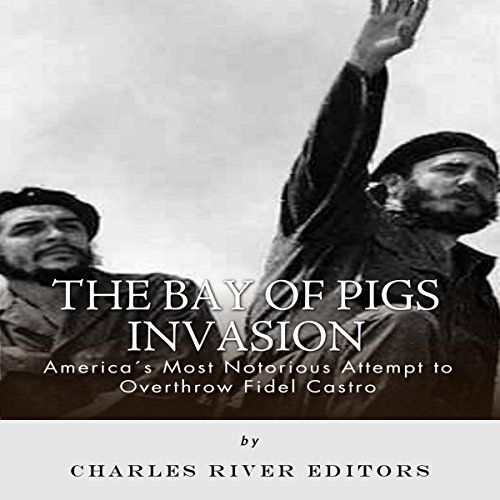
The Bay of Pigs Invasion: President Kennedy's Failed Attempt to Overthrow Fidel Castro
Summary
"Openly and unabashedly they are organizing training camps; openly and unabashedly they are building air bases and air strips. Everyone knows who is building the strips and buying planes, that mercenaries are recruiting troops. They even have the cynicism to publish photographs." (Fidel Castro, March 1961) Within just a month of becoming president, the issue of Communist Cuba became central to John F. Kennedy and his administration. On February 3, 1961, President Kennedy called for a plan to support Cuban refugees in the US. A month later he created the Peace Corps, a program that trained young American volunteers to help with economic and community development in poor countries. Both programs were integral pieces of the Cold War and were attempts to align disadvantaged groups abroad with the United State and the West against the Soviet Union and its Communist satellites. Meanwhile covert operations were laying the groundwork for overthrowing Cuban leader Fidel Castro, and he knew it. Castro railed against CIA involvement among Cubans trying to overthrow him and his still young revolution. Matters came to a head that April, when the Kennedy administration moved beyond soft measures to direct action. From April 17 to 20, 1,400 CIA-trained Cuban exiles landed on the beaches of Western Cuba in an attempt to overthrow Castro. This plan, known as the Bay of Pigs, had been originally drafted by the Eisenhower administration. The exiles landed in Cuba and were expected to be greeted by anti-Castro forces within the country, after which the US would provide air reinforcement to the rebels, and the Castro regime would slowly be overthrown. From the onset almost every phase of the operation went wrong.
©2012 Charles River Editors (P)2015 Charles River Editors

The Cuban Missile Crisis: 13 Days That Brought the Cold War to the Brink
Summary
"For in the final analysis, our most basic common link is that we all inhabit this small planet. We all breathe the same air. We all cherish our children's future. And we are all mortal." (President John F. Kennedy, June 1963) When young president Kennedy came to power in 1961, Soviet leader Nikita Khrushchev was eager to test his mettle from the start. Khrushchev's belief that he could push the inexperienced American leader around grew in the wake of the Bay of Pigs fiasco and the inconclusive Vienna summit in June 1961 that left Kennedy complaining to his brother, Bobby, that Khrushchev was "like dealing with Dad. All give and no take." After the events of the previous year, 1962 saw Khrushchev making his most bellicose decision. Still questioning Kennedy's resolve and attempting to placate the concerns of Cuban leader Fidel Castro following the failed Bay of Pigs invasion, Khrushchev attempted to place medium-range nuclear missiles in Cuba, just 90 miles off the coast of the United States. Though Castro warned him that it would seem like an act of aggression to the Americans, Khrushchev insisted, moving the missiles in quietly under the cover of darkness. The missiles could serve not only as a deterrent against any invasion of Cuba but also as the ultimate first-strike capability in the event of a nuclear war. However, in October 1962, American spy planes discovered that the Soviets were building nuclear missile sites in Cuba, and intelligence officials informed Kennedy. It went without saying that nuclear missile sites located just miles off the coast of the American mainland posed a grave threat to the country. Find out how Kennedy responded.
©2012- Charles River Editors (P)2015 Charles River Editors

President Kennedy Fights the Cold War
Summary
Within just a month of becoming president, the issue of Communist Cuba became central to John F. Kennedy and his administration. On February 3, 1961, President Kennedy called for a plan to support Cuban refugees in the US. A month later, he created the Peace Corps, a program that trained young American volunteers to help with economic and community development in poor countries. Both programs were integral pieces of the Cold War. They were attempts to align disadvantaged groups abroad with the United State and the West against the Soviet Union and its communist satellites. Meanwhile, covert operations were laying the groundwork for overthrowing Cuban leader Fidel Castro, and he knew it. Castro railed against CIA involvement among Cubans who were trying to overthrow him and his still-young revolution. Matters came to a head that April, when the Kennedy Administration moved beyond soft measures to direct action. From April 17-20, 1,400 CIA-trained Cuban exiles landed on the beaches of Western Cuba in an attempt to overthrow Castro. This plan, known as the "Bay of Pigs", had originally been drafted by the Eisenhower Administration. The exiles landed in Cuba and were expected to be greeted by anti-Castro forces within the country, after which the US would provide air reinforcement to the rebels, and the Castro regime would slowly be overthrown. Soviet leader Nikita Khrushchev's belief that he could push the inexperienced American leader around grew in the wake of the Bay of Pigs fiasco and the inconclusive Vienna summit in June 1961, which left Kennedy complaining to his brother Bobby that Khrushchev was, "[L]ike dealing with Dad. All give and no take."
©2012 Charles River Editors (P)2015 Charles River Editors