Albert Rutherford has 12 audiobooks on Listento.it, narrated by 2 narrators, with an average listener rating of 4.7★ across 37 ratings. The most-rated is Scrum Mastery: From Good to Great Servant-Leadership.
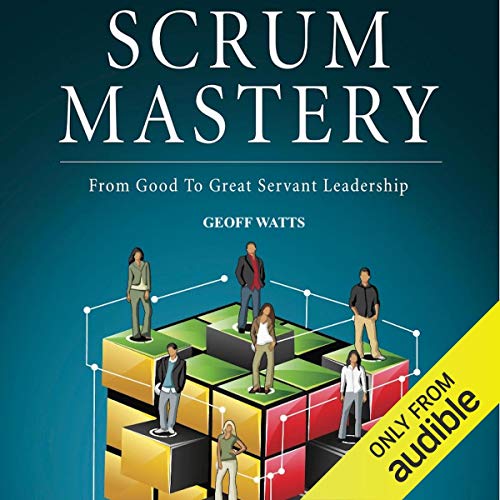
Scrum Mastery: From Good to Great Servant-Leadership
Summary
The basics of being a ScrumMaster are fairly straightforward: At face value, all a ScrumMaster needs to do is facilitate the Scrum process and remove impediments. But being a great ScrumMaster, one who truly embodies the principles of servant-leadership and helps move a team to the high performance levels possible with Scrum, is much harder and much more elusive. In this audiobook, Geoff shares a collection of stories and practical guidance, drawn from over 10 years of coaching numerous Scrum teams that will guide you on your path to greatness. In this audiobook, you will learn: The skills and characteristics of great ScrumMasters How to generate, maintain, and increase engagement from the team How to increase the effectiveness of the Scrum meetings, such as retrospectives and daily scrums How to foster a more creative and collaborative team How to increase the performance of the team How to know when you are a successful ScrumMaster Scrum Mastery is for practicing ScrumMasters who want to develop themselves into a great servant-leader capable of taking their teams beyond simple process compliance. Mike Cohn, in his foreword for the book, said: "Most books rehash well-trod territory and I don’t finish them any wiser. I am positive I will be referring back to this book for many years."
©2013 Inspect & Adapt Ltd (P)2018 Inspect & Adapt Ltd

Lessons from Critical Thinkers
Summary
Do you want to ask smart questions like Socrates or be an out-of-the-box thinker like John Stuart Mill and rational like Descartes? These people have at least one thing in common: They were great critical thinkers of their time, and their shared wisdom lived through the centuries. Lessons from Critical Thinkers provides intellectual power to engage with and participate in effective critical thoughts, arguments, debates, reading, and reflection drawn from methods in the history of philosophical cognitive development. Learn to think slowly and deliberately before making a decision Get ready to question opinions and even facts Learn to gather information before jumping to conclusions Accept and expect the biased and flawed nature of human cognition Lessons from Critical Thinkers gives you a thorough presentation of the ideas and principles of critical thinking practiced by the greatest minds in history. Learn about the most important critical thinking methods to make better decisions in your personal life, career, and friendships. Equip yourself with the essential methods for clear, analytical, logical thinking and critique in a range of ideas and everyday situations. Discover critical thinking by familiarizing yourself with concepts from other disciplines, like philosophy, cognitive biases and errors, race and gender from sociology and political science, and symbols from rhetoric Apply critical thinking and reasoning skills to your day-to-day problems Find the most rewarding options in any opportunity Lessons from Critical Thinkers is a helpful audiobook for listeners of any age and background who want to improve their critical thinking skills by learning from the greatest thinkers of all time. Learn to filter out irrelevant information efficiently and prioritize your resources to get the best results. Enhance your communication skills, reasoning, and logic. Improve your critical, logical, observational, and rational thinking skills with the timeless principles presented in this book.
©2018 Albert Rutherford (P)2019 Albert Rutherford

The Systems Thinker
Summary
Find the optimal solutions to your problems. Gain a deep understanding of the “what, why, how, when, how much” questions of your life. Become a systems thinker and discover how to approach your life from a completely new perspective. What is systems thinking? Put simply, it is thinking about how things interact with one another. Why should this matter to you? Because you are a system. You are a part of smaller and larger systems - your community, your country, your species. Understanding your role within these systems and how these systems affect, hinder, or aid the fulfillment of your life can lead you to better answers about yourself and the world. Information is the most precious asset these days. Evaluating that information correctly is almost priceless. Systems thinkers are some of the bests in collecting and assessing information, as well as creating impactful solutions in any context. The Systems Thinker will help you to implement systems thinking at your workplace, human relations, and everyday thinking habits. Boost your observation and analytical skills to find the real triggers and influencing forces behind contemporary politics, economics, health, and education changes. Systems thinking clears your vision by teaching you not only to find the differences between the elements but also the similarities. This bidirectional analyzing ability will give you a more complex worldview, deeper understanding of problems, and thus better solutions. The car stopped because its tank is empty - so it needs gas. Easy problem, easy solution, right? But could you explain just as easily why the price of gas rose five percent the past month? After becoming a systems thinker, you’ll be able to answer that question just as easily. Change your thoughts, change your results. What are the main elements, questions, and methods of thinking in systems? The most widely used systems archetypes, maps, models, and analytical methods. Learn to identify and provide solutions even the most complex system problems. Deepen your understanding about human motivation with systems thinking. The past 50 years brought so many changes in our lives. The world has become more interconnected than ever. Old rules can’t explain the new world anymore. But systems thinking can. Embrace systems thinking and become a master of analytical, critical, and creative thinking.
©2018 Albert Rutherford (P)2018 Albert Rutherford

The Elements of Thinking in Systems
Summary
Would you like to have better solutions to your problems? Struggling to understand why things went wrong when you did everything right? The Elements of Thinking in Systems can help you with these problems. Systems surround us, and we might not even be aware of it. Your household is a system. The bakery on the corner is a system. Your class at school, your department at work, and your weekend soccer team made of wholehearted dads is a system, too. You are a vital part of more complex systems like your country, the economy, or the world; learn about their changing nature and find optimal solutions to problems related to them. The world is more connected than ever thanks to innovations like telephone, television, computers, and internet. The way we sense reality changed significantly. Using conventional thinking to understand the world as it functions today is not enough. We need to know the elements of systems thinking to see beyond simple cause-effect connections. This audiobook will help you to find strategic solutions to every complex modern problem. The Elements of Thinking in Systems focuses on the nine fundamental system archetypes; our mental models related to them and the step-by-step implication methods to fix them. Learn to use systems archetypes to solve your problems at work, in your business, in your relationship, and social connections. See through the motivations and understand the drives of contemporary politics, economics, and education. Widen your perspective, think critically, analyze deeply, clear your vision, and be more logical and rational just by applying systems thinking. Think differently and get different results. Learn the language of systems thinking. Apply the best systems-thinking ideas, models, and frameworks in your cognitive and decision-making process. Learn to understand, design, and find solutions to the main system problems, called "archetypes". Complexity, organizational pathways, and networks gain more and more importance in our interconnected world. The Elements of Thinking in Systems gives you real-life examples to make the adoption process of this type of thinking smooth. Define your problems more accurately, find better, long-lasting solutions to your problems, learn to create strategic plans using systems diagrams, and understand your place and power over the world.
©2019 Albert Rutherford (P)2019 Albert Rutherford

The Systems Thinker: Analytical Skills
Summary
Enhance your logic, reason, judgment, and wisdom. Increase your ability to create concise and reasoned arguments using data and evidence to get a genuine conclusion. The Systems Thinker: Analytical Skills aims to raise the level of your mental performance by focusing on the fundamentals of how to use your mind effectively. This audiobook will show you how to: Increase your ability to analyze problems and to comprehend what you read, hear, and experience in a logical manner. Examine the logical structure of good and bad reasoning. Look at what type of evidence decisions are commonly based on. Detect common fallacies and rhetorical and psychological factors that can influence your thinking. The audiobook presents the methods that good problem-solvers use in understanding complex ideas. It provides practice in applying these methods to a variety of comprehension, analytical, and reasoning questions. It also includes a number of logical thinking problems to hone your logical thinking skills. Use these intellectual skills to analyze anything you might think about - questions, problems, disciplines. The most widely used forms of analysis Guidance and practice to monitor your thoughts with the help of intellectual tools Learn to question purposes, problems, information, and concepts Interdisciplinary analytical tools to understand and assess your own reasoning, be it about a highly technical question or your everyday life The Systems Thinker: Analytical Skills helps you to find the most fundamental logic of any discipline, problem, or thesis. Transfer your knowledge between and among subjects and fields of observation. Learn four types of profound analysis. Learn to read and create statistical charts. Learn and correct the most frequent errors in reasoning. Learn to complement your analytical thinking tools with synthetic, systemic, critical, and creative thinking tools. Good analytical thinking skills are deeply necessary if you are working in business, education, law, politics, and economics. Understanding the underlying structure of a problem can help you come up with the best solution. Adopt analytical thinking skills to make better decisions, assess situations more accurately, and persuade other people with more success to consider your point of view. This audiobook serves as a springboard toward analytic proficiency. PLEASE NOTE: When you purchase this title, the accompanying PDF will be available in your Audible Library along with the audio.
©2019 Albert Rutherford (P)2019 Albert Rutherford

Models for Critical Thinking
Summary
The quality of our lives is determined by the quality of our thinking. The quality of our thinking is often determined by the quality questions we ask from ourselves. Critical thinking is the art of asking relevant, necessary, and meaningful questions to discover the objective truth behind words, events, and opinions in general. Critical thinking is the ability to think objectively and rationally about a particular situation without letting your emotions hijack you. Like any other skill, critical thinking can be learned through rigorous practice and commitment. Today, we have more access to information than ever before. Information influences our worldview and decisions, often without us noticing it. Following wrong idols can lead us to bad decisions that lead to unhappiness and a dissatisfying life. When what’s “right, beautiful, successful, and cool” gets dictated around us by ads and through “influencers”, we often forget to think for ourselves and make our own choices. Thus we make bad decisions based on the opinion of others - not even our own. Models for Critical Thinking provides you with unique insights into the nature of thinking and reasoning - why are we often so wrong, why are we so inclined to avoid the responsibility of thinking for ourselves, and how can we develop solid, objective thinking patterns. Models for Critical Thinking lays out: The function of critical thinking; its main impediments, the social counterfeits of ethics The elements of critical reasoning Important abilities and traits of critical thinkers The vocabulary of critical analysis The models essential to critical thinking The most secure way of making good decisions is to have well-practiced and predictable strategies you can use when you are faced with a problem that requires deeper analysis. This audiobook will provide you with helpful information and exercises tips. If you follow them, you can find better solutions to your problems. Learn the essential critical thinking skills when reading, writing, and speaking Be on your guard to hidden cognitive traps when shopping and interacting with advertisers Find out what tools and strategies can help you become a more disciplined thinker, developing your analytical, reasoning, and reflective thinking skills Be ready to learn. Be ready to argue intellectually. In this audiobook, I share the best knowledge of the best critical thinkers - intertwined with my own - to help you develop this essential skill that the contemporary job market so keenly demands. I will help you create thinking patterns that lead to a critical and more objective understanding of the world.
©2018 Albert Rutherford (P)2018 Albert Rutherford

Tools of Systems Thinkers
Summary
Think with clarity, depth, and speed. Become an effective problem solver and decision maker. We often have blind spots for the actual reasons that cause problems in our lives. So, we try to fix our issues based on assumptions, false analysis, and mistaken deductions. This can bring a lot of misunderstanding, anxiety, and frustration into our personal and work relationships. Tools of Systems Thinkers shares powerful strategies to organize your thoughts into transparent patterns and find the real roots of your problems to fix them, once and for all. Notice details others miss. See through complexity. Resist jumping to conclusions prematurely. Evaluate information correctly and consistently to make better decisions. Stop sabotaging your self-interest. Overwrite your autopilot with logical and analytical tools. This unique book will give them to you. Learn to utilize mental models and system maps to your greatest advantage. Mental models provide transparency, order, deeper understanding, and context to your problem. System maps can become your leading cognitive tool to find a clear solution that lasts. Change your thinking, change your results. Albert Rutherford is an internationally best-selling author and a retired corporate executive. His books draw on various sources, from corporate system building, organizational behavior analysis, scientific research, and his life experience. He has been building and improving systems his whole adult life and brings his proven strategies to you. Regain focus. Discover relevant information. Find out the five most powerful mental models and system maps. Learn to create a visual representation of complex problems with dynamic systems. Use system tools to fix your everyday problems. Find real-life examples and exercises to deepen your knowledge at the end of each chapter. Make smart and clear decisions. Change your way of thinking. Master analytical, critical, and creative thinking. Become a systems thinker, and discover how to approach your life from an entirely new perspective. PLEASE NOTE: When you purchase this title, the accompanying PDF will be available in your Audible Library along with the audio.
©2021 Albert Rutherford (P)2021 Albert Rutherford

The Art of Thinking Critically
Summary
Identify false information. Avoid getting tricked. Be quick-witted and insightful. Would you like to ask the right questions, come up with strong arguments, detect biases and irrational or illogical reasoning? But you don’t know where to start learning these? The Art of Thinking Critically will help you with that! Using the brightest ideas and best practices of some of the greatest thinkers, you can become a self-thought critical thinker, who doesn’t accept things at face value. With the help of guided exercises, you will learn how to do your own research, think about information for yourself, and draw conclusions that stand true to you. Avoid being manipulated. Being surrounded by inaccurate and often misleading information can feel overwhelming. Become more astute and catch inconsistencies in others’ reasoning; don’t be misled. Learn to question, fact-check, and correct people without sounding offensive How to self-educate to think more critically Equip yourself with good questions and ideas on how to think for yourself Break out of herd mentality Get a structure on how to implement critical thinking practices in your life Human beings are generally curious and wish to understand the world better. But many of us didn’t have the luck to learn effective questioning techniques as children. We were not encouraged to form opinions and were rather scolded for being too curious. So we didn’t learn how to properly question and assess the information we hear, read, and how to think for ourselves. But we can absolutely change that! And educate our children to be better equipped with critical thinking skills. Make better decisions. Don’t be gullible.
©2020 Albert Rutherford (P)2020 Albert Rutherford

The Analytical Mind: Level Up Your Researching and Critical Thinking Skills, Improve Your Decision Making and Problem Solving Ability, Notice the Details Others Miss
Summary
The Analytical Mind aims to raise the level of your mental performance by focusing on the fundamentals of how to use your mind effectively. This book will show you how to: Increase your ability to analyze problems and to comprehend what you read, hear, experience in a logical manner. Examine the logical structure of good and bad reasoning. Look at what type of evidence are decisions commonly based on. Detect common fallacies and rhetorical and psychological factors that can influence your thinking. The book outlines and presents the methods that good problem solvers use in understanding complex ideas. Then, it provides practice in applying these methods to a variety of comprehension, analytical, and reasoning questions. It also includes a number of logical thinking problems to hone your logical thinking skills. Use these intellectual skills to analyze anything you might think about - questions, problems, disciplines. The most widely used forms of analysis. Guidance and practice to monitor your thoughts with the help of intellectual tools. Learn to question purposes, problems, information, and concepts. Interdisciplinary analytical tools to understand and assess your own reasoning, be it about a highly technical question or your everyday life. The Analytical Mind helps you to find the most fundamental logic of any discipline, problem, or thesis. Transfer your knowledge between and among subjects and fields of observation. Learn four types of profound analysis. Learn to read and create statistical charts. Learn and correct the most frequent errors in reasoning. Learn to complement your analytical thinking tools with synthetic, systemic, critical, and creative thinking tools. Good analytical thinking skills are deeply necessary if you are working in business, education, law, politics, and economics. Understanding the underlying structure of a problem can help you come up with a more profound solution. Adopt analytical thinking skills to make better decisions, assess situations more accurately, and persuade other people with more success to consider your point of view. This book serves as a springboard toward analytic proficiency.
©2018 Albert Rutherford (P)2018 Albert Rutherford

The Systems Thinker - Mental Models
Summary
Regain focus. Select relevant information. Make quick and clear decisions. We are dealing with too many options, too much information, conflicting advice on general choices like what diet to choose, or who to choose as a mate. It’s hard to maintain focus and be confident in our decisions under such conditions. The Systems Thinker - Mental Models helps you make decisions based on your relevant thought patterns and true values. Finding the most relevant information to you, the best decision to you is a matter of exploring your thoughts and wants. Mental models are cognitive frameworks that you can use to make order in your head, tune out the noise, and focus on what’s important - without getting overwhelmed. Mental models provide transparency, order, deeper understanding, context, and most importantly, a clear solution or conclusion about problems. Using systems thinking as your leading cognitive tool will provide depth and width to your mental analysis. Learn how corporate executives, economists, and policy makers analyze big data and make decisions based on it. Discover 12 powerful thinking tools to facilitate your though processes Understanding and model dynamic systems Learn to use mental models through real-life examples Mental models are so much more than a cognitive tool; they help with productivity, enhance understanding, boost critical thinking, and analytical skills. Understand how corporations make multidimensional decisions Learn to design your own mental models to map out your real priorities Learn to include soft variables such as emotions into your analysis Shift your mindset from blaming to accountability and resolve conflicts easier PLEASE NOTE: When you purchase this title, the accompanying PDF will be available in your Audible Library along with the audio.
©2020 Albert Rutherford (P)2020 Albert Rutherford

10-Minute Social Psychology
Summary
Would you like to instantly catch people’s thoughts, emotions, motivations, and intentions through mere observation? If yes, you’re in the right place! 10-Minute Social Psychology is a unique audiobook that takes a deeper look into social conflicts: What causes them, what keeps them alive, and most importantly - what you can do about them. The audiobook presents how social awareness is built, and takes you step-by-step through the various mindset shifts and action items. Using the best studies and lessons of social neuroscience and social psychology this audiobook helps you understand how others influence your thoughts, feelings, and behaviors. Establishing a connection between raw biological and social cognition, the neuro-scientific method can have a tremendous impact on our behavior. Improve your: decision-making, critical thinking and reasoning, physical and mental health care, self-understanding. 10-Minute Social Psychology addresses social concerns such as discrimination, in - and out - group dynamics, competition-cooperation, social acceptability, and likability, using neuroscience and social psychology-backed data, giving guidelines and critical thinking practices to diminish these concerns. Learn to predict and change others’ and our own behavior. How our understanding of social behavior can be expanded and improved? How do social processes impact the human brain? Which brain areas implement social behavior? Can we influence them? Become more likable by becoming more empathetic. Tame the social categorization muscle in dimensions like gender, race, or age. What is the cost of social stress? How to become better at cooperation and competition? How to become less susceptible to social influence? Humans are social creatures - our health and well-being partially depend on others. 10-Minute Social Psychology helps you to understand the critical function of how we make sense of and connect with people.
©2020 Albert Rutherford (P)2020 Albert Rutherford

Neuroscience and Critical Thinking: Understand the Hidden Pathways of Your Thought Patterns- Improve Your Memory, Make Rational Decisions, Tune Down Emotional Reactions, and Set Realistic Expectations
Summary
Improve your critical, logical, observational, and rational thinking skills with the timeless principles presented in this book.
©2019 Albert Rutherford (P)2019 Albert Rutherford