David Shih has narrated 39 audiobooks on Listento.it by 47 authors, with an average listener rating of 4.5★ across 1,815 ratings. The most-rated is Jurassic Park.

Jade Dragon Mountain
Summary
On the mountainous border of China and Tibet in 1708, a detective must learn what a killer already knows: that empires rise and fall on the strength of the stories they tell. Li Du was an imperial librarian. Now he is an exile. Arriving in Dayan, the last Chinese town before the Tibetan border, he is surprised to find it teeming with travelers, soldiers, and merchants. All have come for a spectacle unprecedented in this remote province: an eclipse of the sun commanded by the emperor himself. When a Jesuit astronomer is found murdered in the home of the local magistrate, blame is hastily placed on Tibetan bandits. But Li Du suspects this was no random killing. Everyone has secrets: the ambitious magistrate, the powerful consort, the bitter servant, the irreproachable secretary, the East India Company merchant, the nervous missionary, and the traveling storyteller who can't keep his own story straight. Beyond the sloping roofs and festival banners, Li Du can see the mountain pass that will take him out of China forever. He must choose whether to leave and embrace his exile or to stay and investigate a murder that the town of Dayan seems all too willing to forget.
©2015 Elsa Hart (P)2015 Macmillan Audio

Burn Cycle
Summary
An unbeatable enemy. A planet on the brink. And a squad with a taste for revenge. In this incendiary new military science fiction novel, an infantry squad crisscrosses the globe on a search-and-destroy mission against a relentless foe. After cry pilot Maseo Kaytu's white-knuckled victory over the mysterious lampreys at Ayko Base, military command develops new weapons and a new strategy. The updated mission is simple: pinpoint the Hatchery, the "spawn point" of the lampreys, and blast it into a fine powder. Kaytu's battle-tested squad tracks the enemy from remote bases to elegant cities to subterranean caverns, but the lampreys start hitting harder and faster. While the squad is winning battles, Earth is losing the war. When the search for the Hatchery shines a light on Kaytu's insurgent past, he faces a terrible truth. There is no line he won't cross to protect his squad. Then a vicious counterattack teaches him another lesson: You can't save everyone. In the end, all you can do is the job.
©2020 Joel Dane (P)2020 Penguin Audio

Somewhere Only We Know
Summary
10:00 p.m. Lucky is the biggest K-pop star on the scene, and she's just performed her hit song "Heartbeat" in Hong Kong to thousands of adoring fans. She's about to debut on The Tonight Show in America, hopefully a breakout performance for her career. But right now? She's in her fancy hotel, trying to fall asleep but dying for a hamburger. 11:00 p.m. Jack is sneaking into a fancy hotel, on assignment for his tabloid job that he keeps secret from his parents. On his way out of the hotel, he runs into a girl wearing slippers, a girl who is single-mindedly determined to find a hamburger. She looks kind of familiar. She's very cute. He's maybe curious. 12:00 a.m. Nothing will ever be the same.
©2019 Maureen Goo (P)2019 Tantor

China Dream
Summary
A Financial Times Best Book of the Year Blending fact and fiction, China Dream is an unflinching satire of totalitarianism. Ma Daode, a corrupt and lecherous party official, is feeling pleased with himself. He has an impressive office, three properties, and multiple mistresses who text him day and night. After decades of loyal service, he has been appointed director of the China Dream Bureau, charged with replacing people's private dreams with President Xi Jinping's great China Dream of national rejuvenation. But just as he is about to present his plan for a mass golden wedding anniversary celebration, his sanity begins to unravel. Suddenly plagued by flashbacks of the Cultural Revolution, Ma Daode's nightmare visions from the past threaten to destroy his dream of a glorious future. This darkly comic fable exposes the damage inflicted on a nation's soul when authoritarian regimes, driven by an insatiable hunger for power, seek to erase memory, rewrite history, and falsify the truth. It is a dystopian vision of repression, violence, and state-imposed amnesia that is set not in the future, but in China today.
©2018 Ma Jian; English translation copyright 2018 by Flora Drew (P)2019 HighBridge, a division of Recorded Books

The Perfect World of Miwako Sumida
Summary
From the critically acclaimed author of Rainbirds comes a novel of tragedy and dark histories set in Japan. University sophomore Miwako Sumida has hanged herself, leaving those closest to her reeling. In the months before her suicide, she was hiding away in a remote mountainside village, but what, or whom, was she running from? To Ryusei, a fellow student at Waseda; Chie, Miwako's best friend; and Fumi, Ryusei's older sister, Miwako was more than the blunt, no-nonsense person she projected to the world. Heartbroken, Ryusei begs Chie to take him to the village where Miwako spent her final days. While he is away, Fumi receives an unexpected guest at their shared apartment in Tokyo, distracting her from her fear that Miwako's death may ruin what is left of her brother's life. Expanding on the beautifully crafted world of Rainbirds, Clarissa Goenawan gradually pierces through a young woman's careful facade, unmasking her most painful secrets.
©2020 Clarissa Goenawan (P)2020 HighBridge, a division of Recorded Books

The Banished Immortal
Summary
From the National Book Award-winning author of Waiting: a narratively driven, deeply human biography of the Tang dynasty poet Li Bai - also known as Li Po. In his own time (701-762), Li Bai's poems - shaped by Daoist thought and characterized by their passion, romance, and lust for life - were never given their proper due by the official literary gatekeepers. Nonetheless, his lines rang out on the lips of court entertainers, tavern singers, soldiers, and writers throughout the Tang dynasty, and his deep desire for a higher, more perfect world gave rise to his nickname, the Banished Immortal. Today, Bai's verses are still taught to China's schoolchildren and recited at parties and toasts; they remain an inextricable part of the Chinese language. With the instincts of a master novelist, Ha Jin draws on a wide range of historical and literary sources to weave the great poet's life story. He follows Bai from his origins on the Western frontier to his ramblings travels as a young man, which were filled with filled with striving but also with merry abandon, as he raised cups of wine with friends and fellow poets. Ha Jin also takes us through the poet's later years - in which he became swept up in a military rebellion that altered the course of China's history - and the mysterious circumstances of his death, which are surrounded by legend. The Banished Immortal is an extraordinary portrait of a poet who both transcended his time and was shaped by it and whose ability to live, love, and mourn without reservation produced some of the most enduring verses.
©2019 Ha Jin (P)2019 Random House Audio

Bruce Lee: The Art of Expressing the Human Body
Summary
Learn the secrets to obtaining Bruce Lee's astounding physique with this insightful martial arts training book. The Art of Expressing the Human Body, a title coined by Bruce Lee himself to describe his approach to martial arts, documents the techniques he used so effectively to perfect his body for superior health and muscularity. Beyond his martial arts and acting abilities, Lee's physical appearance and strength were truly astounding. He achieved this through an intensive and ever-evolving conditioning regime that is being revealed for the first time in this book. Drawing on Lee's notes, letters, diaries, and training logs, Bruce Lee historian John Little presents the full extent of Lee's unique training methods including nutrition, aerobics, isometrics, stretching, and weight training. In addition to serving as a record of Bruce Lee's training, The Art of Expressing the Human Body, with its easy-to-understand and simple-to-follow training routines, is a valuable source book for those who seek dramatic improvement in their health, conditioning, physical fitness, and appearance.
©1998 Linda Lee Caldwell (P)2021 Tantor
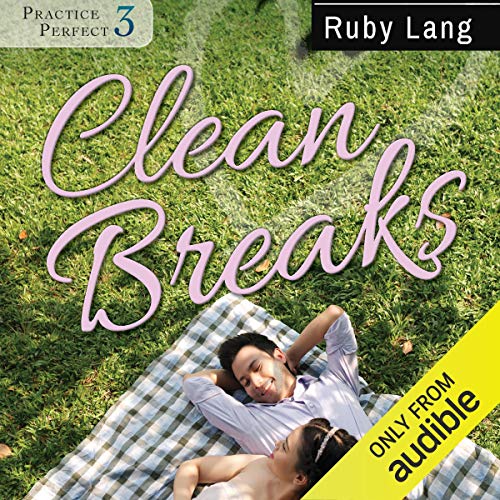
Clean Breaks
Summary
Sarah Soon may have recovered from cancer - in body - but her brush with mortality has left the usually confident OB/GYN shaken about her future and herself. When she unexpectedly runs into Jake Li, her brother's annoying high school BFF who betrayed her trust, he's the last person she wants to see. She doesn't need the now-disturbingly hot social worker hanging around while she sorts herself out, yet suddenly he's inescapable. Everyone's telling the newly divorced Jake that he shouldn't be looking for a serious relationship already, but he's always been helplessly drawn to Sarah's vivaciousness. Can he show her that he's all grown up now and worthy of her trust and a second chance? Or will they make a clean break once and for all? Contains mature themes.
©2017 Mindy Hung (P)2019 Audible, Inc.

Macbeth (No Fear Shakespeare)
Summary
Don’t be intimidated by Shakespeare! These popular guides make the Bard’s plays accessible and enjoyable. Each No Fear guide contains: The complete text of the original play A line-by-line translation that puts Shakespeare into everyday language A complete list of characters with descriptions Plenty of helpful commentary When Shakespeare’s words make your head spin, our audio translations will help you sort out what’s happening, who’s saying what, and why!
©2003 Spark Publishing (P)2021 SparkNotes Audio/No Fear Shakespeare

No-No Boy
Summary
First published in 1956, No-No Boy was virtually ignored by a public eager to put World War II and the Japanese internment behind them. It was not until the mid-1970s that a new generation of Japanese American writers and scholars recognized the novel's importance and popularized it as one of literature's most powerful testaments to the Asian American experience. No-No Boy tells the story of Ichiro Yamada, a fictional version of the real-life "no-no boys". Yamada answered "no" twice in a compulsory government questionnaire as to whether he would serve in the armed forces and swear loyalty to the United States. Unwilling to pledge himself to the country that interned him and his family, Ichiro earns two years in prison and the hostility of his family and community when he returns home to Seattle. As Ozeki writes, Ichiro's "obsessive, tormented" voice subverts Japanese postwar "model-minority" stereotypes, showing a fractured community and one man's "threnody of guilt, rage, and blame as he tries to negotiate his reentry into a shattered world".
©1976 Dorothy Okada (P)2018 Tantor

Strangers from a Different Shore
Summary
In an extraordinary blend of narrative history, personal recollection, and oral testimony, the author presents a sweeping history of Asian Americans. He writes of the Chinese who laid tracks for the transcontinental railroad, of plantation laborers in the cane fields of Hawaii, and of "picture brides" marrying strangers in the hope of becoming part of the American dream. He tells stories of Japanese Americans behind the barbed wire of US internment camps during World War II, Hmong refugees tragically unable to adjust to Wisconsin's alien climate and culture, and Asian American students stigmatized by the stereotype of the "model minority". This is a powerful and moving work that will resonate for all Americans, who together make up a nation of immigrants from other shores.
©1998 Ronald Takaki (P)2018 Tantor

A Loyal Character Dancer
Summary
Inspector Chen's mentor in the Shanghai Police Bureau has assigned him to escort US Marshal Catherine Rohn. Her mission is to bring Wen, the wife of a witness in an important criminal trial, to the United States. Inspector Rohn is already en route when Chen learns that Wen has unaccountably vanished from her village in Fujian. Or is this just what he is supposed to believe? Chen resents his role; he would rather investigate the triad killing in Shanghai's beautiful Bund Park. Li insists that saving face with Inspector Rohn takes priority. So Chen Cao, the ambitious son of a father who imbued him with Confucian precepts, must tread warily as he tries once again to be a good cop, a good man and also a loyal Party member.
©2002 Qiu Xiaolong (P)2018 Tantor

Art and Faith
Summary
From a world-renowned painter, an exploration of creativity's quintessential - and often overlooked - role in the spiritual life Conceived over 30 years of painting and creating in his studio, this book is Makoto Fujimura's broad and deep exploration of creativity and the spiritual aspects of "making". What he does in the studio is theological work as much as it is aesthetic work. In between pouring precious, pulverized minerals onto handmade paper to create the prismatic, refractive surfaces of his art, he comes into the quiet space in the studio, in a discipline of awareness, waiting, prayer, and praise. Ranging from the Bible to T. S. Eliot, and from Mark Rothko to Japanese Kintsugi technique, he shows how unless we are making something, we cannot know the depth of God's being and God's grace permeating our lives. This poignant and beautiful book offers the perspective of, in Christian Wiman's words, "an accidental theologian", one who comes to spiritual questions always through the prism of art.
©2020 Makoto Fujimura (P)2021 eChristian

Ghosts of Gold Mountain
Summary
A groundbreaking, breathtaking history of the Chinese workers who built the Transcontinental Railroad, helping to forge modern America only to disappear into the shadows of history until now. From across the sea, they came by the thousands, escaping war and poverty in southern China to seek their fortunes in America. Converging on the enormous western worksite of the Transcontinental Railroad, the migrants spent years dynamiting tunnels through the snow-packed cliffs of the Sierra Nevada and laying tracks across the burning Utah desert. Their sweat and blood fueled the ascent of an interlinked, industrial United States. But those of them who survived this perilous effort would suffer a different kind of death - a historical one, as they were pushed first to the margins of American life and then to the fringes of public memory. In this groundbreaking account, award-winning scholar Gordon H. Chang draws on unprecedented research to recover the Chinese railroad workers' stories and celebrate their role in remaking America. An invaluable correction of a great historical injustice, The Ghosts of Gold Mountain returns these "silent spikes" to their rightful place in our national saga.
©2019 Gordon H. Chang (P)2019 HighBridge, a division of Recorded Books

When Red Is Black
Summary
When the murder of a woman is reported to the Shanghai police while Inspector Chen is on vacation, Sergeant Yu is forced to take charge of the investigation. The victim, Yin Lige, a novelist known for her banned book, has been found dead in her tiny, humble room off the stairwell of a converted multi-family house. It seems that only a neighbor could have committed the crime, for the building is kept locked at night. But there is no apparent motive. Sergeant Yu tries to unravel the reclusive woman's past and begins to realize it may have larger political implications. The Cultural Revolution might be more than 30 years in the past, but its effects can still be felt at every level of Chinese society.
©2004 Qiu Xiaolong (P)2018 Tantor

Stargazer
Summary
The third installment in the Zero G series by Dan Wells. Zero, Nyx, and the other Pathfinder colonists have adjusted to life on Kaguya. But Earth has built much faster starships-the Dreamcatcher arrives 10 years early, and the Stargazer arrives so early it actually got there before the Pathfinder did! Now the Stargazer is a lost shipwreck, and the race is on to find it, and who should show up looking for it but Nyx's dangerous family: Big Mama, Jim, and Kratt. Nyx and Zero will face kidnappers, pirates, shipwrecks, warlords, dragons, and maybe a new ally or two on their way to save the day once again. Full cast of narrators includes Jonathan Davis, Houston Mahoney, Kathryn Grody, and Mark Sanderlin.
©2020 Dan Wells (P)2021 Audible Originals, LLC.

I Am a Cat
Summary
Written over the course of 1904-1906, Soseki Natsume's comic masterpiece, I Am a Cat, satirizes the foolishness of upper-middle class Japanese society during the Meiji era. With acerbic wit and sardonic perspective, it follows the whimsical adventures of a world-weary stray kitten who comments on the follies and foibles of the people around him. A classic of Japanese literature, I Am a Cat is one of Soseki's best-known novels. Considered by many as the greatest writer in modern Japanese history, Soseki's I Am a Cat is a classic novel sure to be enjoyed for years to come.
©1972 Aiko Ito and Graeme Wilson (P)2020 Tantor

The Dragon Squisher
Summary
“Before I can begin my tale, you need to know about the king's panties.” So begins the epic adventure of 14-year-old Nigel, digger of latrines, shoveler of poop, and the single greatest threat to all the humans, elves, and halflings of Esteria. Nigel needs to escape from military school. Who can blame him? After all, the king just declared war on the gorks, and he's pretty sure his latrine-digging skills aren't going to be much good on the front lines. Problem is, Nigel's escape efforts have a way of backfiring, taking him further from home, and destroying, well, pretty much everything that gets in his way. By the time he and his arch-frenemy are banished from the kingdom and sent on an impossible quest for a (probably bogus) magical artifact, the humans of Esteria find themselves longing for the good old days when they were merely being annihilated by Lord Smoron. Book one of the Nigel Chronicles, The Dragon Squisher tell the story of how Nigel, his too-perfect comrade Lance Hightower, and Eldrack, a female gork prisoner with a well-earned grudge against humans, usher in a new era of chaos and magic.
©2019 Scott McCormick (P)2020 Audible Originals, LLC.

Shikake
Summary
We are living in a time when behavioral change is necessary for our health and survival. Yet we find it exceedingly difficult to transform our own habits, let alone those of other people. Enter Naohiro Matsumura, whose powerful new design method is as astonishingly simple in its logic as it is sophisticated in its psychology. It allows any of us to address challenges in our homes, our public spaces, and our social interactions. As Matsumura shows, a shikake-or "device" in Japanese-is a design that exerts influence on us through subtle nudging, rather than direct command; it encourages a particular behavior without telling its (often unwitting) user the primary purpose of that behavior. For example: footprints in a store guide shoppers and keep them socially distant; a basketball hoop placed over a trash can entices children to tidy up their rooms; a symbol of a shrine in a public square encourages respectfulness; and a staircase painted to look like piano keys prompts exercise through play. Combining traditional Japanese aesthetics with the lessons of behavioral economics, Matsumura reveals how to identify the hidden design cues that already shape our world, and how shikakes can help us confront some of the most pressing challenges of our era, from pandemics to declining civic engagement to climate change and beyond. PLEASE NOTE: When you purchase this title, the accompanying PDF will be available in your Audible Library along with the audio.
©2016 Naohiro Matsumura (P)2021 Tantor