The Great Courses has 635 audiobooks on Listento.it, narrated by 479 narrators, with an average listener rating of 4.5★ across 19,831 ratings. The most-rated is A Column of Fire.

Philosophy of Religion
Summary
These 36 intellectually challenging yet remarkably clear lectures take you on an intellectual journey to explore the questions of divine existence, not from the standpoint of theology, but as an issue of epistemology, the classic branch of philosophy that concerns itself with knowledge theory: how we can know things and how we can know we know them. If you enjoy wrapping your mind around questions for which every potential answer triggers a new set of questions and issues, you will find this course particularly enjoyable, regardless of whether you define yourself as a believer, an atheist, or an agnostic. Professor Hall lays out many of the fundamental questions and issues related to the philosophy of religion: What do we mean by "God"? Consider the many characteristics of a monotheistic deity - including omnipotence, omniscience, omniperfection, and asceity. Can we know if there is a God? Examine the ontological, cosmological, and teleological arguments for the existence of God and the problem of evil. Weigh the arguments and counterarguments for whether the existence of evil - sometimes natural and sometimes human - is compatible with the existence of a god. You won't be surprised to discover that the issue of divine existence remains undecided after the arguments for and against have been put on the table and analyzed. This provocative course will hold the attention of believers, skeptics, and agnostics alike. While your mind may not be changed, it will definitely be put to work.
©2003 The Teaching Company, LLC (P)2003 The Great Courses

20th-Century American Fiction
Summary
Hemingway. Fitzgerald. Faulkner. These and other giants of literature are immediately recognizable to anyone who loves to read fiction and even to many who don't. Now, thanks to these 32 lectures, you can develop fresh insight into some of the greatest American authors of the 20th century. Professor Weinstein sheds light not only on the sheer magnificence of these writers' literary achievements but also explores their uniquely American character as well. Despite their remarkable variety, each author represents an outlook and a body of work that could only have emerged in the United States. As such, the aim of these lectures is to analyze and appreciate some of the major works of American fiction, using as a focal point the idea of freedom of speech. The works you'll investigate here include Winesburg, Ohio (among the most poignant descriptions of life at the beginning of the century); Light in August (which depicts the ravages of racism in the American South); Their Eyes Were Watching God (the first – and perhaps the best – account of growing up black and female in America); Slaughterhouse-Five (a poignant and wacky take of mass destruction and aliens); Sula (an experimental novel that makes rubble out of the conventions of black and white culture); and White Noise (which depicts our encounter with the technological madhouse in which we live). These American fictions, seen together, tell a composite story about coping, about fashioning both a story and a life. Much is dark in these stories, but the honesty and integrity of these writers makes us realize that reading is as much a lifeline as it is entertainment or education.
©1996 The Teaching Company, LLC (P)1996 The Great Courses

Investigating American Presidents
Summary
The office of the president of the United States of America is one that can shape not just a nation but the entire world. But what limits are there if any on presidential power? How do we keep such awesome responsibility in check? These 12 eyeopening, timely lectures examine the ins and outs of presidential investigations using past events as a lens through which to make sense of current (and future) ones. With his political and legal insights, Professor Rosenzweig walks you through the entire path of investigating potential misuse of presidential power, from the establishment of legislative committees to the impeachment process. You’ll witness the construction of the legal framework that informs how Congress and the courts handle charges of abuse of power. You’ll also dive into the investigations of presidents such as Richard Nixon, Ulysses S. Grant, and Bill Clinton as a way to lean what powers exist to ensure presidents adhere to the rule of law, and whether or not they can help us wrestle with current events coming out of the White House. These nonpartisan, unbiased lectures aren’t concerned with right and left but rather with the overarching progress and themes of American political and legal history. They’re detailed enough for legal experts and accessible enough to learners with only a basic understanding of how the US government and the justice system work. PLEASE NOTE: When you purchase this title, the accompanying PDF will be available in your Audible Library along with the audio.
©2018 The Great Courses (P)2018 The Teaching Company, LLC

Jesus and His Jewish Influences
Summary
Jesus - a Jewish man from first-century Judea - was perhaps the most influential person in world history. His life and beliefs sparked a movement that influenced the course of global civilization, and his teachings gave rise to a faith currently practiced by over two billion people around the world. And yet, as revolutionary and lasting as his ideas are, few of us think to ask: Where did they come from? It's important to realize that Jesus' actions and teachings didn't emerge from a vacuum. Rather, they were the products of a fascinating dialogue with - and reaction to - the traditions, cultures, and historical developments of ancient Jewish beliefs. In search of a more complete comprehension of Jesus' legacy, this course explores fundamental questions such as: How was early Judaism different from the Rabbinic Judaism practiced today? What kind of world did early Jewish sects envision, and how does Jesus' worldview relate to theirs? How did events like the Babylonian exile and the reign of Herod the Great affect the development of Judaism up to Jesus' time? Follow an acclaimed archaeologist to unearth the roots of Jesus' actions and teachings within the traditions and beliefs of ancient Judaism. These fascinating 24 lectures approach the subject of Jesus from a historical rather than scriptural perspective - one rooted in ancient texts and archaeological discoveries. This investigation reveals hidden insights into how the tumultuous events of early Jewish history shaped an individual - and a movement - whose legacy endures to this day. PLEASE NOTE: When you purchase this title, the accompanying reference material will be available in your Library section along with the audio.
©2016 The Great Courses (P)2016 The Teaching Company, LLC

Your Public Persona: Self-Presentation in Everyday Life
Summary
Humans are social animals, and the impressions we make on others can critically impact the quality of our lives. Consequently, we spend much of our lives, both consciously and unconsciously, working to shape other people’s ideas about who we are. In this eye-opening 12-lecture series with Professor Leary, explore the “self-presentational underpinnings of human behavior” as well as the what, how, and why of impression management. People form impressions of us - who we are and what we’re like - very quickly and, right or wrong, those impressions determine significant aspects of our outcomes in life, both in the present as well as the future. In just a few short minutes, others assess our personality, interests, attitudes, and moods, taking into account everything from the content of our words to the style of our clothing, and much more. Sometimes their assessments are accurate, other times less so, but the impressions other people form of us significantly impacts how they treat us. Social interactions and the impressions that drive them are vitally important aspects of human behavior. In this compelling course, learn about how we shape the impressions other people form of us - at work, at home, in our social lives, and in the world at large. PLEASE NOTE: When you purchase this title, the accompanying PDF will be available in your Audible Library along with the audio.
©2020 The Great Courses (P)2020 The Teaching Company, LLC

The Great Debate: Advocates and Opponents of the American Constitution
Summary
Recent years have seen an explosion of interest in and interpretation of the U.S. Constitution. Its authority and stature are routinely invoked by voices from every point on the political spectrum, with frequent references to the Founding Fathers and their true "intent." What really was their true intent? As these 12 surprising lectures show, many of those Founding Fathers - including Thomas Jefferson and Patrick Henry - were highly critical of the new Constitution and staunchly opposed it when it was first put forth for ratification by the states as a replacement for the Articles of Confederation. The debate over the Constitution raged for the better part of two years, and beneath its rhetorical flourishes lay not only the longest and most profound civic argument in our nation's history, but also a civics lesson that deserves to endure for all time. It was an argument that would result not only in the ratification of the Constitution, but also in what that Constitution would become. Professor Pangle takes you into this debate. You'll see which Founders opposed the new Constitution, which Founders led the battle for it, and how both sides helped define the result. In an era when contemporary arguments on the national stage so often mirror the same conflicts debated by the Founders, our own reenactment of that original debate can enrich our ability to be active and participating citizens. PLEASE NOTE: When you purchase this title, the accompanying reference material will be available in your Library section along with the audio.
©2007 The Teaching Company, LLC (P)2007 The Great Courses
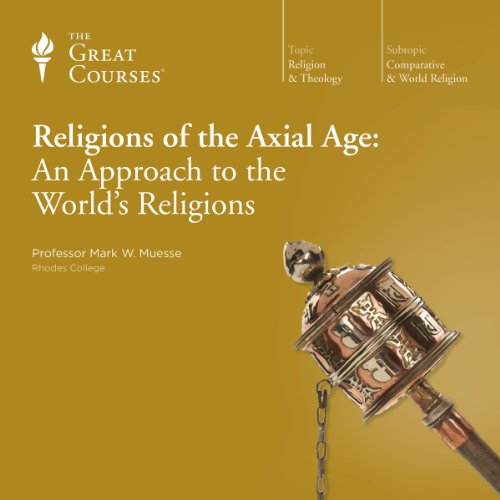
Religions of the Axial Age: An Approach to the World's Religions
Summary
These 24 extraordinary lectures offer you the rare opportunity to relate your own spiritual questions to a variety of ancient quests for meaning and transcendence. Professor Muesse looks at the historical conditions in which the world religions arose and explores how they answered shared metaphysical and human dilemmas. The Axial Age - a pivotal era between 800 and 200 B.C.E. - saw the rise of many of the world's religions in Iran, South Asia, and China. On this stirring journey, you'll learn about the rise of Zoroastrianism in Persia (now Iran); Hinduism, Buddhism, and Jainism on the Indian subcontinent; and Confucianism and Daoism in China. You'll also see how these religions compare, contrast, and contribute to contemporary Judaism, Christianity, and Islam. Through sacred texts, modern scholarship, and thoughts arising from his own personal experiences, Professor Muesse reveals what it meant to be a conscious, morally responsible individual in the Axial Age. You'll enjoy a ringside seat as each founding sage wrestles with moral accountability, the nature of self and ultimate reality, good versus evil, suffering and transcendence - all topics that still puzzle us today.
©2007 The Teaching Company, LLC (P)2007 The Great Courses
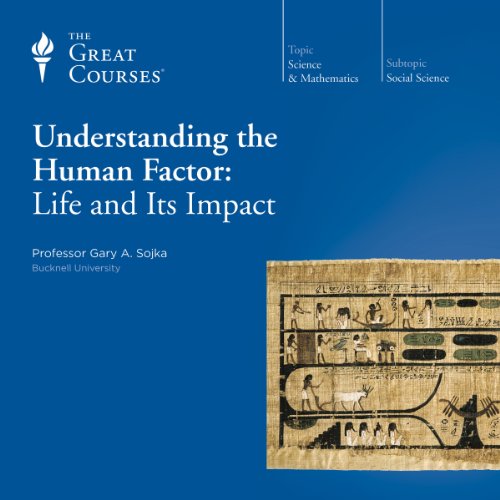
Understanding the Human Factor: Life and Its Impact
Summary
The year is 8000 B.C. A man wanders across a field of prairie grasses in search of edible berries and roots and wild game to feed his family. As he walks, the tips of the grasses brush against him, releasing seeds. He collects a few of these seeds and brings them back to his camp. Later, he notices that when they fall on earth, they begin to sprout, and a new plant grows. In small moments like these, the path of Homo sapiens is changed forever. The process of domesticating plants and animals reflects the greatest transition in the history of humankind - one that served to make us the humans we are today. In this series of 24 thought-provoking lectures, an award-winning educator takes you on a journey through this fascinating story, surveying the remarkable innovations that transformed humankind into the sole agriculturists on our planet - an innovation the human race feels to this day. Drawing on the latest science from a wide variety of fields - including microbiology, genetics, archaeology, and sociology - Professor Sojka offers a seldom-seen, multidisciplinary perspective on human life. The result is a complex and remarkable synthesis of science and history that stretches from the ancient roots of human culture to some of the most significant issues facing the modern world. PLEASE NOTE: When you purchase this title, the accompanying reference material will be available in your Library section along with the audio.
©2009 The Teaching Company, LLC (P)2009 The Great Courses
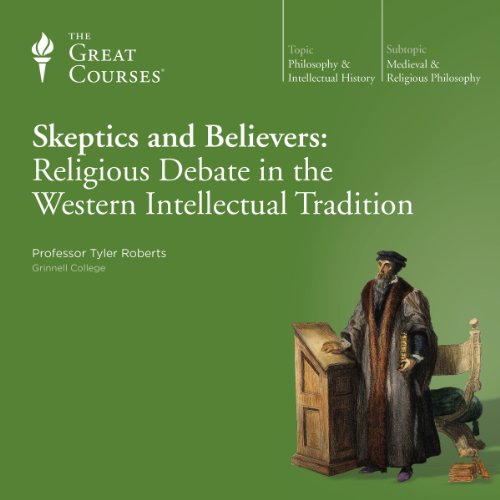
Skeptics and Believers: Religious Debate in the Western Intellectual Tradition
Summary
Beginning in the 16th century, the Protestant Reformation and the Scientific Revolution began to erode the position of authority. As a result, new philosophers began constructing a universal rationality independent of faith. This schism fundamentally changed the course of Western civilization, and it has had consequences that remain with us to this day. This 36-lecture journey will help you understand exactly what the debate has been and will continue to be about. By gaining a richer understanding of the debate's key aspects - including the nature of the conflict, the meaning of the arguments, and what is at stake both philosophically and theologically - you can add significantly to the level of sophistication you already bring to one of today's most far-reaching issues and increase your understanding of both our past and the direction of our future. These lectures examine more than three centuries of debate in the Western world about the nature of religious faith and its compatibility with reason. Drawing on some of Western civilization's greatest theological and philosophical minds, Professor Roberts even-handedly follows and analyzes the arguments of a broad range of skeptics and believers, including the likes of Thomas Aquinas, Karl Marx, Sigmund Freud, Daniel Dennett, Martin Luther, Immanuel Kant, Soren Kierkegaard, and many others.In addition, these lectures maintain the sense of a true conversation across time, so that you'll never lose the thread of how one idea relates to another as he weaves a vast amount of material into a coherent whole that amounts to far more than the sum of its parts. The result is one of the most intellectually satisfying plunges into philosophical and theological thought you will ever take.
©2009 The Teaching Company, LLC (P)2009 The Great Courses

Genius of Michelangelo
Summary
How much do we really know about Michelangelo? Conflicting viewpoints and much confusion surround many aspects of the Renaissance artist's life and art; myth and legend so envelop him that he sometimes seems more like a caricature than a complete human being. Despite a familiarity with some of his works, aspects of Michelangelo's art and life remain open to interpretation. In The Genius of Michelangelo, internationally recognized Michelangelo expert and award-winning Professor of Art History William E. Wallace gives you a comprehensive perspective on one of history's greatest artists, unavailable in any other course. Drawing on a vast command of artistic knowledge and period detail, these 36 intellectually rewarding and dazzling lectures explore the relationship between truth and legend to reveal a groundbreaking new picture of Michelangelo as an artist, a businessman, an aristocrat, and a genius. PLEASE NOTE: When you purchase this title, the accompanying PDF will be available in your Audible Library along with the audio.
©2007 The Great Courses (P)2007 The Teaching Company, LLC
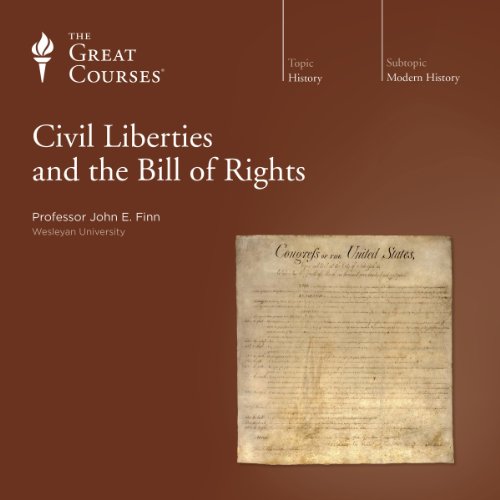
Civil Liberties and the Bill of Rights
Summary
The civil liberties and constitutional rights possessed by our nation's citizens - not only in theory, but in the courtroom, where the state can be forced to honor those liberties - are a uniquely American invention. And when we were taught history and learned about the Constitution and its Bill of Rights, we were always made aware of that uniqueness, of the extraordinary experiment that gave to every citizen of this new nation a gift possessed by no others. Now you can learn exactly what that gift was - in a series of 36 lectures based on Supreme Court opinions from dozens of the Court's most important landmark decisions, presented by an award-winning teacher who is also an internationally recognized expert in constitutional law. You'll learn just what liberties and rights the Founders wanted the new government to protect, as well as how we get from what Professor Finn calls the Constitution's "wonderfully elastic and vague" language to the finely tuned specifics of the Supreme Court's opinions about speech, abortion, and religion, and so much more. And you'll grasp the hard truth that no matter how unwavering the Constitution's language on any subject may appear, things are almost invariably more complicated than it would seem at first reading. The result is a legacy of questions that multiplies with each passing decade, and explains why generations of jurists and legal scholars, not to mention legislators, presidents, and citizens, have argued so long and hard about the meaning of what often appears to be unambiguous phrasing. PLEASE NOTE: When you purchase this title, the accompanying reference material will be available in your Library section along with the audio.
©2006 The Teaching Company, LLC (P)2006 The Great Courses

How Music and Mathematics Relate
Summary
Great minds have long sought to understand the relationship between music and mathematics. Both involve patterns, structures, and relationships. Both generate ideas of great beauty and elegance. Music is a fertile testing ground for mathematical principles, while mathematics explains the sounds instruments make and how composers put those sounds together. Understanding the connections between music and mathematics helps you appreciate both, even if you have no special ability in either field - from knowing the mathematics behind tuning an instrument to understanding the features that define your favorite pieces. By exploring the mathematics of music, you also learn why non-Western music sounds so different, gain insight into the technology of modern sound reproduction, and start to hear the world around you in exciting new ways. PLEASE NOTE: When you purchase this title, the accompanying PDF will be available in your Audible Library along with the audio.
©2013 The Great Courses (P)2013 The Teaching Company, LLC

The Darwinian Revolution
Summary
Published 150 years ago, Charles Darwin's On the Origin of Species - the text that introduced the world to natural selection - is among a handful of books that have changed the world. But the route to that status has been surprisingly circuitous and uncertain. Darwin's profoundly revolutionary message has often been misunderstood, as have his own views on evolution, the intellectual background that led to them, and the turbulent history of their reception. Now, in 24 absorbing lectures by an award-winning teacher, you learn the remarkable story of Darwin's ideas, how scientists and religious leaders reacted to them, and the sea change in human thought that resulted. You'll learn how Darwin arrived at his theory of natural selection-the idea that those members of a species best equipped to survive will tend to outlast others, thus changing the species over time-very slowly and cautiously. For he was all too aware of the intellectual dynamite inherent in its implication of no divine intervention being necessary for a rich diversity of life forms on earth. And you'll see how Darwin worked out the details of his theory not only by building on both his own observations and the insights of others, but also through amazing leaps in the face of apparently contrary evidence. You'll also see how the firestorm of religious criticism Darwin's theory faced has scarcely subsided to this day, with Professor Gregory bringing this controversy up to date by carefully examining the claims of intelligent design, the latest and most sophisticated attempt to challenge Darwin on religious grounds.
©2008 The Teaching Company, LLC (P)2008 The Great Courses

Powerful Women Who Ruled the Ancient World
Summary
What is power and who is allowed to wield it? Why is female power so rare and, often, so feared? What can the women who gained power in the ancient world teach us about the contemporary world and our modern ideas of gender, authority, and equality? Listeners will explore these and other questions as you travel back to the ancient world and uncover the stories of remarkable women who overcame a host of barriers to wield power in a male-dominated world. From Egypt and Mesopotamia to China and Rome, you will meet women who worked strategically to gain unprecedented influence and you will see how their stories echo through the centuries, offering surprising relevance to our understanding of gender and sexual dynamics today. In Powerful Women of the Ancient World, Professor Kara Cooney will share the stories of women who rose to power through ambition; intelligence; skill; and sheer determination. First, you will take a look at what power actually is - how it is defined, how different kinds of power operate, and why women and men are often viewed differently when power is involved. Then, meet the women of the ancient world who challenged the status quo by grasping for and holding authority. Some names listeners will likely already recognize through their “cautionary tales”, such as Cleopatra and Jezebel. Others, though less well-known, will show you the different ways it is possible to be powerful. You will meet rulers like Empress Lü of China and Hatshepsut of Egypt, rebel leaders such as Boudica of Britain, religious leaders like the Hebrew prophetess Deborah, and more. As listeners will learn, times may have changed since antiquity, but the past has a long reach - and in many ways, our cultural ideas about women and power are surprisingly slow to change.
©2020 Audible Originals, LLC (P)2020 Audible Originals, LLC.
Consulting 101: So You Want to Be a Consultant?
Summary
Thinking of starting a consulting business? Knowing how to craft an effective business plan is the first step. What’s next? Finding clients and knowing how much to charge. Plus, the consultancy must be properly marketed. And don’t forget other aspects of consulting, from answering an RFP to knowing when to walk away from a problem client. This business course from The Teaching Company and lecturer Dr. Allison Friederichs delivers all this and more. There’s a lot to think about and plan when it comes to being a consultant. In building her own successful consulting business, and in her teaching career, Dr. Allison Friederichs has learned many lessons and best practices—sometimes the hard way. In these 10 lectures, she’ll help spare listeners that trial-and-error anxiety and instead provide the essential tools and strategies required to start a successful independent consultancy. Consulting 101: So You Want to Be a Consultant? guides listeners step by step through the process of turning dreams of consulting into a reality. Listeners will: Develop a solid understanding of what key differentiators are and what services to provide Learn how to connect past work experience and expertise to clients through communication and brand development Discover what it takes to find a great consulting gig, to rock it, and to learn from any mistakes that might happen along the way Tap into powerful tools and solid tips to ensure a win-win through the use of rewarding exercises and activities that can be easily modified to a particular industry. Get ready to share learned skills and experience with the world…and get paid! Listeners will be fully prepared to launch their consultancy after taking this course.
©2020 Audible Originals, LLC (P)2020 Audible Originals, LLC.

Great Tours: Greece and Turkey, from Athens to Istanbul
Summary
The shimmering turquoise waters and lost worlds of the Aegean await you. Grab your travel hat and join us for a unique cultural journey to the dramatic landscapes of Greece and Turkey - to dazzling ancient cities, majestic empires, and magical treasures of history. This is a land of gods and heroes. Here great myths came to life and epic battles were fought, and the wondrous remains of ancient civilizations still call to you from across the centuries. In The Great Tours: Greece and Turkey, from Athens to Istanbul, award-winning Professor John R. Hale of the University of Louisville is your guide to the fabulous civilizations of the Greeks, Romans, Byzantines, and Ottomans, and to the natural wonders and idyllic landscapes that surround them. These 24 richly enjoyable lectures give you the chance to experience these important sites and cultures through the eyes of an expert archaeologist and scholar, whose knowledge and depth of insight go far beyond any ordinary travel narrative. In each site, you explore the critical history and culture that defined it and the ways in which it influenced our modern world. These lectures offer both a rich resource for travelers preparing to visit these distant lands and a multilevel cultural journey that can be enjoyed just as well from the comfort of home. PLEASE NOTE: When you purchase this title, the accompanying PDF will be available in your Audible Library along with the audio.
©2011 The Great Courses (P)2011 The Teaching Company, LLC

How to Plan for the Perfect Retirement
Summary
Recent statistics suggest that nearly two-thirds of Americans regret not planning properly for retirement. We tend to underestimate the key factors of retirement planning: our total lifespan; the probable length of our retirement; and, perhaps most significant, how much money we’ll need to fund those years in retirement. In fact, retirement planning can feel so overwhelming that many of us put off thinking about it at all until it’s too late to make the necessary changes. Of course, the future tends to get here before we know it - and it does not arrive with its own financial security unless we plan it that way. In How to Plan for the Perfect Retirement, Professor Dana Anspach of Sensible Money, LLC will be your step-by-step guide to help you create the future you want. No matter how old you are or how far along in your working life, it’s never too early or too late to develop a plan that works for you. Professor Anspach will take the mystery out of retirement planning by identifying specific questions you need to ask yourself, explaining exactly how to examine your personal finances, and demonstrating how a small change now can benefit you greatly later on. With vibrant and informative graphics, illuminating statistics, revealing real-world stories, and crystal-clear explanations, this course will make planning for retirement clearer and more attainable than ever before. In this course, you’ll learn specific steps you should take right now to help you plan for the future no matter your income level, age, or family circumstance. Beginning to form a concrete plan allows you to take actionable steps and leave the worry behind. PLEASE NOTE: When you purchase this title, the accompanying PDF will be available in your Audible Library along with the audio.
©2021 The Great Courses (P)2021 The Teaching Company, LLC

Great American Short Stories: A Guide for Writers and Readers
Summary
While short stories exist in traditions all over the world, American short stories are a genre all their own. Emerging from the clash of cultures - and the collision of oral and print traditions - that began during the arrival of European settlers in the 16th and 17th centuries, the short works that emerged have served many functions. They have entertained, certainly, but they have also helped foster identity, shape morality, and build the foundations of the American mythos for nearly four centuries. Whether you want to write short stories, simply want better insight as a reader, or even if you are looking for a new lens through which to view American history, the 24 rich and informative lectures of Great American Short Stories: A Guide for Writers and Readers will show you the ins and outs of this infinitely adaptable - and intrinsically American - literary form. Professor Jennifer Cognard-Black of St. Mary’s College of Maryland guides you through the technical aspects of the short story, while also digging deep into the history of the form in the United States. Along the way, you will discover why the short story became so deeply connected to American identity and how it continues to evolve alongside the nation itself. The “great American novel” is often the lofty goal of writers who want to achieve literary immortality. But from the opening sentence to the lingering denouement, American short stories can both capture the world as it is and help envision what could be. Each is unique, and yet each is a part of a larger chronicle: the story of America. PLEASE NOTE: When you purchase this title, the accompanying PDF will be available in your Audible Library along with the audio.
©2019 The Great Courses (P)2019 The Teaching Company, LLC

The English Novel
Summary
Who can imagine life without novels? They have served not merely as diversions but as companions for so much of our lives, offering hours of pleasure and, at their best, insights few of us can ever quantify. But the simple joy of reading novels sometimes obscures our awareness of the deeper roles they play in our lives: honing our intellect, quenching our emotional thirsts, and shaping our sense of ourselves and of the world we live in. And this may be especially obvious in the case of the English novel, as you'll see in this engaging series of 24 lectures from an award-winning teacher. Under Professor Spurgin's guidance, you'll learn how the period that gave rise to the novel in England corresponded with a convulsive social transformation - one that produced the world's first modern, capitalist economy. Along the way, traditional social values often appeared to be outdated, as did traditional narrative forms. You'll see how the great English novelists were eager to create something new and different, breaking from traditions in which stories were usually centered on aristocrats and nobles to focus instead on the thoughts and feelings of ordinary people and taking pains to capture the rhythms of everyday life. At the same time, they also reacted to a number of larger developments: industrialization and urbanization, democratization and globalization. By placing more than two centuries of great English novelists in the context of British history and showing how their lives intersected with the creation of their art, these lectures offer a fascinating look at a form of enduring popularity and importance whose influence has been felt everywhere novels are read.
©2006 The Teaching Company, LLC (P)2006 The Great Courses

Effective Research Methods for Any Project
Summary
We rely on effective research in many areas of life, and at times our lives even depend on it. But what is it that makes research effective? Any good research rests upon, above all else, method. In these 24 dynamic lectures, you’ll discover the remarkable procedures and techniques that make research such a powerful tool. This brilliantly conceived course gives you a deep, detailed, and practical guide to proper research methods - methods that are broadly applicable to all kinds of research. As groundwork for your own research project, you’ll investigate ethics in research, the role of reviewing the scholarly literature, how to choose a topic for your research and a research question, how to choose the best research design for your project, and how to measure your data. You’ll then study the most important categories of research design and methodology, including: The Classic Experiment - Grasp the procedure of the experiment, the hallmark of research in the sciences Surveys - Learn to design and run a survey, and construct survey questions Case Studies - Delve into the workings of the case study and how to choose your cases for a case study project Field Research -Take a deep look at the use of interviews and how to conduct them, and at observation research, which observes the behavior of subjects in the field Applied Research - Investigate action research, which seeks collaborative solutions to real-world problems In the final section of the course, you’ll learn to analyze your data and communicate your findings. Here, you’ll study quantitative data analysis, interpreting your findings through simple statistical calculations, and qualitative data analysis, which involves discerning meaning and patterns in data. And you’ll learn how to share your findings, from the formal research report to less formal approaches. In Effective Research Methods for Any Project, you’ll gain real skill with this practical and transformative approach to knowledge creation. PLEASE NOTE: When you purchase this title, the accompanying PDF will be available in your Audible Library along with the audio.
©2019 The Great Courses (P)2019 The Teaching Company, LLC