The Anthropology category has 155 audiobooks on Listento.it, with an average listener rating of 4.5★ across 7,559 ratings. The most-rated is Sapiens.

The Chaldean Account of the Deluge
Summary
George Smith (1840-1876) was an English archaeologist and Assyriologist who first discovered and translated the Epic of Gilgamesh, one of the most ancient works of literature. The Babylonian account was similar to the biblical account of the Flood in Genesis. Smith discovered many more tablet fragments of the flood story, and published his work in "The Chaldean Account of Genesis".
Public Domain (P)2018 Museum Audiobooks

The Accidental Homo Sapiens
Summary
What happens now that human population has outpaced biological natural selection? Two leading scientists reveal how we became who we are - and what we might become. When you think of evolution, the picture that most likely comes to mind is a straight-forward progression, the iconic illustration of a primate morphing into a proud, upright human being. But in reality, random events have played huge roles in determining the evolutionary histories of everything from lions to lobsters to humans. However, random genetic novelties are most likely to become fixed in small populations. It is mathematically unlikely that this will happen in large ones. With our enormous, close-packed, and seemingly inexorably expanding population, humanity has fallen under the influence of the famous (or infamous) “bell curve.” Ian Tattersall and Rob DeSalle’s revelatory new book explores what the future of our species could hold, while simultaneously revealing what we didn’t become - and what we won’t become. A cognitively unique species, and our actions fall on a bell curve as well. Individual people may be saintly or evil; generous or grasping; narrow-minded or visionary. But any attempt to characterize our species must embrace all of its members and so all of these antitheses. It is possible not just for the species, but for a single individual to be all of these things - even in the same day. We all fall somewhere within the giant hyperspace of the human condition that these curves describe. The Accidental Homo Sapiens shows listeners that though humanity now exists on this bell curve, we are far from a stagnant species. Tattersall and DeSalle reveal how biological evolution in modern humans has given way to a cultural dynamic that is unlike anything else the Earth has ever witnessed, and that will keep life interesting - perhaps sometimes too interesting - for as long as we exist on this planet.
©2019 Ian Tattersall and Rob DeSalle (P)2019 Audible, Inc.

Mothers and Others
Summary
Somewhere in Africa, more than a million years ago, a line of apes began to rear their young differently than their Great Ape ancestors. From this new form of care came new ways of engaging and understanding each other. How such singular human capacities evolved, and how they have kept us alive for thousands of generations, is the mystery revealed in this bold and wide-ranging new vision of human emotional evolution. Mothers and Others finds the key in the primatologically unique length of human childhood. If the young were to survive in a world of scarce food, they needed to be cared for, not only by their mothers but also by siblings, aunts, fathers, friends - and, with any luck, grandmothers. Out of this complicated and contingent form of childrearing, Sarah Hrdy argues, came the human capacity for understanding others. Mothers and others teach us who will care, and who will not. From its opening vision of "apes on a plane;" to descriptions of baby care among marmosets, chimpanzees, wolves, and lions; to explanations about why men in hunter-gatherer societies hunt together, Mothers and Others is compelling to listen to. But it is also an intricately knit argument that ever since the Pleistocene, it has taken a village to raise children - and how that gave our ancient ancestors the first push on the path toward becoming emotionally modern human beings.
©2009 Sarah Blaffer Hrdy (P)2013 Audible, Inc.

Addicted to Busy
Summary
There's a ritual of the modern workplace - one you've heard and most likely indulged in yourself. It's the call and response we go through when you ask a workmate how they're doing: 'Busy!' 'So busy.' It is pretty obviously a boast disguised as a complaint. And our simultaneously grim and half chuckled reply comes as a kind of congratulation: 'Ha, better than the opposite.' When did we start doing that? As if he didn't have enough to do, Oliver Burkeman explores this epidemic of busyness to reveal that it may not be what it at first seems. He asks if we are talking ourselves into feeling overwhelmed with busyness and if our problem with busyness is not that we do not have the time but rather we literally do not have the head space. He questions whether people have become addicted to busy, either because it makes them feel like heroes fighting the odds or because problems can be avoided by never sitting still. Finally, he examines whether the solution to busyness is perhaps not to work harder and organise ourselves but to indulge in a little idleness. Oliver Burkeman is an award-winning feature writer for the Guardian. He writes a popular weekly column on psychology, ‘This Column Will Change Your Life’, and has reported from London, Washington and New York. Produced by Peter McManus. This programme was broadcast on BBC Radio 4 as Oliver Burkeman Is Busy.
©2018 Oliver Burkeman (P)2018 Random House Audiobooks

The Old Way
Summary
One of our most influential anthropologists reevaluates her long and illustrious career by returning to her roots ? and the roots of life as we know it. When Elizabeth Marshall Thomas first arrived in Africa to live among the Kalahari San, or bushmen, it was 1950, she was 19 years old, and these last surviving hunter-gatherers were living as humans had lived for 15,000 centuries. Thomas wound up writing about their world in a seminal work, The Harmless People. It has never gone out of print. Back then, this was uncharted territory, and little was known about our human origins. Today, our beginnings are better understood. And after a lifetime of interest in the bushmen, Thomas has come to see that their lifestyle reveals great, hidden truths about human evolution. As she displayed in her best seller, The Hidden Life of Dogs, Thomas has a rare gift for giving voice to the voices we don't usually listen to. She helps us see the path that we have taken in our human journey. In The Old Way, she shows how the skills and customs of the hunter-gatherer share much in common with the survival tactics of our animal predecessors. And since it is "knowledge, not objects, that endure" over time, Thomas vividly brings us to see how linked we are to our origins in the animal kingdom. The Old Way is a rare and remarkable achievement, sure to stir up controversy, and is worthy of celebration.
©2006 Elizabeth Marshall Thomas (P)2006 Tantor Media, Inc.

The Complete Works of Tacitus: Volume 4
Summary
The exemplary life of a noble soldier/statesman, a description of ancient Germany, and a discussion of oratory are the subjects of three short masterpieces by the brilliant Roman historian, Tacitus. The Life of Cnaeus Julius Agricola is an almost perfect example of what the Romans called the panegyric, a type of salutary obituary which was invariably produced at the death of renowned persons. Agricola was certainly no ordinary man. For one thing, he was the father-in-law of Tacitus. And for another, he was a genuinely gifted soldier of the highest character, the kind of unsung hero who made possible the success of Roman civilization. Germany and Its Tribes is one of the most interesting pieces to come down to us. It is a very insightful and informed commentary on the feared tribes who lived beyond the Rhine. Although some of the information is incorrect or nonsensical, most of it is quite cogent and represents an accurate picture of the German people in those days. Many will recognize traits that have survived into modern times. The Dialogue on Oratory is a spirited discussion among four men about the merits or demerits of the state of oratory in their time versus its practice in the past. By turns amusing and dazzling, the conversation keeps the listener entertained. This production uses the famous translation by Church and Brodribb, considered the finest in the English language.
©2006 Audio Connoisseur (P)2006 Audio Connoisseur
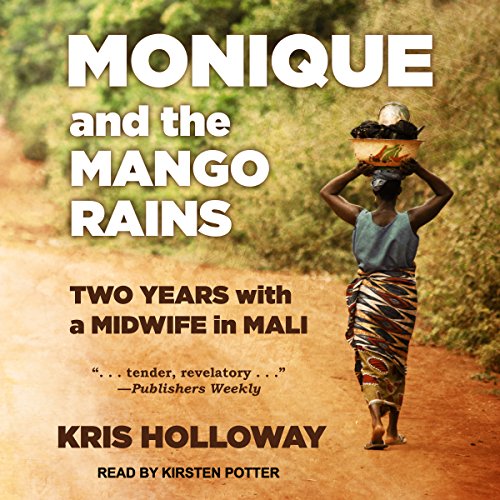
Monique and the Mango Rains
Summary
What is it like to live and work in a remote corner of the world and befriend a courageous midwife who breaks traditional roles? Monique and the Mango Rains: Two Years with a Mali Midwife is the inspiring story of Monique Dembele, an accidental midwife who became a legend, and Kris Holloway, the young Peace Corps volunteer who became her closest confidante. In a small village in Mali, West Africa, Monique saved lives and dispensed hope every day in a place where childbirth is a life-and-death matter and where many children are buried before they cut a tooth. Kris worked side-by-side with her as they cared for each other through sickness and tragedy and shared their innermost secrets and hopes. Monique's life was representative of many women in one of the world's poorest nations, yet she faced her challenges in extraordinary ways. Despite her fiercely traditional society and her limited education she fought for her beliefs birth control, the end of female genital mutilation, the right to receive a salary, and the right to educate her daughters. And she struggled to be with the man she loved. Her story is one of tragedy joy, rebellion, and of an ancient culture in the midst of change. It is an uplifting tribute to indomitable spirits everywhere.
©2007 Kris Holloway (P)2018 Tantor

Darkest England
Summary
In his best-selling Darkest England, Idries Shah asserts that the English hail from a little-known place called "Hathaby", but their roots go back much farther, perhaps to the distant Asian realm of Sakasina. Once a nomadic tribe of warriors, the English fled westward, bringing with them epic tales, traditions, and an Oriental way of thought. Shah charts the genius of the English in adopting and adapting "almost anything spiritual, moral or material" for their own use - a faculty that has transformed them from warrior nomads into successful diplomats, businessmen, thinkers, and scientists.
©1987 The Estate of Idries Shah (P)2020 ISF Publishing
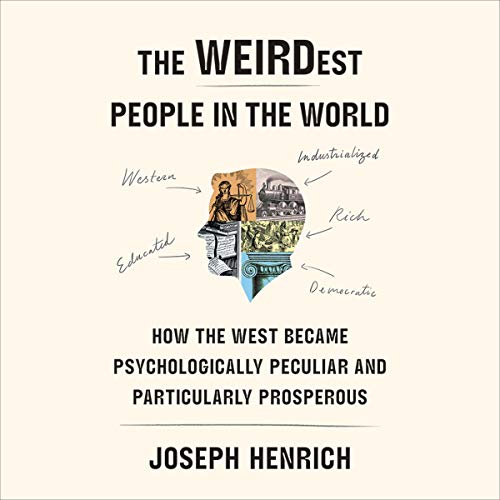
The WEIRDest People in the World
Summary
A bold, epic account of how the co-evolution of psychology and culture created the peculiar Western mind that has profoundly shaped the modern world. Perhaps you are WEIRD: raised in a society that is Western, Educated, Industrialized, Rich, and Democratic. If so, you’re rather psychologically peculiar. Unlike much of the world today, and most people who have ever lived, WEIRD people are highly individualistic, self-obsessed, control-oriented, nonconformist, and analytical. They focus on themselves—their attributes, accomplishments, and aspirations—over their relationships and social roles. How did WEIRD populations become so psychologically distinct? What role did these psychological differences play in the industrial revolution and the global expansion of Europe during the last few centuries? In The WEIRDest People in the World, Joseph Henrich draws on cutting-edge research in anthropology, psychology, economics, and evolutionary biology to explore these questions and more. He illuminates the origins and evolution of family structures, marriage, and religion, and the profound impact these cultural transformations had on human psychology. Mapping these shifts through ancient history and late antiquity, Henrich reveals that the most fundamental institutions of kinship and marriage changed dramatically under pressure from the Roman Catholic Church. It was these changes that gave rise to the WEIRD psychology that would coevolve with impersonal markets, occupational specialization, and free competition—laying the foundation for the modern world. Provocative and engaging in both its broad scope and its surprising details, The WEIRDest People in the World explores how culture, institutions, and psychology shape one another, and explains what this means for both our most personal sense of who we are as individuals and also the large-scale social, political, and economic forces that drive human history. PLEASE NOTE: When you purchase this title, the accompanying PDF will be available in your Audible Library along with the audio.
©2020 Joseph Henrich (P)2020 Brilliance Publishing, Inc., all rights reserved.

Underground
Summary
A panoramic investigation of the subterranean landscape, from sacred caves and derelict subway stations to nuclear bunkers and ancient underground cities - an exploration of the history, science, architecture, and mythology of the worlds beneath our feet. When Will Hunt was 16 years old, he discovered an abandoned tunnel that ran beneath his house in Providence, Rhode Island. His first tunnel trips inspired a lifelong fascination with exploring underground worlds, from the derelict subway stations and sewers of New York City to the sacred caves, catacombs, and tombs, from bunkers to ancient underground cities in more than 20 countries around the world. Underground is both a personal exploration of Hunt’s obsession and a panoramic study of how we are all connected to the underground, how caves and other dark hollows have frightened and enchanted, repelled and captivated us through the ages. In a narrative spanning continents and epochs, Hunt follows a cast of subterranea-philes who have dedicated themselves to investigating underground worlds. He tracks the origins of life with a team of NASA microbiologists a mile beneath the Black Hills, camps out for three days with urban explorers in the catacombs and sewers of Paris, descends with an Aboriginal family into a 35,000-year-old sacred mine in the Australian outback, follows a ghostlike graffiti artist writing stories in the subway tunnels of New York, and glimpses a sacred sculpture molded by Paleolithic artists in the depths of a cave in the Pyrenees. Each adventure is woven with findings in mythology and anthropology, natural history and neuroscience, literature and philosophy. In elegant and graceful prose, Hunt cures us of our “surface chauvinism”, opening our eyes to the planet’s hidden dimension. He reveals how the subterranean landscape gave shape to our most basic beliefs, including how we think about ourselves as humans. At bottom, Underground is a meditation on the allure of darkness, the power of mystery, and our eternal desire to connect with what we cannot see. Advance praise for Underground: “An unusual and intriguing travel book.... As [Will] Hunt reveals the scientific, historic, literary, psychological, spiritual, and metaphorical qualities of his exploration, it begins to seem less idiosyncratic than universal, a pull that has persisted throughout civilization and a mystery that has yet to be solved. The underground may represent hell to some, but it has also provided spiritual solace for centuries.... A vivid illumination of the dark and an effective evocation of its profound mystery.” (Kirkus Reviews, starred review)
©2019 Will Hunt (P)2019 Random House Audio

Summary of The Coddling of the American Mind
Summary
Suicide, anxiety, and depression are on the rise in college campuses! What should we do? Greg Lukianoff and Jonathon Haidt expose the reasons behind the increase of anxiety, depression, and suicide on college campuses today. They expose the three great untruths that have been indoctrinated into our young people through parenting and education and how policy has shut down the right to free speech, critical thinking, and social integration. After an explanation as to the foundation of the problems, Lukianoff and Haidt shed light on psychological truths, parenting skills, suggestions for positive changes in the education system, and step-by-step instructions for cognitive behavioral therapy. In this detailed summary and analysis of The Coddling of the American Mind, you'll earn shocking facts, like: Safety: what it is and why it isn't necessarily the best option Exactly what is contributing to the rise of mental illness in young people (It'll shock you) Exciting concepts that, if followed, could dramatically affect our school systems for the better And much more! Educate yourself! Scroll to the top and buy now. Note to listeners: This is a summary and analysis companion book based on Greg Lukianoff and Johnathan Haidt's The Coddling of the American Mind: How Good Intentions and Bad Ideas are Setting Up a Generation for Failure. This fan-based excerpt is meant to enhance your original reading/listening experience, not supplement it. We strongly encourage you to purchase the original book.
©2020 Scorpio Digital Press (P)2020 Scorpio Digital Press

Out of the Shadows
Summary
It goes without saying that even today, it's not easy to be gay in America. While young gay men often come out more readily, even those from the most progressive of backgrounds still struggle with the legacy of early-life stigma and a deficit of self-acceptance, which can fuel doubt, regret, and, at worst, self-loathing. And this is to say nothing of the ongoing trauma wrought by AIDS, which is all too often relegated to history. Drawing on his work as a clinical psychologist during and in the aftermath of the epidemic, Walt Odets reflects on what it means to survive and figure out a way to live in a new, uncompromising future, both for the men who endured the upheaval of those years and for the younger men who have come of age since then, at a time when HIV is still deeply affecting gay communities, especially among the most marginalized. Through moving stories - of friends and patients, and his own - Odets considers how experiences early in life launch men on trajectories aimed at futures that are not authentically theirs. He writes to help reconstruct how we think about gay life by considering everything from the misleading idea of "the homosexual", to the diversity and richness of gay relationships, to the historical role of stigma and shame and the significance of youth and of aging.
©2019 Walt Whitman Odets (P)2019 HighBridge, a division of Recorded Books

Unbound
Summary
Although we usually think of technology as something unique to modern times, our ancestors began to create the first technologies millions of years ago in the form of prehistoric tools and weapons. Over time, eight key technologies gradually freed us from the limitations of our animal origins. The fabrication of weapons, the mastery of fire, and the technologies of clothing and shelter radically restructured the human body, enabling us to walk upright, shed our body hair, and migrate out of tropical Africa. Symbolic communication transformed human evolution from a slow biological process into a fast cultural process. The invention of agriculture revolutionized the relationship between humanity and the environment, and the technologies of interaction led to the birth of civilization. Precision machinery spawned the industrial revolution and the rise of nation-states; and in the next metamorphosis, digital technologies may well unite all of humanity for the benefit of future generations. Synthesizing the findings of primatology, paleontology, archeology, history, and anthropology, Richard Currier reinterprets and retells the modern narrative of human evolution that began with the discovery of Lucy and other Australopithecus fossils. But the same forces that allowed us to integrate technology into every aspect of our daily lives have also brought us to the brink of planetary catastrophe. Unbound explains both how we got here and how human society must be transformed again to achieve a sustainable future. Technology: "The deliberate modification of any natural object or substance with forethought to achieve a specific end or to serve a specific purpose."
©2015 Richard L. Currier (P)2015 Audible, Inc.

The History of Magic
Summary
Brought to you by Penguin. Three great strands of practice and belief run through human history - science, religion and magic. Over the last few centuries, magic - the idea that we have a connection with the universe and that the universe responds to us - has developed a bad reputation. But it is still with us, as it has been for millennia, as Professor Chris Gosden shows in this extraordinarily bold and unprecedented history. As Gosden argues, magic preceded religion and science, and it has been with us from the curses and charms of ancient Greek, Roman and Jewish magic, to the shamanistic traditions of Eurasia, indigenous America and Africa, the alchemy of the Renaissance, colonial dismissals of magic as backward, and quantum physics today, where magic and science converge. Today 75 percent of the adult population of the Western world hold some belief in magic, whether we believe that the mind of a patient influences recovery, or find it hard to stab a photo of a loved one. Drawing on his decades of research around the world, with incredible breadth and authority and stunning detail - from the first known horoscope to the power of tattoos - Gosden reveals magic's positive qualities and how we might use it to rethink our relationship with the world. This timely history of human thought across thousands of years rightly shows the role that magic has played in shaping civilisation.
©2020 Chris Gosden (P)2020 Penguin Audio

The Age of Wood
Summary
A groundbreaking examination of the role that wood and trees have played in our global ecosystem - including human evolution and the rise and fall of empires - in the best-selling tradition of Yuval Harari's Sapiens and Mark Kurlansky's Salt. As the dominant species on Earth, humans have made astonishing progress since our ancestors came down from the trees. But how did the descendants of small primates manage to walk upright, become top predators, and populate the world? How were humans able to develop civilizations and produce a globalized economy? Now, in The Age of Wood, Roland Ennos shows for the first time that the key to our success has been our relationship with wood. Brilliantly synthesizing recent research with existing knowledge in fields as wide-ranging as primatology, anthropology, archaeology, history, architecture, engineering, and carpentry, Ennos reinterprets human history and shows how our ability to exploit wood's unique properties has profoundly shaped our bodies and minds, societies, and lives. He takes us on a sweeping 10 million-year journey from Southeast Asia and West Africa where great apes swing among the trees, build nests, and fashion tools; to East Africa where hunter gatherers collected their food; to the structural design of wooden temples in China and Japan; and to Northern England, where archaeologists trace how coal enabled humans to build an industrial world. Addressing the effects of industrialization - including the use of fossil fuels and other energy-intensive materials to replace timber - The Age of Wood not only shows the essential role that trees play in the history and evolution of human existence, but also argues that for the benefit of our planet we must return to more traditional ways of growing, using, and understanding trees. A winning blend of history and science, this is a fascinating and authoritative work for anyone interested in nature, the environment, and the making of the world as we know it.
©2020 Roland Ennos. All rights reserved. (P)2020 Simon & Schuster, Inc. All rights reserved.

Food, Sex, and Relationships
Summary
A Frank, Sensuous Banquet for the Senses with Three American Originals Get ready for a roller-coaster ride for your senses as Harriet Lerner, Mollie Katzen, and Susie Bright unleash their ideas about America's favorite taboos in Food, Sex, and Relationships. With combined book sales of over seven million copies, these three best-selling writers are at the height of their powers as they cast light in the shadowy corners of the human mind. This high-spirited dialogue covers: How food, sex, and relationships intertwine in American life today Who the real "man haters" are - the surprising truth Where to find a sexual experience that's better than an orgasm! How the foods we eat - and reject - define our very selves Food, Sex, and Relationships includes an eye-opening question-and-answer session plus an exclusive interview revealing the personal journeys that have brought these three cultural pioneers into the hearts of millions of readers and listeners.
©2010 Harriet Lerner, Susie Bright, Mollie Katzen (P)2010 Harriet Lerner, Susie Bright, Mollie Katzen
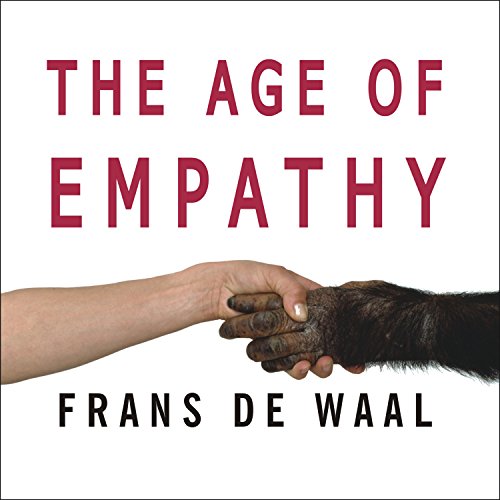
The Age of Empathy
Summary
Is it really human nature to stab one another in the back in our climb up the corporate ladder? Competitive, selfish behavior is often explained away as instinctive, thanks to evolution and "survival of the fittest", but in fact, humans are equally hard-wired for empathy. Using research from the fields of anthropology, psychology, animal behavior, and neuroscience, Frans de Waal brilliantly argues that humans are group animals - highly cooperative, sensitive to injustice, and mostly peace-loving - just like other primates, elephants, and dolphins. This revelation has profound implications for everything from politics to office culture.
©2009 Frans de Waal (P)2009 Tantor

Mysteries of the Middle Ages
Summary
After the long period of cultural decline known as the Dark Ages, Europe experienced a rebirth of scholarship, art, literature, philosophy, and science and began to develop a vision of Western society that remains at the heart of Western civilization today. By placing the image of the Virgin Mary at the center of their churches and their lives, medieval people exalted womanhood to a level unknown in any previous society. For the first time, men began to treat women with dignity and women took up professions that had always been closed to them. The communion bread, believed to be the body of Jesus, encouraged the formulation of new questions in philosophy: Could reality be so fluid that one substance could be transformed into another? Could ordinary bread become a holy reality? Could mud become gold, as the alchemists believed? These new questions pushed the minds of medieval thinkers toward what would become modern science. Artists began to ask themselves similar questions. How can we depict human anatomy so that it looks real to the viewer? How can we depict motion in a composition that never moves? How can two dimensions appear to be three? Medieval artists (and writers, too) invented the Western tradition of realism. On visits to the great cities of Europe - monumental Rome; the intellectually explosive Paris of Peter Abelard and Thomas Aquinas; the hotbed of scientific study that was Oxford; and the incomparable Florence of Dante and Giotto - Cahill brilliantly captures the spirit of experimentation, the colorful pageantry, and the passionate pursuit of knowledge that built the foundations for the modern world.
©2006 Thomas Cahill (P)2006 Books on Tape

Homo dieteticus
Summary
Siamo entrati nell'era di Homo dieteticus. Crudisti, sushisti, vegetariani, vegani, gluten free, no carb: fra etica e dietetica la ricerca del modello alimentare virtuoso è diventata la nuova religione globale. E come tutte le religioni nascenti produce continue contrapposizioni, scismi, eresie, sette, abiure. Ciascun credo si ritiene l'unica via verso la salvezza. E verso l'immortalità. O almeno quel suo succedaneo salutistico che chiamiamo longevità. Così anticipiamo il giorno del giudizio e facciamo del dietologo una sorta di Dio giudice. O di Dio una sorta di dietologo improprio, che dispensa premi e castighi qui e ora. Ecco perché la dieta non è più una misura di benessere, ma una condizione dell'essere.
©2015 Società editrice il Mulino Spa (P)2020 Audible Studios

Uomini e ambienti
Summary
Come ha avuto origine Homo sapiens? In che modo alcune popolazioni si sono adattate ai climi caldi, altre al freddo e altre ancora all'alta quota? Perché alcuni difetti genetici permettono di sopravvivere meglio in certe condizioni? Come possiamo interagire con l'ambiente per ricavarne il cibo necessario in modo sostenibile? Attraverso un'incursione nella biodiversità umana, nell'audiolibro si affronta la varietà delle strategie biologiche e culturali con cui la nostra specie si è potuta adattare ai diversi ambienti, talvolta trasformandoli anche profondamente in rapporto alle proprie esigenze. Alimentazione, clima e complessi patogeni sono le tre grandi sfide che abbiamo dovuto affrontare; a queste abbiamo risposto con strategie adattative di natura genetica, fisiologica e culturale, che ci hanno consentito di giungere sin qui.
©2009 Società editrice il Mulino Spa (P)2019 Audible Studios