The Medicine & Health Care Industry category has 225 audiobooks on Listento.it, with an average listener rating of 4.3★ across 424 ratings. The most-rated is Lies My Doctor Told Me.

Indispensable: The Prescription for a Fulfilling Pharmacy Career
Summary
“You are more than just a pill counter.” (Alex Barker, PharmD)
Are you trapped in your pharmacy job? Feeling burned out, like you can’t handle another day of work? Fearfully imagining working at your job for another 20 years? Worried about a lack of career options in pharmacy? Feeling absolutely powerless to do anything about it? Fed up with the stress your career is causing you?
If so, this book is your prescription to:
Learn the step-by-step method to creating an Indispensable career.
Quickly transition into a new, fulfilling job and out of your old miserable one.
Chart a path full of opportunities by unleashing your secret strengths.
Become the Indispensable pharmacist the best companies fight over.
Indispensable is your guide to creating confidence in a career path full of exciting opportunities. One with less anxiety, stress, and burnout from your work. It is the secret to a fulfilling and Indispensable career where you don't need to work so hard to find your next job. In this book, I share my story about how I created my Indispensable career from the shambles of a broken one, and how other pharmacists, even those with no prior experience, can do the same.
©2019 Alex Barker (P)2019 Alex Barker
![Cover art for Autodisciplina sin esfuerzo [Self-Discipline Without Effort]](https://m.media-amazon.com/images/I/41onwsqNcZL._SL500_.jpg)
Autodisciplina sin esfuerzo [Self-Discipline Without Effort]
Summary
Aquí un extracto de Autodisciplina sin esfuerzo La autodisciplina se construye día a día con la constancia. Tener autodisciplina requiere de fuerza de voluntad y responsabilidad consigo mismo para lograrla. Ser autodisciplinado es aplicar las acciones necesarias, para lograr los objetivos; es mejorar los hábitos de vida; es incluir nuevas responsabilidades y cumplirlas, sabiendo que al hacerlas dejarán un resultado positivo. Cuando no se tiene la costumbre de ser autodisciplinado, puede ser un poco difícil empezar, para ello es que se preparó este trabajo donde en diez capítulos se divide todo lo esencial que requiere hacerse autodisciplinado y aplicarlo día a día con herramientas que están dentro de cada uno y servirán para lograr lo que proponga. Para ello se requiere tener mentalidad positiva. La negatividad tiene que quedarse afuera, esa mala energía no provoca nada saludable, al contrario, arruina los sueños. Pero adoptar una conducta positiva permite que todos los esfuerzos y la perseverancia sean más fáciles de llevar, incluso se puede disfrutar del camino. La autodisciplina, exige que se aprenda a tener los propósitos hechos con planes de acción y no por impulso, ser impulsivo no deja nada bueno, porque se pueden tomar decisiones que no sean del todo beneficiosas para los objetivos. Sabiendo que se es autodisciplinado, se pueden plantear objetivos realistas que puedan ser alcanzados, de acuerdo a la capacidad de cada uno. Hechos con la mente enfocada y teniendo la claridad de lo que se quiere alcanzar. No todo es emprender objetivos para alcanzar el éxito, la abundancia o la independencia. Los objetivos van en el cuerpo, por eso la autodisciplina recomienda cuidarse, incluyendo el deporte en las metas del día, así como el control de los vicios y la alimentación inadecuada. Ser autodisciplinado es una forma de mejorar todo el entorno de cada uno, y aprender a serlo en el día a día es fácil, a continuación se narrará cómo hacerlo. Please note: This audiobook is in Spanish.
©2020 Manuel del Pozo (P)2020 Manuel del Pozo

Ramadi Iraq 2007
Summary
Doc Cole was a 39-year-old Army combat medic serving at an Iraqi Police Station. During his tenure there, he treats multiple wounds, fights with the Army Medical Station for support and supplies, and relays a day by day account of blood, sweat, tears, and the ultimate triumph and tragedy of the human spirit. He finds himself with meager supplies, no air conditioning and a language barrier almost impossible to overcome even with an Interpreter.
©2007 Eugene Cole Bolchoz (P)2015 Eugene Cole Bolchoz

Psych Notes Clinical Pocket Guide
Summary
Perfect wherever you are - in class, in clinical field, and in any practice setting! This handy guide delivers quick access to need-to-know information on DSM-5 disorders and treatments, psychotropic drugs, documentation, and patient education. No other book delivers as much in a format that is easy to listen to and easy to access.
©2017 Darlene D. Pedersen, MSN, APRN, PMHCNS (P)2020 Timothy

Bipolar Disorder: Understanding Symptoms, Mood Swings & Treatment, Revised and Updated Version
Summary
You are about to discover proven steps and strategies to properly support and care for a loved one with bipolar disorder. More often than not, people who have a loved one diagnosed with bipolar disorder wonder what to expect and how they should show their love and support. It can be very difficult for those who are diagnosed with bipolar disorder to accept their condition. In the same way, it can also be overwhelming, and at the same time frightening, for the family and friends of people with bipolar disorder, especially if they do not know the appropriate ways to support and deal with the condition. Bipolar disorder, which is also known as manic depression, is a type of mental or psychiatric disorder that is marked by extreme mood swings. Although there have continuously been studies on the condition, its ultimate cause remains unknown. On the other hand, some of the presumed contributors to bipolar disorder include brain chemistry, genetics, and life events. All people experience various events in their daily lives; however, people who are suffering due to bipolar disorder experience persistent episodes of life's "ups and downs" that affect their ability to function as an individual. Bipolar disorder can affect one's thoughts, moods, and behavior. In recent studies, mental health experts estimate that over two million adults are afflicted with bipolar disorder. Thus, if you or a loved one has been diagnosed with this condition, the most important step towards discarding uncertainty is education. Educating yourself about bipolar disorder can help you deal with a loved one who has been inflicted with this unfortunate condition.
©2014 dsk-enterprise (P)2015 dsk-enterprise

Marie's Story
Summary
A personal journey of Alzheimer's care-giving.
©2018 Colleen Bixler (P)2019 Colleen Bixler
Flu Pandemic
Summary
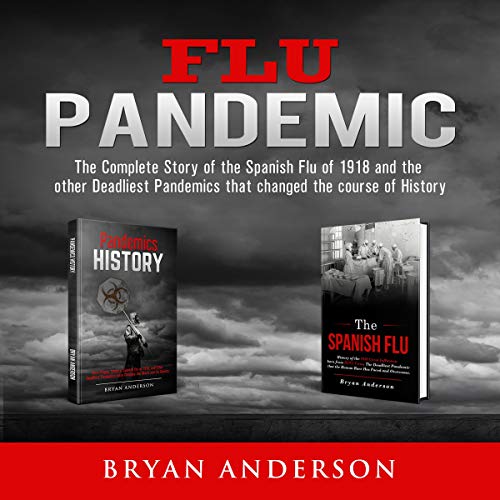
Discover the only resource guide you'll ever need to completely understand the origin and evolution of the world's most deadly and common pandemics. Have you always been curious about pandemics, but are bored by the intensely academic and theoretical nature of most literature covering the subject? Are you looking for a concise, straightforward guide to educate you on the true nature of pandemics and the cascading effects on the global economy and politics? If your answer is yes, then this special bundle is for you. If the recent pandemic spreading quickly around the globe has taught us anything, it's that history always repeats itself. The best we can do is deal with global pandemics with the lessons learned from history. In this special resource bundle, experienced historian Bryan Anderson hands you a comprehensive knowledge base of catastrophic global pandemics, their impact on the world, and the lessons learned, from the historical context to science-based explanations. This special bundle has everything you need to know about the Spanish Flu and other deadly pandemics that have plagued the human population. It has the following books: Pandemics History The Spanish Flu Each of the pandemics listed in Pandemics History has the following information in them: Origin and history: Everything in the universe has an origin and a history. Pandemics are no different. Causes and symptoms: All the pandemics listed in this book has a detailed dossier on their causes and the symptoms they manifest. Viral pathogenesis: You'll learn how each of the pandemic-causing viruses enters the body and the pathways they take to invade the human body. Medication and treatment: From cutting-edge treatment to regular medications, you'll discover how health workers deal with these diseases. Here's a snippet of what you're going to discover in the Spanish Flu: Everything you need to know about the Spanish Flu, from its scientific classification to its evolution and global spread The classification of different types of influenza, when and where they are most likely to occur, and some of the best medical measures to counter it All you need to know about where the Spanish Flu originated, how it was transmitted, the communities it affected, and the pattern it adopted as it mutated The politics surrounding the pandemic and how the world governments reacted to the Spanish flu, as well as measures that were taken to bring it under control Important lessons learned from the Spanish Flu pandemic Whether you're a student of medicine or history or are a curious mind simply interested in history and the lessons of the past, these books are deeply insightful, clear and free from abstract and ambiguous ideas, and will help you truly understand pandemics and increase your awareness and preparedness in the future. Scroll to the top of the page and click the "Buy Now" button to stay aware and keep yourself and loved ones safe!
©2020 Bryan Anderson (P)2020 Bryan Anderson

Navigating Your Surgical Career: The AWS Guide to Success
Summary
A career in surgery is immensely rewarding and challenging at the same time. This helpful guide written by leaders in surgery is meant to inspire young surgeons and make their career journey a bit easier. The career guide is now available as an audiobook, making this priceless and practical advice even more accessible.
©2015 Association of Women Surgeons (P)2017 Association of Women Surgeons

Healthcare Is Killing Us
Summary
Imagine...from sick care to an ideal healthcare system. The US healthcare system desperately needs radical reform to rein in costs, reduce harm, expand access, and become customer centric. Imagine a healthcare system where consumers are respected and in control. Imagine communities focused on prevention and health instead of just on sick care and where pricing is no longer hidden. Imagine a system where drugs and surgeries are more affordable and effective. Imagine what real change in our healthcare system would mean for you, the economy, and our future. Real change requires disruptive innovation. As citizens, employers, entrepreneurs, healthcare workers, elected officials, and patients, it is time for us to drive the change. Authors Aaron Fausz and Terry Howell explain how we can disrupt, dismantle, and rebuild. Will you be among the daring disruptors creating the ideal healthcare system of tomorrow, today? Don’t just imagine. It’s time to do something. Listen to this audiobook and become part of the solution. PLEASE NOTE: When you purchase this title, the accompanying PDF will be available in your Audible Library along with the audio.
©2019 Aaron Fausz & W. Terry Howell (P)2019 Aaron Fausz & W. Terry Howell
![Cover art for Terapia Cognitiva Del Comportamiento [Cognitive Behavioral Therapy]](https://m.media-amazon.com/images/I/51uJL3PvayL._SL500_.jpg)
Terapia Cognitiva Del Comportamiento [Cognitive Behavioral Therapy]
Summary
Aquí hay un extracto de Terapia Cognitiva del Comportamiento En la psicología existen distintos enfoques terapéuticos. Cuando un paciente acude a un terapeuta para que le ayude y oriente, luego de la primera consulta, descubre que hay terapias psicológicas que son científicas y han demostrado ser eficaces. Dentro de estas, se encuentra la terapia cognitivo conductual. Se puede definir como la aplicación clínica de la ciencia de la psicología, que se fundamenta en principios y procedimientos validados empíricamente. El objetivo de este tratamiento es la conducta, en sus distintos niveles, cognitivo, fisiológico y emocional. La terapia cognitivo conductual (TCC), considera que la persona tiene responsabilidad en los procesos que padece y puede ejercer control sobre ellos. La TCC pone el énfasis en los determinantes actuales de la conducta, empero, tiene en cuenta los elementos de la historia de la persona que explica el por qué se está dando la situación actual. Aunque se consideran elementos del pasado, la terapia se orienta al presente y tiene como meta alcanzar objetivos concretos y reales. La TCC cuenta con técnicas y programas específicos para diversos problemas y trastornos, cuya aplicación tiene un tiempo limitado en comparación con otras psicoterapias a largo plazo. Una de sus características es ser una terapia de tiempo limitado. Las terapias, su historia, las aplicaciones y la importancia de la TCC, será tratada en este trabajo a continuación. Conozca cómo influye la Terapia Cognitivo Conductual en las condiciones que puede estar sufriendo un paciente. Please note: This audiobook is in Spanish.
©2020 Manuel del Pozo (P)2020 Manuel del Pozo

Selling Your Practice
Summary
Your practice is your number-one asset. How you transition will define your financial legacy. Selling a practice is complex, and it is critical that you optimize that sale for the benefit of you and your family. There are a multitude of considerations and decisions that have to be made in determining the when, the how, and the who of selling your practice. Unfortunately, few give much thought to selling or exiting until the day they decide they want to sell. Or, in some cases, when they must sell due to disability, death, or fatigue. Dr. David Phelps' new book, Selling Your Practice, raises all of these points and lets you in on the secret that will ensure the security of your future: Ask for help. Dr. Phelps strongly encourages all those wanting to plan for their transition out of dentistry to seek mentorship and guidance to best prepare for their next phase of life. For that reason, Dr. Phelps sought the top transition experts to help explain a clear path to your envisioned future. Featuring: Dr. Brady Frank (Author of Transition Time) Dr. Dustin Burleson (Founder, Burleson Smiles) Dr. Mike Abernathy (CEO, Summit Practice Solutions) Dr. Paul Goodman (Founder, DentalNachos.com) Timothy Lott, CPA (Dental transition expert) Jerry Jones (Patient attraction and retention expert) You don't want to miss the advice and expertise these professionals have to offer about: Identifying key ways to maximize the market value of your practice Choosing which type of buyer/seller fits your goals and desires Minimizing the risk of being taken advantage of by large corporate acquisitions Transitioning on your own terms, whether you want to continue practicing dentistry as a non-owner, or hang up the handpiece Building your team of advisors to navigate the transition and more!
©2020 David Phelps International, LLC (P)2020 Dr. David Phelps

The South Carolina State Hospital
Summary
Nearly two decades after it closed, the South Carolina State Hospital continues to hold a palpable mystique in Columbia and throughout the state. Founded in 1821 as the South Carolina Lunatic Asylum, it housed, fed, and treated thousands of patients incapable of surviving on their own. The patient population in 1961 eclipsed 6,600, well above its listed capacity of 4,823, despite an operating budget that ranked 45th out of the 48 states with such large public hospitals. By the mid-1990s, the patient population had fallen under 700, and the hospital had become a symbol of captivity, horror, and chaos. Author William Buchheit details this history through the words and interviews of those who worked on the iconic campus.
©2020 William Buchheit (P)2020 Tantor

Launch into Home Health Physical Therapy
Summary
Are you interested in learning about home health? Are you looking to launch into a successful career in the growing and lucrative field of home health physical therapy? This concise, one-of-a-kind introductory guide cuts through all the nonsense and demystifies home health for the practicing physical therapist or physical therapy student. After listening to Launch into Home Health Physical Therapy, you will have all the tools you need to hit the ground running and earn a job in this growing and fulfilling setting! Written by a successful home health physical therapist and entrepreneur, this book offers an insider's perspective of the home health industry. By the end of this book, you will know as much about home health physical therapy as someone who has been working in the profession for over a year - all before you even see your first patient! After listening to this book, you will: Understand how home health works, the function of the home health agency, and characteristics of the home health patient. Learn how to make your patients safer, stronger, and happier in their homes. Understand the essence of the initial, routine, and discharge visits. Learn how to boost your day-to-day efficiency and productivity. Recognize how to spot and avoid common pitfalls. Understand basic clinical documentation and patient care expectations. Be familiar with the OASIS and other home health-specific concepts like homebound and face-to-face encounter. Know how to find top-tier home health agencies that will serve as potential employers. Understand how to prepare for and land a home health physical therapy job. Increase your earning potential! As a bonus for buying this audiobook, the author has created a free online companion course to complement each chapter, which will help you gain a deeper understanding of the concepts and lessons discussed. The companion course includes the book's references, interviews from home health professionals as well as bonus content not included in the book. Enroll in the FREE companion course at learn.peterbsims.com
©2017 Peter B. Sims (P)2017 Peter B. Sims

The English Sweating Sickness
Summary
Plague and pestilence have both fascinated and terrified humanity from the very beginning. Societies and individuals have struggled to make sense of them, and more importantly, they’ve often struggled to avoid them. Before the scientific age, people had no knowledge of the microbiological agents - unseen bacteria and viruses - which afflicted them, and thus, the maladies were often ascribed to wrathful supernatural forces. Even when advances in knowledge posited natural causes for epidemics and pandemics, medicine struggled to deal with them, and for hundreds of years, religion continued to work hand-in-hand with medicine. It was only in the mid-19th century that scientists established a definitive link between viruses and bacteria and disease, and this allowed the development of vaccines to prevent the spread of killers such as smallpox, typhus, and diphtheria. In the early 20th century, the development of antibiotics helped immensely, but as the Spanish Flu of 1918 and the recent coronavirus outbreak demonstrated, people have not succeeded in conquering all infectious diseases. In fact, it was not until World War II that most of the pestilences that have afflicted people in the past could be effectively prevented, but the fear of contagion remains strong. The plague, for all its horrors, became a known quantity that moved through a predictable progression, so by the 15th century, citizens learned to go on with their lives, resigned to the fact that these curses seemed inescapable. However, in the mid-15th century, a new “febrile” disease of an entirely unknown cause struck again in Britain in a series of erratically paced and lethal outbreaks between 1485 and 1551. Confined almost entirely to England, the new and unfamiliar wave of illness paled before the statistical destruction caused by the Black Death. However, what came to be known as the “English sweating sickness” reappeared through the decades in a stunning display of unpredictable timing and terrifying symptoms. The anxiety produced by its rapid and grim emergence rivaled that of the previous continental scourge. Surviving the disease offered no defense against reinfection, and what began as mild discomfort in the morning often left a victim dead by nightfall. The new plague’s arrival was indeed poorly timed for a country still recovering from the Black Death. To worsen the burden, respiratory diseases already stalked various communities throughout the British Isles, and a syphilis epidemic was widespread. Typhus and malaria were well known to larger Britain. All that the citizens of England knew was that the new peril was different, lacking the rash of typhus or the boils of bubonic plague, cold comfort at best. The new “sweating sickness” was not preying on Britain - only England. In an uncustomary manner, the sweating sickness chose the aristocracy for its primary target, rather than the usual assault on the poor. Worse for the wealthy and ruling class, including the royals, the sweating sickness uncharacteristically infiltrated the ranks of young men aspiring to high places in society and government. In turn, few men and women in their households were spared. The poor suffered as well, but as with the plague, they were mandated to continue their daily regimens in the absence of any alternative. For the well-to-do, the disease struck at the heart of England’s existence, personal and economical, with a predilection for those being groomed for state leadership or royal positions
©2020 Charles River Editors (P)2020 Charles River Editors

The BIG Book on the Gastric Sleeve
Summary
The vertical sleeve gastrectomy, or gastric sleeve, can be your weight loss solution after years of struggling with obesity. Thousands of patients have successfully lost weight and kept it off after vertical sleeve gastrectomy. Making the right decisions can help you make the most out of this life-changing experience. The Big Book on the Gastric Sleeve: Everything You Need to Lose Weight and Live Well with the Vertical Sleeve Gastrectomy! provides the information and tips you need to make the most out of this chance to overcome obesity forever. How does the gastric sleeve work? Is the vertical sleeve gastrectomy your best option? Who will your surgeon be? What will your diet be like? How can you reduce complications and side effects? This indispensible book answers these questions and more with straightforward and complete explanations. The authors, a successful weight loss surgery patient and a nutritionist specializing in weight loss speak to those considering weight loss surgery, current gastric sleeve patients and their supporters. Learn about: Expected weight loss after vertical sleeve gastrectomy (VSG) Choosing a surgeon and paying for surgery Safely preparing for and recovering from surgery Avoiding mistakes that can slow weight loss and harm your health The VSG diet for weight loss: what, when and how much to eat Health benefits and risks of the sleeve Embracing life as a sleeve patient This complete guide covers the entire VSG journey - don't miss out on critical information that can get you the weight loss that you want and deserve!
©2013 Alex Brecher (P)2014 Alex Brecher

Children Under Fire
Summary
One of The New York Times' 16 New Books to Watch for in March One of Publishers Weekly’s Most Anticipated Books of the Year One of Newsweek’s Most Highly Anticipated Books of The Year One of Buzzfeed’s Most Anticipated Books the Year Based on the acclaimed series - a finalist for the Pulitzer Prize - an intimate account of the devastating effects of gun violence on our nation’s children, and a call to action for a new way forward In 2017, seven-year-old Ava in South Carolina wrote a letter to Tyshaun, an eight-year-old boy from Washington, DC. She asked him to be her pen pal; Ava thought they could help each other. The kids had a tragic connection - both were traumatized by gun violence. Ava’s best friend had been killed in a campus shooting at her elementary school, and Tyshaun’s father had been shot to death outside of the boy’s elementary school. Ava’s and Tyshaun’s stories are extraordinary, but not unique. In the past decade, 15,000 children have been killed from gunfire, though that number does not account for the kids who weren’t shot and aren’t considered victims but have nevertheless been irreparably harmed by gun violence. In Children Under Fire, John Woodrow Cox investigates the effectiveness of gun safety reforms as well as efforts to manage children’s trauma in the wake of neighborhood shootings and campus massacres, from Columbine to Marjory Stoneman Douglas. Through deep reporting, Cox addresses how we can effect change now, and help children like Ava and Tyshaun. He explores their stories and more, including a couple in South Carolina whose 11-year-old son shot himself, a Republican politician fighting for gun safety laws, and the charlatans infiltrating the school safety business. In a moment when the country is desperate to better understand and address gun violence, Children Under Fire offers a way to do just that, weaving wrenching personal stories into a critical call for the United States to embrace practical reforms that would save thousands of young lives.
©2021 John Woodrow Cox (P)2021 HarperCollins Publishers
Another Person's Poison
Summary
To some, food allergies seem like fabricated cries for attention. For others, they pose a dangerous health threat. Food allergies are bound up with so many personal and ideological concerns that it is difficult to determine what is medical and what is myth. This book parses the political, economic, cultural, and genuine health factors of a phenomenon that now dominates our interactions with others and our understanding of ourselves. Surveying the history of food allergy from ancient times to the present, Another Person's Poison also gives listeners a clear grasp of new medical findings on allergies and what they say about our environment, our immune system, and the nature of the food we consume. For most of the 20th century, food allergies were considered a fad or junk science. While many physicians and clinicians argued that certain foods could cause a range of chronic problems, from asthma and eczema to migraines and hyperactivity, others believed that allergies were psychosomatic. Another Person's Poison traces the trajectory of this debate and its effect on public-health policy and the production, manufacture, and consumption of food. Are rising allergy rates purely the result of effective lobbying and a booming industry built on self-diagnosis and expensive remedies? Or should physicians become more flexible in their approach to food allergies and more careful in their diagnoses? Exploring the issue from scientific, political, economic, social, and patient-centered perspectives, this book is the first to engage fully with the history of what is now a major modern affliction, illuminating society's troubled relationship with food, disease, and the creation of medical knowledge.
©2015 Columbia University Press (P)2016 Audible, Inc.

Wild Rescues
Summary
A paramedic story that takes places in the wild and sheds a never-seen-before light on wilderness medicine, our national parks, and conflicts that arise between tourism and protecting the land Wild Rescues is a fast-paced, firsthand glimpse into the exciting lives of paramedics who work with the National Park Service: a unique brand of park rangers who respond to medical and traumatic emergencies in some of the most isolated and rugged parts of America. In 2014, Kevin Grange left his job as a paramedic in Los Angeles to work in a response area with 2.2 million acres: Yellowstone National Park. Seeking a break from city life and urban EMS, he wanted to experience pure nature, fulfill his dream of working for the National Park Service, and take a crash-course in wilderness medicine. Between calls, Grange reflects upon the democratic ideal of the National Park mission, the beauty of the land, and the many threats facing it. With visitation rising, budgets shrinking, and people loving our parks to death, he realized that - along with the health of his patients - he was also fighting for the life of “America’s Best Idea”.
©2021 Kevin Grange (P)2021 Blackstone Publishing

The Dark Side, Part 2
Summary
Following up on his well-received first book, Andy Thompson provides another captivating, thought-provoking, and at times intense glimpse into the daily life of a paramedic working in the UK's National Health Service. In the style of his first book, Andy recalls each event from the detailed documentation recorded at the time. Each account is written in a way that puts the listener right there next to him, so you live the events in real time. You'll hear the dialogue between paramedics, patients, their loved ones, and other health-care professionals as it would have been. You'll also share in Andy's thought processes during each of the 10 very different situations he encounters. The term "the dark side" describes the frontline emergency aspect of the ambulance service, since paramedics frequently experience somber situations. In The Dark Side, Part 2, you will share in some truly traumatic, tragic, and tearful events involving a seemingly healthy young patient, a prison inmate, the victims of a horrific car crash, heart attacks, a frightening epileptic fit, the alarming effects of an allergic reaction, and what can happen when under-strain doctors prescribe the wrong medications. But there's still room for lighthearted moments and a taste of the sometimes dark humor that allows paramedics to continually deal with events most of us would find too horrific. The detail in the descriptions of the care given to each patient on-scene by Andy and his colleagues will have you marveling at the ability of these health-care professionals to work at such speed of thought, buying enough time to deliver a patient into the specialist hands of hospital care. There are inevitably also those times when tears of hope turn to tears of despair for loved ones. You cannot feel that pain until it happens to you, but this book will bring you mighty close to it at times.
©2014 Andy Thompson (P)2015 Andy Thompson
![Cover art for Eso no estaba en mi libro de Historia de la Medicina [That Was Not in My History of Medicine Book]](https://m.media-amazon.com/images/I/510Qfy0qe0L._SL500_.jpg)
Eso no estaba en mi libro de Historia de la Medicina [That Was Not in My History of Medicine Book]
Summary
¿Sabía quiénes fueron las mujeres pioneras en licenciarse en medicina? ¿O cuáles fueron las enfermedades que se desarrollaron en contextos bélicos? ¿Conoce los orígenes de la Cruz roja y la media luna? El hombre que leía con la lengua, ¿ficción o realidad? Desde tiempos de la Biblia, ¿cuáles han sido las enfermedades con mayor rechazo? ¿Se salvaron vidas con el simple hecho de lavarse las manos? ¿Cuál es el origen del botiquín? ¿Se imaginaba que acontecimientos tan catastróficos como la primera Guerra Mundial propiciaron grandes avances en la cirugía? Adéntrese en la fascinante historia de la medicina con este audiolibro repleto de sorprendentes anécdotas y los pasajes de la historia más determinantes e interesantes sobre epidemias, guerras, medicamentos, grandes hazañas o las fatídicas infecciones. Una obra donde se abordan desde los mayores logros médicos de la humanidad y las enfermedades más cruentas y devastadoras que asolaron ciudades y países, hasta las anécdotas y casos más curiosos que provocaron el mayor de los asombros. «No es fácil ser pionera, pero...¡es fascinante! No cambiaría un instante, ni siquiera el peor, por todo el oro del mundo». Elisabeth Backwell, primera mujer incluida en el registro de médicos de gran Bretaña.
©2019 Carlos Aitor Yuste and Jon Arrizabalaga (P)2020 Audible, Inc.