The World category has 419 audiobooks on Listento.it, with an average listener rating of 4.5★ across 2,940 ratings. The most-rated is A Short History of Nearly Everything.

A Voyage Long and Strange
Summary
On a chance visit to Plymouth Rock, Tony Horwitz makes an unsettling discovery. A history buff since early childhood, expensively educated at university - a history major, no less! - he's reached middle age with a third-grader's grasp of early America. In fact, he's mislaid more than a century of American history, the period separating Columbus' landing in 1492 from the arrival of English colonists at Jamestown in 160-...something. Did nothing happen in between? Horwitz decides to find out, and in A Voyage Long and Strange he uncovers the neglected story of America's founding by Europeans. He begins a thousand years ago, with the Vikings, and then tells the dramatic tale of conquistadors, castaways, French voyageurs, Moorish slaves, and many others who roamed and rampaged across half the states of the present-day U.S. continent, long before the Mayflower landed. To explore this history and its legacy in the present, Horwitz embarks on an epic quest of his own - trekking in search of grape-rich Vinland, Ponce de Leon's Fountain of Youth, Coronado's Cities of Gold, Walter Raleigh's Lost Colonists, and other mysteries of early America. And everywhere he goes, Horwitz probes the revealing gap between fact and legend, between what we enshrine and what we forget. An irresistible blend of history, myth, and misadventure, A Voyage Long and Strange allows us to rediscover the New World for ourselves.
©2008 Tony Horwitz (P)2008 Random House, Inc.

Glorious Revolution
Summary
Discover the remarkable history of the glorious revolution! On August 28, 2019, British Prime Minister Boris Johnson asked Queen Elizabeth II to prorogue Parliament. She approved the request. The elaborate ritual of the queen granting the prime minister permission to do what he intended to do anyway demonstrates how the legacy of the Glorious Revolution of 1688 made the British Parliament, not the monarch, the ultimate source of power in government. But it was not always so. Under the Stuart kings, battles between the Parliament and the throne were far from unusual, with no ceremonial rituals to preserve popular fictions regarding who was in power. King Charles I believed ardently in the divine right of kings and went to his execution firmly convinced that he was God’s anointed. His second son James II believed the same. However, James II was a Catholic, and his succession to the English throne following the death of his brother Charles II set in motion a series of cataclysmic events which culminated in a largely bloodless revolution to bring James’s daughter Mary and her husband William of Orange to the throne as Protestant sovereigns. Under the 11-year Interregnum following the execution of King Charles I, the Parliament got a taste of power, and ordinary men perceived that God might choose rulers from among their own class. The path to parliamentary supremacy over pedigreed royalty, although ultimately achieved without bloodshed, was strewn with religious intolerance, petty rivalries, titanic clashes of ideology, and a belief in the rights of Parliament to govern without royal interference. The evolution of parliamentary supremacy over royal birthright redefined human social evolution, laying the groundwork for a bold new experiment in government that would make democracy the crowning achievement of the modern age. Discover a plethora of topics, such as: The Roundheads Behead a King The Return of the Monarchy: Charles II James, the Catholic King The Dutch Invasion of England Mary and William: Joint Sovereigns, One Ruler And much more! So, if you want a concise and informative book on the Glorious Revolution, simply scroll up and click the "buy now" button for instant access!
©2020 Hourly History (P)2020 Hourly History

A Macat Analysis of Christopher R. Browning's Ordinary Men
Summary
Ordinary Men is one of the most influential works on the Holocaust. Before US historian Browning's 1992 book, most Holocaust scholarship focused either on the experience of the victims or on the Nazi political ideology driving the slaughter. Browning investigates the stories of some who carried out acts of extreme violence, those who literally had blood on their hands. Who were they? What were their backgrounds? And how could they end up committing such unspeakable acts? Browning focuses on one unexceptional regiment of German reservists, Police Battalion 101, carefully reconstructing the men's personalities. While their orders to kill appalled them at first, Browning shows how a combination of reluctance to challenge authority and peer pressure enabled them to face their gruesome task. These men were not driven by ideology. Rather than being moral monsters, Browning insists they were simply "ordinary men." While some have criticized Browning's relentless focus on the individual, Ordinary Men is nonetheless an essential work for anybody who wants to understand the Holocaust.
©2016 Macat Inc (P)2016 Macat Inc

The Spanish Flu
Summary
Learn about the Spanish Flu, understand the preventive measures to fight it, come together as a community, and deliver a concerted response Are you interested in learning about the worst pandemic to have occurred in modern history? Do you need to know how to be prepared to deal with the current pandemic and any possible future ones? If you answered “yes” to any of these questions, keep listening. The Spanish Flu was the worst disaster to have occurred in modern history. It began to erupt in 1918 and spread to become an epidemic affecting communities. As it was also a time of war, the epidemic became a pandemic because of the travelling soldiers who unknowingly became the carriers of the deadly virus. Why is it important for us to know about the Spanish Flu? Historic context is invaluable and it is true of this pandemic. If we have a good understanding of it, we can be better prepared to deal with the current pandemic that is affecting our communities and ones that may arise in the future. This book is a great source of knowledge as it clearly narrates how the virus came about, how it spread, and how it was countered. In this eye-opening book, here is what else you’ll learn: A brief history of the pandemics around the globe, including the Spanish Flu What were the origins of the Spanish Flu and where did it erupt from? How were countries affected as a result of the spread of the deadly virus How the virus spread in waves, how the society was affected by it, and what measures were taken by medical communities Why entire societies and communities were cut off from each other because of the pandemic, and what preventive measures were taken to curb its spread Why the second wave of the Spanish Flu was especially deadly, and how its spread was exacerbated How the virus was countered with each successive wave of mutation, and how it was brought under control A history of why virus pandemics spread and what are some of the most effective ways to deal with them so as to slow their spread Times call for us to continually renew our understanding of history so we can learn and be better prepared to address any present or future eventuality. The Spanish Flu is not any different and is the closest example in relation to the present virus pandemic. The more we study the Spanish Flu, the more we can recognize patterns into what role we should play as citizens to help curb the deadly spread. This book is timely and extremely useful in making us aware that we should take whatever precaution necessary to ensure a safe outcome for our families and communities.
©2020 Nathan Grisham (P)2020 Nathan Grisham

Vom Kriege
Summary
Wie muß die Strategie moderner Kriegführung angelegt sein, damit Kriege gewonnen werden können? Diese Frage stellte sich Carl von Clausewitz. Als Ergebnis seiner Überlegungen entstand eine der wichtigsten militärtheoretischen Abhandlungen der Weltgeschichte und ein Meisterwerk der Strategie: "Vom Kriege". Dieses Hörbuch fasst die wichtigsten Gedanken und Zitate auf 76 Minuten zusammen.
(c) + (p) 2008 Vocalbar

Conquering the Electron
Summary
Conquering the Electron offers listeners a true and engaging history of the world of electronics, beginning with the discoveries of static electricity and magnetism and ending with the creation of the smartphone and the iPad. This book shows the interconnection of each advance to the next on the long journey to our modern-day technologies. Exploring the combination of genius, infighting, and luck that powered the creation of today's electronic age, Conquering the Electron debunks the hero worship so often plaguing the stories of great advances. Want to know how AT&T's Bell Labs developed semiconductor technology - and how its leading scientists almost came to blows in the process? Want to understand how radio and television work - and why RCA drove their inventors to financial ruin and early graves? Conquering the Electron offers these stories and more, presenting each revolutionary technological advance right alongside blow-by-blow personal battles that all too often took place.
©2011 Derek Cheung and Eric Brach (P)2020 Tantor
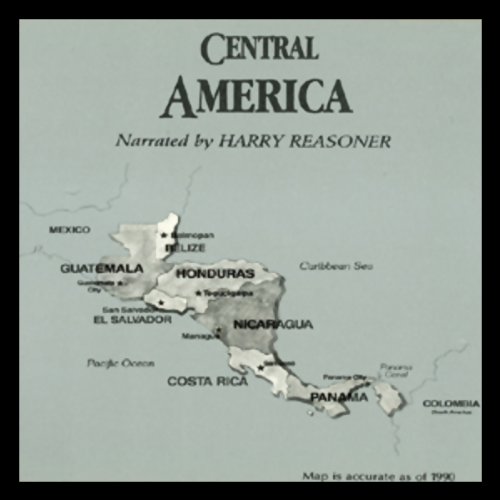
Central America
Summary
A cluster of five countries, Guatemala, Honduras, El Salvador, Nicaragua, and Costa Rica, are commonly referred to as Central America. Although these nations differ in their histories and politics, they share at least one factor; they have been caught up in the turmoil of America's foreign policy in this region. This audiobook depicts the chain of events that have led to the Central America we view on television.
©1991 Knowledge Products, Inc. (P)1991 Knowledge Products, Inc.

Liberty's Torch
Summary
The Statue of Liberty is one of the most recognizable monuments in the world, a powerful symbol of freedom and the American dream. For decades, the myth has persisted that the statue was a grand gift from France, but now Liberty's Torch reveals how she was in fact the pet project of one quixotic and visionary French sculptor, Frédéric Auguste Bartholdi. Bartholdi not only forged this 151-foot-tall colossus in a workshop in Paris and transported her across the ocean, but battled to raise money for the statue and make her a reality. A young sculptor inspired by a trip to Egypt where he saw the pyramids and Sphinx, he traveled to America, carrying with him the idea of a colossal statue of a woman. There he enlisted the help of notable people of the age - including Ulysses S. Grant, Joseph Pulitzer, Victor Hugo, Gustave Eiffel, and Thomas Edison - to help his scheme. He also came up with inventive ideas to raise money, including exhibiting the torch at the Philadelphia World's Fair and charging people to climb up inside. While the French and American governments dithered, Bartholdi made the statue a reality by his own entrepreneurship, vision, and determination.
©2014 Elizabeth Mitchell. Recorded by arrangement with Grove/Atlantic, Inc. (P)2014 Audible Inc.

Reappraisals
Summary
The accelerating changes of the past generation have been accompanied by a similarly accelerated amnesia. The 20th century has become "history" at an unprecedented rate. The world of 2007 was so utterly unlike that of even 1987, much less any earlier time, that we have lost touch with our immediate past even before we have begun to make sense of it - and the results are proving calamitous. In less than a generation, the headlong advance of globalization has altered structures of thought that had been essentially unchanged since the European industrial revolution. As a result, we have lost touch with a century of social thought and socially motivated activism. In the 24 essays in Reappraisals, Judt resurrects the key aspects of the world we have lost to remind us how important they still are to us now and to our future.
©2008 Tony Judt (P)2008 Blackstone Audio, Inc.

A Macat Analysis of C. L. R. James's The Black Jacobins: Toussaint L'Ouverture and the San Domingo Revolution
Summary
Published in 1938, Cyril Lionel Robert (C. L. R.) James' The Black Jacobins is the little-known story of the only successful slave revolution known in history. It was this 12-year struggle of the African slaves in the French colony of San Domingo that led to the establishment of the Republic of Haiti in 1804. The uprising was inspired by the ideals of the French Revolution that had begun in 1789, just two years before, and in this work James goes to great lengths to show the relationship between the two upheavals. The Black Jacobins was an early example of what is known as "history from below", telling the story of key moments from the point of view of ordinary people rather than high-ranking politicians and noblemen. Although James' Marxism colors his view of events in the book, The Black Jacobins is considered a classic work and gives an accurate and groundbreaking portrayal of a unique historical event.
©2016 Macat Inc (P)2016 Macat Inc

The Moors in Spain
Summary
The Moors in Spain is an overview of the Moorish conquest of the Iberian Peninsula. Stanley Edward Lane-Poole (1854 - 1931), the author, was a noted British archaeologist.
Public Domain (P)2020 Museum Audiobooks

Seven Myths of the Spanish Conquest
Summary
Here is an intriguing exploration of the ways in which the history of the Spanish Conquest has been misread and passed down to become popular knowledge of these events. The book offers a fresh account of the activities of the best-known conquistadors and explorers, including Columbus, Cortes, and Pizarro. Using a wide array of sources, historian Matthew Restall highlights seven key myths, uncovering the source of the inaccuracies and exploding the fallacies and misconceptions behind each myth. This vividly written and authoritative book shows, for instance, that native Americans did not take the conquistadors for gods and that small numbers of vastly outnumbered Spaniards did not bring down great empires with stunning rapidity. We discover that Columbus was correctly seen in his lifetime - and for decades after - as a briefly fortunate but unexceptional participant in efforts involving many southern Europeans. It was only much later that Columbus was portrayed as a great man who fought against the ignorance of his age to discover the new world. Another popular misconception - that the Conquistadors worked alone - is shattered by the revelation that vast numbers of black and native allies joined them in a conflict that pitted native Americans against each other. This and other factors, not the supposed superiority of the Spaniards, made conquests possible. The Conquest, Restall shows, was more complex - and more fascinating - than conventional histories have portrayed it. Seven Myths of the Spanish Conquest offers a richer and more nuanced account of a key event in the history of the Americas.
©2003 Oxford University Press, Inc. (P)2018 Tantor

The Story of Atlantis and the Lost Lemuria
Summary
William Scott-Elliot (1849-1919) was a theosophist and follower of Helena Blavatsky. In The Story of Atlantis and the Lost Lemuria - first published in 1896 - the author explores the histories of the two legendary lost continents in light of Blavatsky's theories about ancient history and lost races. There are similarities with some of Edgar Cayce’s claims, and it is said that H P Lovecraft was inspired by Scot-Elliot’s writing in constructing the "Cthulhu Mythos".
Public Domain (P)2019 Museum Audiobooks

As If an Enemy's Country: The British Occupation of Boston and the Origins of Revolution
Summary
In the dramatic few years when colonial Americans were galvanized to resist British rule, perhaps nothing did more to foment anti-British sentiment than the armed occupation of Boston. As If an Enemy's Country is Richard Archer's gripping narrative of those critical months between October 1, 1768, and the winter of 1770, when Boston was an occupied town. Bringing colonial Boston to life, Archer deftly moves between the governor's mansion and cobblestoned back alleys as he traces the origins of the colonists' conflict with Britain. He reveals the maneuvering of colonial political leaders, such as Governor Francis Bernard, Lieutenant Governor Thomas Hutchinson, and James Otis Jr. as they responded to London's new policies, and he evokes the outrage many Bostonians felt towards Parliament and its local representatives. Archer captures the popular mobilization under the leadership of John Hancock and Samuel Adams that met the oppressive imperial measures - most notably the Sugar Act and the Stamp Act. When the British government decided to garrison Boston with troops, it posed a shocking challenge to the people of Massachusetts. The city was flooded with troops; almost immediately, tempers flared and violent conflicts broke out. Archer's vivid tale culminates in the swirling tragedy of the Boston Massacre and its aftermath, including the trial and exoneration of the British troops involved. A thrilling and original work of history, As If an Enemy's Country tells the riveting story of what made the Boston townspeople, and with them other colonists, turn toward revolution. The “Pivotal Moments in American History” series seeks to unite the old and the new history, combining the insights and techniques of recent historiography with the power of traditional narrative. Each title has a strong narrative arc with drama, irony, suspense, and - most importantly - great characters who embody the human dimension of historical events.
©2010 Richard Archer (P)2011 Audible, Inc.

The Human Cosmos
Summary
"A tour de force on par with Sapiens by Yuval Noah Harari." (Booklist, starred review) "One to savor." (Publishers Weekly, starred review) An historically unprecedented disconnect between humanity and the heavens has opened. Jo Marchant's book can begin to heal it. For at least 20,000 years, we have led not just an earthly existence but a cosmic one. Celestial cycles drove every aspect of our daily lives. Our innate relationship with the stars shaped who we are - our art, religious beliefs, social status, scientific advances, and even our biology. But over the last few centuries we have separated ourselves from the universe that surrounds us. It's a disconnect with a dire cost. Our relationship to the stars and planets has moved from one of awe, wonder and superstition to one where technology is king - the cosmos is now explored through data on our screens, not by the naked eye observing the natural world. Indeed, in most countries modern light pollution obscures much of the night sky from view. Jo Marchant's spellbinding parade of the ways different cultures celebrated the majesty and mysteries of the night sky is a journey to the most awe inspiring view you can ever see - looking up on a clear dark night. That experience and the thoughts it has engendered have radically shaped human civilization across millennia. The cosmos is the source of our greatest creativity in art, in science, in life. To show us how, Jo Marchant takes us to the Hall of the Bulls in the caves at Lascaux in France, and to the summer solstice at a 5,000-year-old tomb at New Grange in Ireland. We discover Chumash cosmology and visit medieval monks grappling with the nature of time and Tahitian sailors navigating by the stars. We discover how light reveals the chemical composition of the sun, and we are with Einstein as he works out that space and time are one and the same. A four-billion-year-old meteor inspires a search for extraterrestrial life. The cosmically liberating, summary revelation is that star-gazing made us human.
©2020 Jo Marchant (P)2020 Penguin Audio

Don't Know Much About Geography: Revised and Updated Edition
Summary
From bestselling author Kenneth C. Davis comes a treasure trove of answers to questions about our world. Was there an Atlantis? What's the smallest country in the world? What's the difference between a jungle and a rain forest? Kenneth C. Davis, author of Don't Know Much About® History, Don't Know Much About the Civil War and Don't Know Much About the Bible, turns his inimitable wit and wide-ranging knowledge to the subject of geography, and proves once and for all that there is a lot more to it than labeling countries on a map. From often amusing perceptions people have had through the ages about the world and the universe to the changing map of today, Davis shows how geography is really a great crossroad of many fields: biology, meteorology, astronomy, history, economics, and even politics. In this lively, entertaining, and endlessly fascinating presentation, you'll hear about the personalities that helped shape the world and learn the answers to questions that have vexed most of us since grade school. Along the way, Davis offers an affectionate ode to the earth: a celebration of the earth, a searching investigation of the destruction of our habitat, and a practical guide to saving our home planet. For anyone who has felt geographically ignorant ever since gas stations stopped handing out free maps, Don't Know Much About Geography is enormously informative entertainment.
©1993 Reed Business Information, Inc. (P)2013 Random House Audio

Pandemic History: The Worst Pandemics That Changed History
Summary
Are you interested in learning about the worst pandemics that have accompanied human history? Do you want to know how the different epidemics have been dealt with in the past? If so, this is the audiobook you need to listen! In this audiobook, you will be provided with the information necessary to understand how the different pandemics have followed one another in past years. Based on extensive research, this audiobook takes readers through the battles faced by mankind throughout history, focusing mostly on the most famous viruses. You will find the history of: Malaria Tuberculosis History of Smallpox Plague and Black Plague (1346-1353) Cholera Spanish influenza (1918-1920) The Spread of the Plague through the Byzantine Empire Hong Kong Flu (1968 Influenza Pandemic) HIV and AIDS Serious Acute Respiratory Syndrome (SARS) Ebola Even if we talk about past events, it is always important to know these historical events, from which we can glean many teachings. What are you waiting for? Would you like to know more? Buy this audiobook now!
©2020 John Muan (P)2020 John Muan

Season of the Witch
Summary
Audie Award Nominee, History, 2013 Season of the Witch is the first book to fully capture the dark magic of San Francisco in this breathtaking period, when the city radically changed itself - and then revolutionized the world. The cool gray city of love was the epicenter of the 1960s cultural revolution. But by the early 1970s, San Francisco’s ecstatic experiment came crashing down from its starry heights. The city was rocked by savage murder sprees, mysterious terror campaigns, political assassinations, street riots, and finally a terrifying sexual epidemic. No other city endured so many calamities in such a short time span. David Talbot takes us deep into the riveting story of his city’s ascent, decline, and heroic recovery. He draws intimate portraits of San Francisco’s legendary demons and saviors: Charles Manson, Patty Hearst and the Symbionese Liberation Army, Jerry Garcia, Janis Joplin, Bill Graham, Herb Caen, the Cockettes, Harvey Milk, Jim Jones and the Peoples Temple, Joe Montana and the Super Bowl 49ers. He reveals how the city emerged from the trials of this period with a new brand of “San Francisco values”, including gay marriage, medical marijuana, immigration sanctuary, universal health care, recycling, renewable energy, consumer safety, and a living wage mandate. Considered radical when they were first introduced, these ideas have become the bedrock of decent society in many parts of the country, and exemplify the ways that the city now inspires us toward a live-and-let-live tolerance, a shared sense of humanity, and an openness to change. As a new generation of activists and dreamers seeks its own path to a more enlightened future, Season of the Witch - with its epic tale of the wild and bloody birth of San Francisco values - offers both inspiration and cautionary wisdom.
©2012 David Talbot (P)2012 Brilliance Audio, Inc.

The Ever-Changing Past
Summary
History is not, and has never been, inert, certain, merely factual, and beyond reinterpretation. Taking listeners from Thucydides to the origin of the French Revolution to the Civil War and beyond, James M. Banner, Jr., explores what historians do and why they do it. Banner shows why historical knowledge is unlikely ever to be unchanging, why history as a branch of knowledge is always a search for meaning and a constant source of argument, and why history is so essential to individuals' awareness of their location in the world and to every group and nation's sense of identity and destiny. He explains why all historians are revisionists while they seek to more fully understand the past, and how they always bring their distinct minds, dispositions, perspectives, and purposes to bear on the subjects they study.
©2021 James M. Banner, Jr. (P)2021 Tantor

Behemoth
Summary
A sweeping, global history of the rise of the factory and its effects on society We live in a factory-made world: modern life is built on three centuries of advances in factory production, efficiency, and technology. But giant factories have also fueled our fears about the future since their beginnings, when William Blake called them "dark Satanic mills". Many factories that operated over the last two centuries - such as Homestead, River Rouge, and Foxconn - were known for the labor exploitation and class warfare they engendered, not to mention the environmental devastation caused by factory production from the beginning of the Industrial Revolution up to today. In a major work of scholarship that is also wonderfully accessible, celebrated historian Joshua B. Freeman tells the story of the factory and examines how it has reflected both our dreams and our nightmares of industrialization and social change. He whisks listeners from the textile mills in England that powered the Industrial Revolution and the factory towns of New England to the colossal steel and car plants of 20th-century America, Eastern Europe, and the Soviet Union and on to today's behemoths making sneakers, toys, and cellphones in China and Vietnam. The giant factory, Freeman shows, led a revolution that transformed human life and the environment. He traces arguments about factories and social progress through such critics and champions as Marx and Engels, Charles Dickens, Alexander Hamilton, Henry Ford, and Joseph Stalin. He chronicles protests against standard industry practices from unions and workers' rights groups that led to shortened workdays, child labor laws, protection for organized labor, and much more. In Behemoth, Freeman also explores how factories became objects of great wonder that both inspired and horrified artists and writers in their time. He examines representations of factories in the work of Charles Sheeler, Margaret Bourke-White, Charlie Chaplin, Diego Rivera, and Edward Burtynsky. Behemoth tells the grand story of global industry from the Industrial Revolution to the present. It is a magisterial work on factories and the people whose labor made them run. And it offers a piercing perspective on how factories have shaped our societies and the challenges we face now.
©2018 Joshua B. Freeman (P)2018 Blackstone Audio, Inc.