The Anthropology category has 155 audiobooks on Listento.it, with an average listener rating of 4.5★ across 7,559 ratings. The most-rated is Sapiens.

Ancient Bones
Summary
A thrilling new account of human origins, as told by the paleontologist who led the most groundbreaking dig in recent history. Somewhere west of Munich, Madelaine Böhme and her colleagues dig for clues to the origins of humankind. What they discover is beyond anything they imagined: the fossilized bones of Danuvius guggenmosi ignite a global media frenzy. This ancient ancestor defies our knowledge of human history - his nearly 12-million-year-old bones were not located in Africa - the so-called birthplace of humanity - but in Europe, and his features suggest we evolved much differently than scientists once believed. In prose that reads like a gripping detective novel, Ancient Bones interweaves the story of the dig that changed everything with the fascinating answer to a previously undecided and now pressing question: How, exactly, did we become human? Placing Böhme’s discovery alongside former theories of human evolution, the authors show how this remarkable find (and others in Eurasia) are forcing us to rethink the story we’ve been told about how we came to be, a story that has been our guiding narrative - until now. PLEASE NOTE: When you purchase this title, the accompanying PDF will be available in your Audible Library along with the audio.
©2020 Madelaine Böhme, Rüdiger Braun, and Florian Breier (P)2020 Greystone Books

Lords of the Horizons
Summary
The Ottoman Empire has long exerted a strong pull on Western minds and hearts. For over 600 years the empire swelled and declined, rising from a dusty fiefdom in the foothills of Anatolia to a power which ruled over the Danube and the Euphrates with the richest court in Europe. But its decline was prodigious, protracted and total.
©1998 Jason Goodwin (P)2018 Audible, Ltd

The Meaning of Human Existence
Summary
Searching for meaning in what Nietzsche once called “the rainbow colors” around the outer edges of knowledge and imagination, Edward O. Wilson bridges science and philosophy to create a 21st century treatise on human existence. Once criticized for his over-reliance on genetics, Wilson unfurls here his most expansive and advanced theories on human behavior, recognizing that, even though the human and spider evolved similarly, the poet’s sonnet is wholly different than the spider’s web. Whether attempting to explicate "the Riddle of the Human Species", warning of "the Collapse of Biodiversity", or even creating a plausible "Portrait of E.T.", Wilson does indeed believe that humanity holds a special position in the known universe. Alarmed, however, that we are about to abandon natural selection by redesigning biology and human nature as we wish them, Wilson concludes that advances in science and technology bring us our greatest moral dilemma since God stayed the hand of Abraham. Edward O. Wilson is widely recognized as one of the world’s leading scientists. He is the winner of the Pulitzer Prize and the author of the best-selling The Social Conquest of Earth and Letters to a Young Scientist.
©2014 Edward O. Wilson (P)2014 Recorded Books
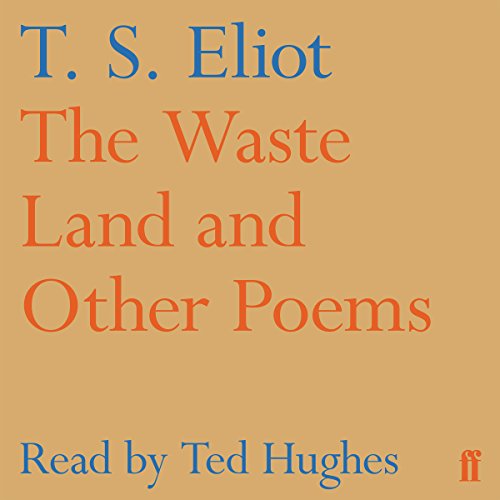
The Waste Land and Other Poems
Summary
'The Waste Land' is a landmark in 20th-century poetry. Here it is read by the late Poet Laureate Ted Hughes. Published in 1922, it is a brilliant exploration of a faithless, immoral society trying to rebuild itself after the devastation of the Great War. Rich in literary references and steeped in allusive and evocative imagery, 'The Waste Land' is widely considered to be the pinnacle of modernist poetry. This audiobook also contains some of Eliot's other poems, including 'The Love Song of J. Alfred Prufrock', 'Sweeney Among the Nightingales', 'Ash Wednesday' and 'Journey of the Magi'. Thomas Stearns Eliot was born in St Louis, Missouri, in 1888. He came to England in 1914 and published his first book of poems in 1917. He received the Nobel Prize in Literature in 1948. Eliot died in 1965. Ted Hughes (1930-1998) was born in Yorkshire. His first book, The Hawk in the Rain, was published by Faber and Faber and was followed by many volumes of poetry and prose for adults and children, including River (1983). He received the Whitbread Book of the Year for both Tales from Ovid (1997) and Birthday Letters (1998). He was Poet Laureate from 1984, and in 1998 he was appointed to the Order of Merit.
©1922 T. S. Eliot (P)1997 Faber Audio

Domesticated
Summary
Without our domesticated plants and animals, human civilization as we know it would not exist. We would still be living at subsistence level as hunter-gatherers if not for domestication. It is no accident that the cradle of civilization - the Middle East - is where sheep, goats, pigs, cattle, and cats commenced their fatefully intimate associations with humans. Before the agricultural revolution, there were perhaps 10 million humans on Earth. Now there are more than seven billion of us. Our domesticated species have also thrived, in stark contrast to their wild ancestors. In a human-constructed environment - or manmade world - it pays to be domesticated. Domestication is an evolutionary process first and foremost. What most distinguishes domesticated animals from their wild ancestors are genetic alterations resulting in tameness, the capacity to tolerate close human proximity. But selection for tameness often results in a host of seemingly unrelated by-products, including floppy ears, skeletal alterations, reduced aggression, increased sociality, and reduced brain size. It's a package deal known as the domestication syndrome. Elements of the domestication syndrome can be found in every domesticated species - not only cats, dogs, pigs, sheep, cattle, and horses but also more recent human creations, such as domesticated camels, reindeer, and laboratory rats. That domestication results in this suite of changes in such a wide variety of mammals is a fascinating evolutionary story, one that sheds much light on the evolutionary process in general. We humans, too, show signs of the domestication syndrome, which some believe was key to our evolutionary success. By this view human evolution parallels the evolution of dogs from wolves, in particular. PLEASE NOTE: When you purchase this title, the accompanying reference material will be available in your Library section along with the audio.
©2015 Richard C. Francis (P)2015 Audible, Inc.

The Geography of Genius
Summary
Travel the world with Eric Weiner, the New York Times best-selling author of The Geography of Bliss, as he journeys from Athens to Silicon Valley - and throughout history, too - to show how creative genius flourishes in specific places at specific times. In The Geography of Genius, acclaimed travel writer Weiner sets out to examine the connection between our surroundings and our most innovative ideas. He explores the history of places, like Vienna of 1900, Renaissance Florence, ancient Athens, Song Dynasty Hangzhou, and Silicon Valley, to show how certain urban settings are conducive to ingenuity. And, with his trademark insightful humor, he walks the same paths as the geniuses who flourished in these settings to see if the spirit of what inspired figures like Socrates, Michelangelo, and Leonardo remains. In these places, Weiner asks, "What was in the air, and can we bottle it?" This link can be traced back through history: Darwin's theory of evolution gelled while he was riding in a carriage. Freud did his best thinking at his favorite coffeehouse. Beethoven, like many geniuses, preferred long walks in the woods. Sharp and provocative, The Geography of Genius redefines the argument about how genius came to be. His reevaluation of the importance of culture in nurturing creativity is an informed romp through history that will surely jump-start a national conversation.
©2016 Eric Weiner (P)2016 Simon & Schuster

Why Is the Penis Shaped Like That?
Summary
Why do testicles hang the way they do? Is there an adaptive function to the female orgasm? What does it feel like to want to kill yourself? Does “free will” really exist? And why is the penis shaped like that anyway? In Why Is the Penis Shaped Like That?, the research psychologist and award-winning columnist Jesse Bering features more than thirty of his most popular essays from Scientific American and Slate, as well as two new pieces, that take readers on a bold and captivating journey through some of the most taboo issues related to evolution and human behavior. Exploring the history of cannibalism, the neurology of people who are sexually attracted to animals, the evolution of human body fluids, the science of homosexuality, and serious questions about life and death, Bering astutely covers a generous expanse of our kaleidoscope of quirks and origins. With his characteristic irreverence and trademark cheekiness, Bering leaves no topic unturned or curiosity unexamined, and he does it all with an audaciously original voice. Whether you’re interested in the psychological history behind the many facets of sexual desire or the evolutionary patterns that have dictated our current mystique and phallic physique, Why Is the Penis Shaped Like That? is bound to create lively discussion and debate for years to come.
©2012 Jesse Bering (P)2012 Macmillan Audio

Do Parents Matter?
Summary
When it comes to parenting, more isn't always better - but it is always more tiring. In Japan, a boy sleeps in his parents' bed until age 10, but still shows independence in all other areas of his life. In rural India, toilet training begins one month after infants are born and is accomplished with little fanfare. In Paris, parents limit the amount of agency they give their toddlers. In America, parents grant them ever more choices, independence, and attention. Given our approach to parenting, is it any surprise that American parents are too frequently exhausted? Over the course of nearly 50 years, Robert and Sarah LeVine have conducted a groundbreaking, worldwide study of how families work. They have consistently found that children can be happy and healthy in a wide variety of conditions, not just the effort-intensive, cautious environment so many American parents drive themselves crazy trying to create. While there is always another news article or scientific fad proclaiming the importance of some factor or other, it's easy to miss the bigger picture: that children are smarter, more resilient, and more independent than we give them credit for. Do Parents Matter? is an eye-opening look at the world of human nurture, one with profound lessons for the way we think about our families. PLEASE NOTE: When you purchase this title, the accompanying reference material will be available in your Library section along with the audio.
©2016 Robert A. LeVine and Sarah LeVine (P)2017 Hachette Audio

The Golden Bough
Summary
The Golden Bough, the monumental study of religious rites and practices in ‘primitive’ societies, was one of the earliest influential texts in anthropology. Its author, Sir James Frazer, surveyed the wide range of cultural habits, taboos and beliefs in communities across the world concluding that there was an observable pattern in the way magic developed into religion, though formal expression emerged in different ways. It was a study that he continued for many years, with initial volumes appearing in 1890 and growing in size until the 12-volume edition was published in 1915. In 1922, Frazer produced his own single volume edition which is presented here. His starting point was the ‘remarkable rule which regulated the succession to the priesthood of Diana at Aricia’, where the incumbent would remain in position until slain in combat by his successor. Further study showed Frazer that this was a familiar pattern in both religion and rule. The more he compared unconnected early societies the more similarities he found - a pattern which suggested the universal existence of basic human tendencies. His multifaceted analysis of magic and religion considers topics as various as tree worship, taboo, sacrifice, myths of Adonis and Osiris, the Corn-Mother, the transference of evil, public scapegoats and much else. He draws on evidence for these from many different societies - ranging from Babylonian, African, and Jewish to Khazar, European and Mexican. The Golden Bough was, and remains, a remarkable achievement for its breadth and detail and proved a huge influence on numerous international figures including psychologists Sigmund Freud and C. G Jung, writers and poets James Joyce, T. S. Eliot, and Robert Graves, the mythologist Joseph Campbell and the contemporary critic Camille Paglia. The Golden Bough helped to establish anthropology as a science. But Frazer’s methods and conclusions also drew criticism from later professionals whose detailed field studies produced a more nuanced view on rituals, beliefs and practices. Nevertheless, The Golden Bough remains a remarkable, fascinating and colourful document with its extensive range and detail on human practice. Andrew Cullum presents this challenging, important work with clarity and sustained interest. A PDF containing chapter headings is available for download to aid the listener and show the scope of the work. It also contains a reproduction of Turner’s painting The Golden Bough, which set Frazer along his path. PLEASE NOTE: When you purchase this title, the accompanying reference material will be available in your Library section along with the audio on our Desktop Site.
Public Domain (P)2020 Ukemi Productions Ltd

Any Ordinary Day
Summary
As a journalist, Leigh Sales often encounters people experiencing the worst moments of their lives in the full glare of the media. But one particular string of bad news stories - and a terrifying brush with her own mortality - sent her looking for answers about how vulnerable each of us is to a life-changing event. What are our chances of actually experiencing one? What do we fear most and why? And when the worst does happen, what comes next? In this wise and layered audiobook, Leigh talks intimately with people who've faced the unimaginable, from terrorism to natural disaster to simply being in the wrong place at the wrong time. Expecting broken lives, she instead finds strength, hope, even humour. Leigh brilliantly condenses the cutting-edge research on the way the human brain processes fear and grief, and poses the questions we too often ignore out of awkwardness. Along the way, she offers an unguarded account of her own challenges and what she's learned about coping with life's unexpected blows. Warm, candid and empathetic, this audiobook is about what happens when ordinary people, on ordinary days, are forced to suddenly find the resilience most of us don't know we have.
©2018 Leigh Sales (P)2018 Penguin Random House Australia

Introducing the Ancient Greeks
Summary
Acclaimed classics scholar Edith Hall's Introducing the Ancient Greeks is the first book to offer a synthesis of the entire ancient Greek experience, from the rise of the Mycenaean kingdoms of the sixteenth century BC to the final victory of Christianity over paganism in AD 391. Each of the ten chapters visits a different Greek community at a different moment during the twenty centuries of ancient Greek history. In the process, the book makes a powerful original argument: A cluster of unique qualities made the Greeks special and made them the right people, at the right time, to take up the baton of human progress. According to Herodotus, the father of history, what made all Greeks identifiably Greek was their common descent from the same heroes, the way they sacrificed to their gods, their rules of decent behavior, and their beautiful language. Edith Hall argues, however, that their mind-set was just as important as their awe-inspiring achievements. They were rebellious, individualistic, inquisitive, open-minded, witty, rivalrous, admiring of excellence, articulate, and addicted to pleasure. But most important was their continuing identity as mariners, the restless seagoing lifestyle that brought them into contact with ethnically diverse peoples in countless new settlements, and the constant stimulus to technological innovation provided by their intense relationship with the sea. Expertly researched and elegantly told, Introducing the Ancient Greeks is an indispensable contribution to our understanding of the Greeks.
©2014 Edith Hall (P)2014 Audible Inc.

Cro-Magnon
Summary
Best-selling author Brian Fagan brings early humans out of the deep freeze with his trademark mix of erudition, cutting-edge science, and vivid storytelling. Cro-Magnon reveals human society in its infancy, facing enormous environmental challenges - including a rival species of humans, the Neanderthals. For ten millennia, Cro-Magnons lived side by side with Neanderthals, an encounter that Fagan fills with drama. Using their superior intellects and tools, these ingenious problem solvers survived harsh conditions that eventually extinguished their Neanderthal cousins. Cro-Magnon captures the indomitable adaptability that has made Homo sapiens an unmatched success as a species. Living on a frozen continent with only the most basic tools, Ice Age humans survived and thrived.
©2010 Brian Fagan (P)2010 Tantor

The Aztecs: A Very Short Introduction
Summary
This Very Short Introduction employs the disciplines of history, religious studies, and anthropology as it illuminates the complexities of Aztec life. Readers meet a people highly skilled in sculpture, astronomy, city planning, poetry, and philosophy, who were also profoundly committed to cosmic regeneration through the thrust of the ceremonial knife and through warfare. Davíd Carrasco looks beyond Spanish accounts that have colored much of the Western narrative to let Aztec voices speak about their origin stories, the cosmic significance of their capital city, their methods of child rearing, and the contributions women made to daily life and the empire. Carrasco discusses the arrival of the Spaniards, contrasts Aztec mythical traditions about the origins of their city with actual urban life in Mesoamerica, and outlines the rise of the Aztec empire. He also explores Aztec religion, which provided both justification for and alternatives to warfare, sacrifice, and imperialism, and he sheds light on Aztec poetry, philosophy, painting, and especially monumental sculpture and architecture. He concludes by looking at how the Aztecs have been portrayed in Western thought, art, film, and literature as well as in Latino culture and arts.
©2012 Davíd Carrasco (P)2013 Audible, Inc.

Life
Summary
Scientists' understanding of life is progressing more rapidly than at any point in human history, from the extraordinary decoding of DNA to the controversial emergence of biotechnology. Featuring pioneering biologists, geneticists, physicists, and science writers, Life explains just how far we've come - and takes a brilliantly educated guess at where we're heading. Richard Dawkins and J. Craig Venter compare genes to digital information and sketch the frontiers of genomic research. Edward O. Wilson reveals what ants can teach us about building a superorganism - and, in turn, about how cells build an organism. Elsewhere, David Haig reports new findings on how mothers and fathers individually influence the human genome while Kary Mullis covers cutting-edge treatments for dangerous viruses. And there's much more in this fascinating volume. We may never have all the answers. But the thinkers collected in Life are asking questions that will keep us dreaming for generations.
©2016 John Brockman (P)2016 Tantor

The Silk Road
Summary
The Silk Road is as iconic in world history as the Colossus of Rhodes or the Suez Canal. But what was it, exactly? It conjures up a hazy image of a caravan of camels laden with silk on a dusty desert track reaching from China to Rome. The reality was different - and far more interesting - as revealed in this new history. In The Silk Road, Valerie Hansen describes the remarkable archaeological finds that revolutionize our understanding of these trade routes. For centuries, key records remained hidden - sometimes deliberately buried by bureaucrats for safe keeping. But the sands of the Taklamakan Desert have revealed fascinating material, sometimes preserved by illiterate locals who recycled official documents to make insoles for shoes or garments for the dead. Hansen explores seven oases along the road, from Xi'an to Samarkand, where merchants, envoys, pilgrims, and travelers mixed in cosmopolitan communities, tolerant of religions from Buddhism to Zoroastrianism. There was no single, continuous road, but a chain of markets that traded between East and West. China and the Roman Empire had very little direct trade. China's main partners were the people of modern-day Iran, whose tombs in China reveal much about their Zoroastrian beliefs. Silk was not the most important good on the road; paper, invented in China before Julius Caesar was born, had a bigger impact in Europe, while metals, spices, and glass were just as important as silk. Perhaps most significant of all was the road's transmission of ideas, technologies, and artistic motifs. The Silk Road is a fascinating story of archaeological discovery, cultural transmission, and the intricate chains across Central Asia and China.
©2012 Valerie Hansen (P)2018 Tantor

Minds Make Societies
Summary
A watershed book that masterfully integrates insights from evolutionary biology, genetics, psychology, economics, and more to explore the development and workings of human societies “There is no good reason why human societies should not be described and explained with the same precision and success as the rest of nature.” Thus argues evolutionary psychologist Pascal Boyer in this uniquely innovative book. Integrating recent insights from evolutionary biology, genetics, psychology, economics, and other fields, Boyer offers precise models of why humans engage in social behaviors such as forming families, tribes, and nations, or creating gender roles. In fascinating, thought-provoking passages, he explores questions such as: Why is there conflict between groups? Why do people believe low-value information such as rumors? Why are there religions? What is social justice? What explains morality? Boyer provides a new picture of cultural transmission that draws on the pragmatics of human communication, the constructive nature of memory in human brains, and human motivation for group formation and cooperation.
©2018 Pascal Boyer. (P)2018 Brilliance Publishing, Inc., all rights reserved.
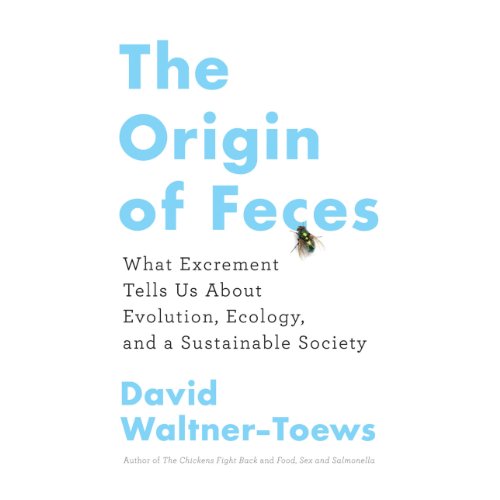
The Origin of Feces
Summary
An entertaining and enlightening exploration of why waste matters, this cultural history explores an often ignored subject matter and makes a compelling argument for a deeper understanding of human and animal waste. Approaching the subject from a variety of perspectives - evolutionary, ecological, and cultural - this examination shows how integral excrement is to biodiversity, agriculture, public health, food production and distribution, and global ecosystems. From primordial ooze, dung beetles, bug frass, cat scats, and flush toilets to global trade, pandemics, and energy, this is the awesome, troubled, uncensored story of feces.
©2013 David Waltner-Toews (P)2013 Audible, Inc.

American Colossus
Summary
From best-selling historian H. W. Brands, a sweeping chronicle of how a few wealthy businessmen reshaped America from a land of small farmers and small businessmen into an industrial giant. The three decades after the Civil War saw a wholesale shift in American life, and the cause was capitalism. Driven by J. P. Morgan, Andrew Carnegie, John D. Rockefeller, and others like them, armies of men and women were harnessed to a new vision of massive industry. A society rooted in the soil became one based in cities, and legions of immigrants were drawn to American shores. H. W. Brands’ American Colossus portrays the stunning transformation of the landscape and institutions of American life in these years. Brands charts the rise of Wall Street, the growth of a national economy, the building of the railroads, and the first sparks of union life. By 1900, America was wealthier than ever, yet prosperity was precarious, inequality rampant, and democracy stretched thin. A populist backlash stirred. American Colossus is an unforgettable portrait of the years when a recognizably modern America first took shape.
©2010 H.W. Brands (P)2010 Random House Audio

The Life and Afterlife of Harry Houdini
Summary
Joe Posnanski enters the colorful world of Harry Houdini and his legions of devoted fans to explore the illusionist’s impact on global culture - and why his legacy endures to this day. Nearly a century after Harry Houdini died on Halloween in 1926, he feels as modern and alive as ever. The name Houdini still leaps to mind whenever we witness a daring escape. The baby who frees herself from her crib? Houdini. The dog who vanishes and reappears in the neighbor’s garden? Houdini. Every generation produces new disciples of the magician, from household names in magic like David Copperfield and David Blaine to countless other followers whose lives have been transformed by the power of Houdini. In rural Pennsylvania, a 13-year-old girl finds the courage to leave a violent home after learning that Houdini ran away to join the circus; she eventually becomes the first female magician to saw a man in half on television. In Australia, an eight-year-old boy with a learning impediment feels worthless until he sees an old poster of Houdini advertising “Nothing on earth can hold Houdini prisoner” and begins his path to becoming that nation’s most popular magician. In California, an actor and Vietnam War veteran finds purpose in his life by uncovering the secrets of his hero. But the unique phenomenon of Houdini was always more than his death-defying stunts or his ability to escape handcuffs and straitjackets. It is also about the power of imagination and self-invention. His incredible transformation from Ehrich Weiss, humble Hungarian immigrant and rabbi’s son, into the self-named Harry Houdini has won him a slice of immortality. No one has withstood the test of time quite like Houdini. Fueled by Posnanski’s personal obsession with the magician - and magic itself - The Life and Afterlife of Harry Houdini is a poignant odyssey of discovery, blending biography, memoir, and first-person reporting to trace Houdini’s metamorphosis into an iconic figure who has inspired millions.
©2019 Joe Posnanski (P)2019 Simon & Schuster Audio

Im Grunde gut
Summary
Der Historiker und Journalist Rutger Bregman setzt sich in seinem neuen Buch mit dem Wesen des Menschen auseinander. Anders als in der westlichen Denktradition angenommen ist der Mensch seinen Thesen nach nicht böse, sondern im Gegenteil: von Grund auf gut. Und geht man von dieser Prämisse aus, ist es möglich, die Welt und den Menschen in ihr komplett neu und grundoptimistisch zu denken. In seinem mitreißend geschriebenen, überzeugenden Buch präsentiert Bregman Ideen für die Verbesserung der Welt. Sie sind innovativ und mutig und stimmen vor allem hoffnungsfroh.
©2020 Rowohlt Verlag GmbH, Hamburg. Übersetzung von Ulrich Faure und Gerd Busse (P)2020 Argon Verlag GmbH, Berlin