The Great Courses has 635 audiobooks on Listento.it, narrated by 479 narrators, with an average listener rating of 4.5★ across 19,831 ratings. The most-rated is A Column of Fire.

Imagination
Summary
This overview discusses how important imagination is and the major effect it has on our lives, including the role it plays in hallucinations, moods, and creativity.
©2019 Dreamscape Media, LLC (P)2019 Dreamscape Media, LLC
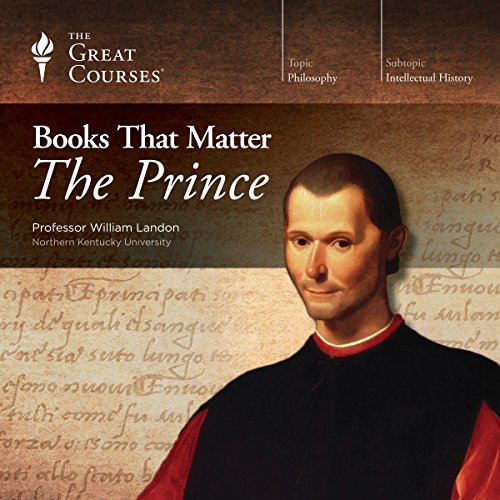
Books that Matter: The Prince
Summary
Should leaders be feared or loved? Can dictators give rise to democracy? Should rulers have morals or wear them like a mask? Niccolò Machiavelli's The Prince puts forth unsettling questions like these, whose answers redefined centuries of political wisdom. But what does it really mean to be Machiavellian? These 24 lectures are more than just a close reading of one of the great books of Western history. They're a revealing investigation of the historical context of Machiavelli's philosophical views, his tumultuous relationship with Florentine politics, his reception by his contemporaries and by 20th-century scholars, and his lasting influence on everyone from William Shakespeare to Joseph Stalin. Throughout the lectures, you'll dive deeply into the work's most important chapters to survey their main insights; read between the lines to uncover hidden meanings, inspirations, and ironies; learn how scholars have debated their historical inspiration and importance; and discover the author's startling imagery and sometimes beautiful language. Going beyond the commonly held vision of Renaissance Italy as a place of creative genius, Professor Landon reveals the drama and terror of Machiavelli's life and world, including his relationships to the city of Florence, the powerful Medici family, and the villainous Cesare Borgia (Machiavelli's ideal prince). For those who have already heard The Prince, prepare to engage with the text on a deeper level than ever before. And for those who've always wanted to listen to this important book, this is your introduction to one man's revolutionary beliefs about achieving - and maintaining - power. PLEASE NOTE: When you purchase this title, the accompanying reference material will be available in your Library section along with the audio.
©2016 The Great Courses (P)2016 The Teaching Company, LLC

Great Scientific Ideas That Changed the World
Summary
What is the greatest scientific idea of all? Because science has so dramatically altered how we live and how we think about ourselves, the answer may well be the very idea of science itself, because - just like science's most important achievements - it, too, needed to be thought about, perfected, and invented. This 36-lecture series explores the ideas that have helped form the foundation of modern life - when society has been willing to pursue them. The lectures interpret the term "scientific idea" broadly, to include the ideas that made science possible at all, as well as the ideas that make it so immensely powerful. The result will be new insights into how science shapes society, as well as the way in which society, in turn, affects the directions taken by science. You'll learn that there is no sharp distinction between ideas that are classified as scientific and those that are classified as philosophical or mathematical, or even between scientific ideas and political, religious, or aesthetic ideas. And how for 200 years, it has been the interaction of science and technology with society that has been the primary driver of social and cultural change, first in the West, then globally, and at an accelerating rate, affecting social and personal values and relationships; social, political, and economic institutions; and cultural values and activities in ways beyond anything our great-grandparents (or sometimes even parents) would recognize. PLEASE NOTE: When you purchase this title, the accompanying reference material will be available in your Library section along with the audio.
©2007 The Teaching Company, LLC (P)2007 The Great Courses

History of Bourbon
Summary
Is bourbon the quintessential American liquor? Bourbon is not just alcohol—the amber-colored drink is deeply ingrained in American culture and tangled in American history. From the early days of raw corn liquor to the myriad distilleries that have proliferated around the country today, bourbon is a symbol of the United States. This course traces bourbon's entire history, from the 1700s, with Irish, Scottish, and French settlers setting up stills and making distilled spirits in the New World, through today's booming resurgence. On their tour of bourbon's fascinating, turbulent, and uniquely American evolution, listeners will explore the mysterious origins of the whiskey’s name and meet the men and women who have been championed as its inventors and made it so popular - from Daniel Boone's cousin and Baptist minister Elijah Craig to Jacob Beam and Evan Williams. In this 10-lecture journey through the story of an undeniably American libation, listeners will: Hear the stories behind the earliest bourbon whiskies right up to the current "bourbon bubble" Learn how a contemplative spirit went from agricultural product to industrial commodity Explore how - and why - bourbon played such a large role in the years of the early republic Get the facts on when and why Congress passed whiskey-protection laws Discover the surprising importance of bourbon distilleries during World War II, when the spirit became war material Go inside the Golden Age of Bourbon - a remarkable proliferation of new brands and niche markets happening now Witness the growth of brands like Jim Beam, Heaven Hill, Bulleit Bourbon, and Old Taylor Gain insights into why distilled spirits, like clothes and cars, project a message about who we are and the cultures to which we belong Join Dr. Ken Albala, a history professor who has written numerous books on food, as he lays out in expert detail the critical role bourbon has played throughout the cultural and political history of the nation.
©2019 Audible Originals, LLC (P)2019 Audible Originals, LLC.

God and Mankind: Comparative Religions
Summary
How do the major religions answer unanswerable questions? What can we gain from their answers? Why are we here? Will we ever discover the source of the mystery? Each of these questions raises countless more, and these eight eye-opening lectures are an ideal starting point for gaining some progress in considering them. Professor Oden's lectures approach religious belief and ritual as possible answers to these most difficult and enduring questions, which have occupied humanity from the beginning. They underscore both the unity and the diversity of religious approaches to life in a sweeping conceptual grasp. And they treat the study of religion as both a matter of faith and as an appropriate subject of intellectual and academic pursuit. Throughout these lectures, you'll examine the four traditional views of religion; ponder the best ways to understand and compare religious beliefs; investigate the problem of the existence of evil in a world created by a benevolent deity; compare the birth narratives of several important religious figures including Moses, Jesus, and the Buddha; probe the secrets of rituals and their ramifications for the religious communities of sect and church; see how the United States is the perfect case study for learning about the religious nature of a particular society; and much more.
©1991 The Teaching Company, LLC (P)1991 The Great Courses

Great Figures of the New Testament
Summary
Improve your biblical literacy with these 24 insightful lectures about the cast of vivid characters in the New Testament. From the well-known figures of Jesus, John the Baptist, and the disciples to important but lesser known figures, such as the Syro-Phoenician woman who must turn Jesus's own words back on him to gain the healing of her daughter, Professor Levine paints vivid portraits of Christianity's founding generation. You'll learn about such figures as: The elderly couple Elizabeth and Zechariah and their son, John the Baptist; Jesus's friends, the contemplative Mary and the vocal Martha, as well as their brother, Lazarus; The apostles Peter and Thomas, James and John, and Judas Iscariot; Mary Magdalene, who becomes known as the apostle to the apostles; Paul the apostle, as presented in Acts of the Apostles and what can be determined about him from his letters; A number of strong and interesting women, including the unnamed Samaritan and a repentant sinner who anoints Jesus; Jesus's interlocutors, including the centurion with a paralyzed son and the desperate Canaanite mother with a demon-possessed daughter. Rather than promoting any particular religious worldview, this course seeks to read the ancient texts anew to discover what they really say and how they were interpreted by both the secular culture and the faithful church.
©2002 The Teaching Company, LLC (P)2002 The Great Courses

Understanding the New Testament
Summary
The New Testament is a fascinating book - the canonical root of Christian history and theology. Yet the book is also a paradox, because this single “book” is comprised of 27 different books by more than a dozen authors, each of whom has a different perspective and is responding to a different set of historical circumstances. How do you reconcile this diversity of voices into a single, unified belief system? And should you even try? For a historian, the diversity of authors is not a challenge to be reckoned with, but rather an exciting opportunity. In the New Testament, we have 27 primary sources that offer a doorway to the extraordinary history of the early Christian communities. In these books, you can discover how: Christian practices developed; Conflicts of belief were debated and addressed; The institution of the Church evolved; and A man named Jesus of Nazareth was transformed into the Messiah. Join Professor David Brakke, an award-winning Professor of History at The Ohio State University, for Understanding the New Testament. In these 24 eye-opening lectures, he takes you behind the scenes to study not only the text of the New Testament, but also the authors and the world in which it was created. You will explore Jewish lives under Roman occupation, reflect on the apocalyptic mood of the first and second centuries AD, witness the early Christians’ evangelism beyond the Jewish communities, and witness the birth of a faith that continues to shape our world today. PLEASE NOTE: When you purchase this title, the accompanying PDF will be available in your Audible Library along with the audio.
©2019 The Teaching Company, LLC (P)2019 The Great Courses

Alexander the Great and the Hellenistic Age
Summary
This series of 24 lectures examines a crucial period in the history of the ancient world, the age ushered in by the extraordinary conquests of Alexander the Great. In all the annals of the ancient world, few stories are more gripping than those from this era. In the opening lectures, you'll explore the enigma of Alexander, son of a brilliant father, yet always at odds with the man whom he succeeded. You'll trace his early campaigns against the Persians and follow him to Egypt, where he was acclaimed as the son of god. You'll then look at his career after this and find in him a blend of greatness and madness as he strove to replace the Persian empire of the Achaemenid dynasty with a new, mixed ruling class of Macedonians and Persians. From there, you'll delve into the catastrophic period after Alexander's death in 323 B.C., which ushered in a period of catastrophic change as ambitious warlords carved up Alexander's realm into their own separate empires. You'll learn about each of the three kingdoms that resulted: Ptolemaic Egypt, Seleucid Syria, and the Attalid Empire in Asia Minor. Just as important to these lectures are the in-depth discussions of the bounties of Hellenistic culture, which contributed landmark ideas in everything from philosophy (which became more academic), art and architecture (with its excessive, naked emotions), and religion (especially the growing popularity of cult movements). Taken all together, these lectures are an engrossing and riveting journey into ancient history-and the life and times of the man who left an indelible mark on everything that would come after.
©2000 The Teaching Company, LLC (P)2000 The Great Courses

How the World Learns
Summary
America's blueprint for mass education has been followed across the globe - yet international student assessments show that achievement varies sharply, with the US and much of Europe typically scoring average at best. Not surprisingly, this state of affairs has sparked anxieties about an educational crisis. Adding even more fuel to the fire: many cite a growing disconnect between what schools teach and the needs of a rapidly changing market. The problem, if there is one, is highly complex, and in these 24 thought-provoking lectures led by an associate professor of comparative and international education, you'll take a meaningful look at education around the world to understand why. You'll go beyond prescriptions for quick fixes to engage in a detailed comparison of teaching methods and student achievement, from the focus on STEM instruction and the intent of morals education to the role of preschool and the importance of creativity. You'll discover why Finland and South Korea rank as the two best educational systems despite having diametrically opposed approaches and consider the unique challenges facing schools from America to South Africa. You'll use internationally comparative data to identify strengths and weaknesses and to see how this information is used - and sometimes misused - to enact policies. The data and systems are not studied in a vacuum, however. Instead you'll explore how cultural, religious, socioeconomic, and historical contexts may influence these methods and whether one nation's best practice could backfire in another. Along the way you'll contemplate questions about the goals of education and the ways teachers may help students reach them, from whether standardized testing is the best way to measure what a person is capable of to whether teachers should have a role beyond presenting academic content.
©2015 The Great Courses (P)2015 The Teaching Company, LLC

George Orwell: A Sage for All Seasons
Summary
George Orwell was more than just a writer. He was a political and social sage who valued, above all else, individual freedom. His works aren’t just entertainment - they’re cautionary tales and red flags of warning. And if we ever hope to understand threats to freedom and how to stop them, we must learn from them. In these 24 lectures, learn how the man born as Eric Blair forged himself into a writer of international importance and renown. Mixing historical inquiry, literary analysis, and cultural biography, Professor Shelden gets at the truth of British life in the opening decades of the 20th century. These lectures cover the creation, reception, and implication of Orwell’s major works, from Burmese Days and Homage to Catalonia to Animal Farm and Nineteen Eighty-Four. Embark on a chronological journey through Orwell’s life and times, from his youth in Edwardian England to his formative experiences at boarding school (captured in the brilliant essay, “Such, Such Were the Joys”) to his being shot through the neck by a sniper while serving as a freedom fighter against the forces of General Franco. Along the way, examine the experiences - and the people - Orwell drew upon when forging himself into a writer and a citizen of the world. Here, in one comprehensive package, is a compendium of all Orwell’s many personas: the writer brave enough to speak truth to power, the soldier willing to sacrifice his life for others, the citizen willing to expose the injustices, and the sage for freedom-loving civilizations everywhere. PLEASE NOTE: When you purchase this title, the accompanying PDF will be available in your Audible Library along with the audio.
©2020 The Great Courses (P)2020 The Teaching Company, LLC

Cities of the Ancient World
Summary
We live in a world of cities - for the first time ever, the majority of the population lives in an urban environment - and reflecting on ancient models of the "city" as a human phenomenon offers important lessons for our culture today. Cities of the Ancient World is your opportunity to survey the breadth of the ancient world through the context of its urban development. Taught by esteemed Professor Steven L. Tuck, of Miami University, these 24 eye-opening lectures not only provide an invaluable look at the design and architecture of ancient cities, they also offer a flesh-and-blood glimpse into the daily lives of ordinary people and the worlds they created. Cities of the Ancient World gives you insight into cities large and small, famous and obscure. Ultimately, however, this is a course about people, not just buildings. Studying these cities will give you a new appreciation for the remarkable cultures of the ancient world, from the ruins of Uruk to the Golden Age of Athens, and spur you to reflect on what makes a city survive. More than anything else, Cities of the Ancient World is a course about human beings - what life was like in these cities and how people lived.
©2014 The Teaching Company, LLC (P)2014 The Great Courses
The Life and Writings of C. S. Lewis
Summary
What can we still learn from C.S. Lewis? Find out in these 12 insightful lectures that cover the author's spiritual autobiography, novels, and his scholarly writings that reflect on pain and grief, love and friendship, prophecy and miracles, and education and mythology. This is your chance to explore a canon of literary work that speaks volumes about the imaginative, emotional, and spiritual power of literature. As you delve into the depths of enduring works such as the Chronicles of Narnia, The Screwtape Letters, Mere Christianity, and Till We Have Faces, you'll consider a range of questions central to truly understanding why C.S. Lewis has had such a profound impact on 20th-century readers. From the magisterial Oxford History of English Literature to children's fantasy series, how did Lewis write with such brilliance and coherence in so many distinct fields? What were the people, events, and influences that shaped his thought, his character, and the spiritual drama at his life's core? What do Lewis's fictional and factual autobiographies reveal about his conversion and his efforts to explain and defend Christianity? How do his writings help readers come to grips with perennial spiritual questions involving miracles, suffering, sin, and salvation? Join Professor Markos for an eye-opening examination of why Lewis - the Oxbridge don and self-described, "very ordinary layman of the Church of England," touches millions of readers so deeply and is considered the most widely read Christian spokesman of our time. PLEASE NOTE: When you purchase this title, the accompanying reference material will be available in your Library section along with the audio.
©2000 The Teaching Company, LLC (P)2000 The Great Courses

Great Masters: Beethoven - His Life and Music
Summary
Have you ever wondered how the lives of great composers - especially when set against the social, political, and cultural context of their world - influenced their music? After listening to this perceptive series of eight lectures on the life and music of Ludwig van Beethoven, you will likely find that you hear his work in an entirely different way, with your insight informed by new knowledge of how Beethoven was able to create masterpieces from the crises of his life. You'll learn about the years of progressive hearing loss - ultimately to produce total deafness - and the understandable agony and rage such a fate would bring upon a composer. About his deep depression over the end of his relationship with the woman he calls his Immortal Beloved. About his pathological hatred of authority, his persecution complex, even delusional behaviors. But you'll also learn how each of these crises, and many others, served to drive Beethoven inward, to reinvent himself and redeem his suffering through art, creating disruptive works of profound passion and beauty that reinvented the nature of musical expression in the Western world. PLEASE NOTE: When you purchase this title, the accompanying reference material will be available in your Library section along with the audio.
©2001 The Teaching Company, LLC (P)2001 The Great Courses

Greek Legacy: Classical Origins of the Modern World
Summary
Virtually all of the major building blocks of our culture (law, government, religion, science, medicine, drama, architecture, and more) derived ultimately from the ancient Greeks. In these 12 lectures, you'll explore the continuing influence of the classical Greek achievement on contemporary life. The point is not the often tedious claim that there is nothing new under the sun. Rather, it is to underscore the remarkable continuity of the Greek perspective and ethos preserved over several millennia. You'll learn how great literary themes that have dominated creative writing over the past two millennia were developed and bequeathed to us by a handful of ancient Greek poets and dramatists. You'll study the pure symmetry of ancient Greek art and architecture and its influence on everything from politics to the works of Leonardo da Vinci. You'll explore the Greek ideals in scholarship and the relationship the ancient Greeks saw between what you study and what you become. You'll also get a chance to investigate the origins of the modern scientific method in the mathematical deductions of Pythagoras and the explosively productive inductive inquiries of Aristotle, as well as the origins of modern clinical medicine in the work of Hippocrates of Cos and the Greek writings of Galen. And you'll study statecraft, specifically the contemporary notions of freedom, self-government, virtuous leadership, and civic life that have their origins in the Athens of Pericles, Plato, and Aristotle.
©1998 The Teaching Company, LLC (P)1998 The Great Courses

Medieval Heroines in History and Legend
Summary
This series of 24 fascinating lectures draws on the latest modern scholarship to explore the lives of four medieval women who still shimmer in the modern imagination: Heloise, the abbess and mistress of Abelard; the prophet Hildegard of Bingen; Queen Eleanor of Aquitaine; and Joan of Arc. These lectures exemplify today's golden age of medieval scholarship, in which the role women played in medieval life is being clarified for the first time. You examine both old legends and new facts to address several provocative questions, such as: Were Hildegard's visions the result of migraines? How did Joan conduct herself in battle and react to its bloody reality? What does Eleanor's life tell us about a woman's role in the Crusades? As you journey through a past we are only now beginning to understand fully, you learn how these remarkable heroines have been both understood and misunderstood throughout history, and you'll better understand how history passes judgment on both women and the Middle Ages. PLEASE NOTE: When you purchase this title, the accompanying reference material will be available in your Library section along with the audio.
©2002 The Teaching Company, LLC (P)2002 The Great Courses

Classics of American Literature
Summary
To truly understand the United States of America, you must explore its literary tradition. Now, in this grand collection of 84 fascinating lectures, you'll get the chance to finally become familiar with America's true literary masterpieces (some you may already be familiar with, others you have yet to discover). Professor Weinstein has crafted these lectures to explain why some works become classics while others do not, why some "immortal" works fade from our attention completely, and even why some contemporary works now being ignored or snubbed by critics may be considered immortal one day. One memorable work at a time, you'll see how each of these masterpieces shares the uncompromising uniqueness that invariably marks the entire American literary canon. From Sleepy Hollow to The Great Gatsby and beyond, you'll journey through more than two centuries of the best writers America has yet produced, bringing out the beauty of their language, the excitement of their stories, and the value in what they say about life, power, love, adventure, and what it means, in every sense, to be American. You'll explore the roles of self-reliance and the "self-made man" in the evolution of American literature; the evolution of the American ghost story, from Poe and Hawthorne to James and Morrison; the epic strain in American literature, from Melville and Whitman to Faulkner and Ellison; the perspectives on nature revealed in poets Whitman, Dickinson, Frost, and Eliot; the tenets of Modernism in the work of Eliot, Fitzgerald, Hemingway, and Faulkner; the contributions of O'Neill, Miller, and Williams to American theater; and much more. PLEASE NOTE: When you purchase this title, the accompanying reference material will be available in your Library section along with the audio.
©1998 The Teaching Company, LLC (P)1998 The Great Courses

12 Essential Scientific Concepts
Summary
Science is such a vast arena of knowledge that people looking for a better grasp of its secrets often wonder where to begin. The answer: with the essentials. Now, finally satisfy your desire for scientific inquiry in a way that makes this enormous field accessible, understandable, and undeniably captivating. Professor Viskontas boils down the scientific world into 12 key concepts every educated person should know. Devoting two lectures to each concept to give you more time to engage with it, her 24-lecture series is an engaging and enlightening introduction to everything from the behavior of subatomic particles to the latest theories about the Big Bang. Throughout, you'll get accessible looks at key building blocks of scientific knowledge, including brain plasticity, fluid mechanics, electromagnetism, genetics, quantum theory, emergence, evolution, thermodynamics, the Big Bang, and the nature of matter. Each concept is presented in a clear, concise way that will inform and delight you, and that will give you the opportunity to probe the invisible life of living cells, visit the universe seconds after its birth, and much more. Concepts that may have eluded you in school, that you may not be familiar with, or that you simply never appreciated for their intricate beauty are now brought to vivid life in a way that sticks. Welcome to the world of science - reduced to its powerful essence. PLEASE NOTE: When you purchase this title, the accompanying reference material will be available in your Library section along with the audio.
©2014 The Great Courses (P)2014 The Teaching Company, LLC

Big Data: How Data Analytics Is Transforming the World
Summary
In our age of accelerating progress in so many fields, it’s easy to lose sight of the underlying innovation that makes the data analytics revolution possible. These 24 lectures introduce you to the key concepts, methods, and accomplishments of this versatile approach to problem solving. You need no expertise in mathematics to follow this exciting story. Tim Chartier, professor of mathematics and computer science, explains the basic computational techniques used in data analytics, but his focus is on how these ideas are applied and the amazing results they achieve. His case histories make these lectures both accessible and entertaining. He takes you behind the scenes to review many examples of data analysis in action, including the pitfalls and potential of Internet traffic analysis, algorithms that aim to predict what customers want, some of the best defenses for keeping your personal data private, how methods for filling out March Madness game brackets can be applied to other problems, and much more. Professor Chartier is a champion of the fun, challenge, and breathtaking power of mathematics - qualities that are accessible with data analytics. And with his enjoyable lectures, you’ll discover concepts and tools that are transforming the world - and that you can use to transform your own life. It’s like watching a thrilling spectator sport that invites you to suit up and join the action! PLEASE NOTE: When you purchase this title, the accompanying PDF will be available in your Audible Library along with the audio.
©2014 The Great Courses (P)2014 The Teaching Company, LLC

The Book of Genesis
Summary
Nearly everyone in the Western world is familiar with the stories in the book of Genesis. Its language is simple. Its powerful sentences are short. And its messages glisten with clarity. But is it possible that the understanding of the book of Genesis we've all grown up with isn't as complete as we'd like to believe? That its deceptively simple sentences and surface appearance hide from contemporary readers a purposeful and intricate structure designed to let its depth and detail and implication resonate with the readers and listeners of its own time? These 24 fascinating lectures offer the necessary tools to change our perceptions of the book of Genesis, showing us how we might read, hear, think about - and feel - its words as an ancient Hebrew would have, allowing us to gain a new appreciation of "one of the most remarkable literary compositions from the ancient world," as Professor Rendsburg calls it, the book with which both Jews and Christians alike begin their Bible. With a detailed, line-by-line literary parsing that gently probes its language, exploring how and why its effects were achieved and what the book's author-or authors-were saying, Professor Rendsburg reveals more insights than most of us have ever dreamed were there. Among those insights, you'll learn why the book of Genesis has not one but two creation stories, what hints the book's many contradictions offer about its authorship, and more. Although this is a course whose emphasis is literary, with detailed analysis dominating, Professor Rendsburg is mindful that the book of Genesis is, for many, a theological pillar of religious faith. And he is both respectful of that reality and aware of it in an even broader historical, social, and archeological context.
©2006 The Teaching Company, LLC (P)2006 The Great Courses
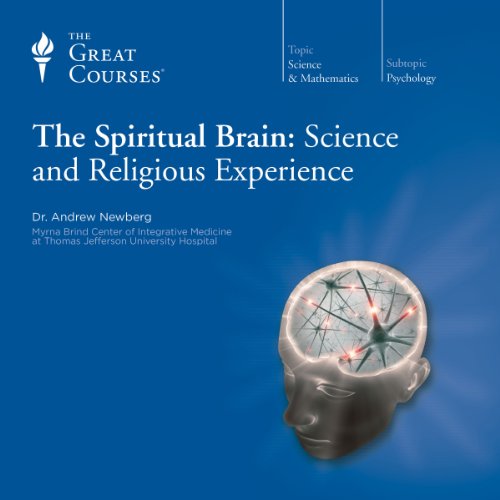
The Spiritual Brain: Science and Religious Experience
Summary
Does God exist? Do we have a soul? Is it possible to make contact with a spiritual realm? How should we respond to the divine? Will life continue beyond death?Most people, whether deeply religious or outright doubters of any spiritual power, have probably pondered these questions for themselves. In fact, the religious impulse is so powerfully pervasive that neuroscience has posed a provocative question: Are our brains wired to worship? Now, in a series of 24 riveting lectures from an award-winning scholar and practicing neuroscientist, you can explore the exciting field of neurotheology - the new discipline aimed at understanding the connections between our brains and different kinds of religious phenomena. Using an academic, experimental approach into what he calls "objective measures of spirituality," Professor Newberg attempts to explain what others have previously only guessed at: the neuroscientific basis for why religion and spirituality have played such a prominent role in human life. In these captivating lectures, you'll learn how religious experiences originate, their meaning, and the reasons why religion plays such a huge role in human experience - peering directly into the seat of all human thought and action as you delve into the relationship between brain function and spirituality. A leading researcher in neurotheology, Professor Newberg offers you innovative approaches to ancient beliefs and practices. Using brain imaging and other cutting-edge physiological studies, he helps you to better understand how the brain controls or responds to religious and spiritual beliefs and behavior. PLEASE NOTE: When you purchase this title, the accompanying reference material will be available in your Library section along with the audio.
©2012 The Teaching Company, LLC (P)2012 The Great Courses